Loading...
Mevlut Cavusoglu vs Wen Jiabao
Wen Jiabao leads by 4.5 pts · 2 figures compared
…
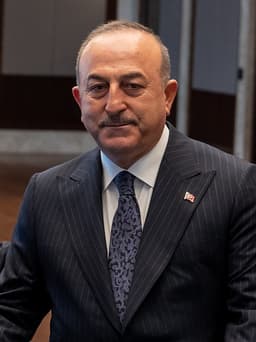
Mevlut Cavusoglu
Politician · Modern
46.8Total

Wen Jiabao
Politician · Modern
51.3Total
Basic Information
Born
1968
1942
Died
—
—
Era
Modern
Modern
Nationality
Turkey
China
Occupation
Politician
Politician
Civilization
Middle Eastern
Eastern
Score Comparison
Military (10%)
23.5
16.4
Political (20%)
68.0
55.0
Influence (20%)
54.9
61.0
Legacy (20%)
41.7
45.8
Leadership (15%)
40.0
80.0
Strategy (15%)
41.1
26.7
TOTAL
46.8
51.3
Mevlut Cavusoglu — Complete Timeline
2014 AD
Appointed Minister of Foreign AffairsPolitical Action◆ Major
Cavusoglu was appointed Foreign Minister of Turkey on August 29, 2014, serving under President Erdogan. He became one of the longest-serving foreign ministers in Turkish history, overseeing foreign policy during a period of regional turmoil.
Turkish PoliticsForeign PolicyDiplomacy
Impact: national
2016 AD
2016 Turkish coup attempt responsePolitical Action◆ Major
During the July 15, 2016 coup attempt, Cavusoglu was in New York. He coordinated diplomatic efforts to condemn the coup, secured international support for the Turkish government, and later oversaw a purge of foreign ministry personnel linked to the Gulen movement.
Coup AttemptDiplomacyPurge
Impact: national
Syrian conflict diplomacyPolitical Action◆ Major
Cavusoglu played a key role in Turkish foreign policy regarding the Syrian civil war, including the Euphrates Shield operation (2016) and the Idlib ceasefire agreements. He negotiated with Russia and Iran under the Astana process, shaping Turkey's military involvement.
Syrian WarDiplomacyMilitary Intervention
Impact: regional
2020 AD
Eastern Mediterranean tensionsPolitical Action◆ Major
Cavusoglu led Turkey's assertive stance in the Eastern Mediterranean, including disputes over maritime boundaries and energy resources with Greece and Cyprus. He oversaw the deployment of research vessels and diplomatic confrontations with the EU and NATO allies.
Maritime DisputeEnergyNATO
Impact: regional
Wen Jiabao — Complete Timeline
2003 AD
Became Premier of the People's Republic of ChinaPolitical Action◆ Major
Wen Jiabao succeeded Zhu Rongji as Premier, continuing market reforms while emphasizing social welfare. He focused on reducing rural poverty and improving healthcare and education.
PremierEconomic ReformSocial Welfare
Impact: nationalconstructive
Oversaw the response to the SARS outbreakPolitical Action◆ Major
Wen Jiabao led China's response to the SARS epidemic, implementing quarantine measures and improving transparency. The crisis was contained within months, though initial delays were criticized.
SARSPublic HealthCrisis Management
Impact: globalconstructive
2006 AD
Abolished agricultural taxReform◆ Major
Wen Jiabao's government abolished the agricultural tax, a levy that had burdened farmers for centuries. This reform reduced rural poverty and increased agricultural productivity.
Agricultural ReformRural PovertyTax Abolition
Impact: nationalconstructive
2008 AD
Implemented the 4 trillion yuan stimulus packageReform◆ Major
In response to the global financial crisis, Wen Jiabao announced a 4 trillion yuan stimulus package focused on infrastructure, social welfare, and tax cuts. This helped China maintain high growth rates.
Stimulus PackageGlobal Financial CrisisInfrastructure
Impact: globalconstructive
2013 AD
Retired from politicsPolitical Action
Wen Jiabao stepped down as Premier after two terms, retiring from public life. He was succeeded by Li Keqiang, and his policies of social welfare expansion continued.
RetirementPolitical TransitionSocial Welfare
Impact: national
Expert Analysis
Origins
Mevlut Cavusoglu was born on February 22, 1968, in Alanya, Turkey. He studied economics at Ankara University and later earned a master's degree in public administration from California State University. His early career included work in tourism and local government, serving as a member of parliament for the Justice and Development Party (AKP) since 2002.
Wen Jiabao was born on September 15, 1942, in Tianjin, China. He studied geological engineering at the Beijing Institute of Geology and worked in Gansu province for 14 years as a geologist. His political career began in the Communist Youth League, and he rose through the ranks as a protégé of Hu Jintao.
Both came from modest backgrounds, but Cavusoglu's international education contrasted with Wen's technical upbringing.
Rise to Power
Cavusoglu rose quickly within the AKP, becoming a key figure in Turkey's EU accession negotiations. He served as Minister of EU Affairs from 2013 to 2014 and was appointed Minister of Foreign Affairs on August 29, 2014, under President Erdogan. His tenure saw him become one of the longest-serving foreign ministers in Turkish history.
Wen Jiabao's rise was more gradual. He served as Vice Premier from 1998 to 2003, overseeing agriculture and disaster relief. He became Premier of the People's Republic of China on March 16, 2003, succeeding Zhu Rongji. His appointment marked a shift toward more populist policies, focusing on rural poverty and social welfare.
Cavusoglu's political score of 68.0 reflects his rapid ascent, while Wen's 55.0 indicates a steadier climb. Both relied on strong mentors: Cavusoglu on Erdogan, Wen on Hu Jintao.
Leadership & Governance
Cavusoglu's leadership style is assertive and confrontational, especially in foreign policy. He coordinated Turkey's response to the 2016 coup attempt from New York, securing international support for the government. He led Turkey's assertive stance in the Eastern Mediterranean, including disputes with Greece and Cyprus over maritime boundaries. His strategy score of 41.1 reflects mixed results: the Euphrates Shield operation (2016) in Syria achieved tactical goals, but the Idlib ceasefire (2020) strained ties with Russia.
Wen Jiabao's governance was more domestic-focused and welfare-oriented. He oversaw the response to the SARS outbreak in 2003, implementing quarantine measures that contained the virus within months. His government abolished the agricultural tax in 2006, a historic reform that reduced rural poverty. He also implemented a 4 trillion yuan stimulus package in 2008 to counter the global financial crisis, focusing on infrastructure and social welfare. His leadership score of 80.0 highlights his effectiveness in crisis management and reform.
Cavusoglu's political maneuvering scores 68.0, but Wen's leadership score of 80.0 shows greater consensus-building. Cavusoglu's military score of 23.5 reflects his non-combat role, while Wen's 16.4 is even lower.
Triumph & Tragedy
Cavusoglu's greatest triumph was his role in the 2016 coup attempt response, where he coordinated diplomatic efforts that legitimized the government. His greatest failure was the Eastern Mediterranean tensions, which isolated Turkey from NATO allies. The Idlib ceasefire also failed to prevent a humanitarian crisis.
Wen Jiabao's greatest triumph was the abolition of the agricultural tax, which lifted millions from poverty. His SARS response was also a success, though initial secrecy caused criticism. His greatest failure was the 2008 Sichuan earthquake response, where delayed information and school collapses sparked public anger. The stimulus package, while boosting growth, led to debt and overcapacity.
Both faced crises: Cavusoglu's coup response was a clear success, while Wen's earthquake response was a clear failure. Their influence scores (Cavusoglu 54.9, Wen 61.0) reflect global reach.
Character & Destiny
Cavusoglu is known for his loyalty to Erdogan and his combative rhetoric. He often defended Turkish interests aggressively, which won him support at home but alienated allies. His character shaped a destiny of constant crisis management, from Syria to Libya to the Mediterranean.
Wen Jiabao is remembered as a common-touch leader, often visiting disaster sites and rural areas. He was more technocratic and cautious, focusing on gradual reforms. His character led to a legacy of social welfare expansion but also criticism for avoiding political reform.
Cavusoglu's total score of 46.8 reflects his polarizing nature, while Wen's 51.3 shows broader approval. Both were products of their systems: Cavusoglu of Erdogan's authoritarian turn, Wen of China's one-party state.
Legacy
Cavusoglu's legacy is tied to Turkey's assertive foreign policy under Erdogan. He expanded Turkish influence in the Middle East and Africa but strained relations with the West. His tenure saw Turkey become a key player in Syria and Libya. His legacy score of 41.7 is moderate, as his impact may fade with Erdogan's departure.
Wen Jiabao's legacy is more enduring. His social welfare policies, including free rural education and healthcare, have become part of China's fabric. The agricultural tax abolition remains a landmark reform. His legacy score of 45.8 is slightly higher, reflecting tangible domestic changes.
Cavusoglu's influence score of 54.9 is comparable to Wen's 61.0, but Wen's domestic impact is more measurable.
Conclusion
Wen Jiabao had greater impact than Mevlut Cavusoglu. While Cavusoglu shaped Turkish foreign policy during a turbulent decade, his influence is contingent on Erdogan's regime. Wen's domestic reforms—abolishing the agricultural tax, expanding social welfare—directly improved the lives of hundreds of millions. His leadership score of 80.0 dwarfs Cavusoglu's 40.0, and his legacy score of 45.8 is higher. The score gap of 4.5 points in Wen's favor confirms this. Cavusoglu's political maneuvering (68.0) cannot match Wen's concrete policy achievements. Therefore, Wen Jiabao is the more impactful figure.
Rankings
🥇
Wen JiabaoLeader
Mil: 16.4Pol: 55.0Inf: 61.0
51.3
🥈
Mevlut Cavusoglu
Mil: 23.5Pol: 68.0Inf: 54.9
46.8
+4.5 behind
How This Comparison Works
Algorithm
Each figure is scored on 6 dimensions (0—100 scale) based on structured historical data: Military (10%), Political (20%), Influence (20%), Legacy (20%), Leadership (15%), Strategy (15%). The weighted total produces the final ranking.
Data Sources
Scores are computed from structured sub-indicators in the database. Scale factors adjust for era (Ancient ×0.85, Modern ×1.0) and civilization size (Eastern ×1.05, Other ×0.80) to account for differences in population and military scale.
Maximum 3 Figures
Comparisons are limited to 2—3 figures to ensure readability and statistical meaningfulness.
Error Margins
±5 points per dimension — Sub-scores are derived from historical records with inherent uncertainty. Two figures within 5 points on a dimension should be considered roughly equivalent in that area.
Total Score Accuracy
±3 points overall — The weighted combination of 6 dimensions produces a total score with approximately ±3 points of uncertainty. Differences of less than 3 points are not statistically significant— the figures are effectively tied.
Known Limitations
- Historical records are incomplete and uneven across civilizations
- Figures from oral-tradition societies may be underrepresented
- Occupation labels can misclassify multi-role figures
- Scores measure capability and impact, not moral character
- Quantitative scoring is a comparison tool, not absolute truth
Capability Radar
Military (10%) — Battles & Warfare
Battles
20
13
Win Rate
24
15
Expansion
26
20
Political (20%) — Governance & Reform
Reform
40
65
Diplomacy
70
60
Economy
30
75
Influence (20%) — Cultural & Global Reach
Cultural
20
40
Global
40
55
Legacy (20%) — Historical Impact
Historical
30
45
Longevity
20
30
Leadership (15%) — Power & Stability
Tenure
60
70
Stability
35
65
Strategy (15%) — Tactics & Innovation
Strategy
32
25
Tactics
33
26
Reform
38
31
Similar Comparisons
Comments & Discussion
No comments yet. Be the first to share your thoughts!