Loading...
This comparison has not been analyzed yet.
One-time AI generation (~1 minute). Scores and timeline are already available below.
Michal Kazimierz Pac vs Paul von Hindenburg
Paul von Hindenburg leads by 8.4 pts · 2 figures compared
…

Michal Kazimierz Pac
General · Modern
53.8Total
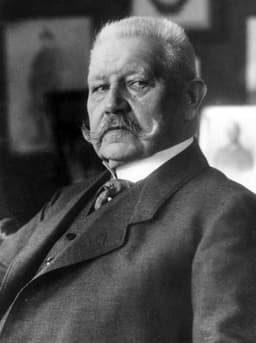
Paul von Hindenburg
General · Modern
62.2Total
Basic Information
Born
1624
1847
Died
1682
1934
Era
Modern
Modern
Nationality
Poland-Lithuania
Germany
Occupation
General
General
Civilization
Western
Western
Score Comparison
Military (10%)
30.0
65.0
Political (20%)
68.0
43.7
Influence (20%)
59.0
82.0
Legacy (20%)
50.0
55.0
Leadership (15%)
48.8
64.0
Strategy (15%)
60.0
52.5
TOTAL
53.8
62.2
Michal Kazimierz Pac — Complete Timeline
1660 AD
Battle of PolonkaWar◆ Major
Pac commanded Lithuanian forces alongside Stefan Czarniecki at Polonka, defeating the Russian army. This victory secured the eastern border and enhanced Pac's reputation as a military commander.
Russo-Polish WarBattleVictory
Impact: regional
Battle of CudnówWar
Pac participated in the Polish-Lithuanian victory at Cudn
Russo-Polish WarBattleTreaty
Impact: regional
1667 AD
Appointment as Great Hetman of LithuaniaPolitical Action◆ Major
Pac was appointed Great Hetman of Lithuania, the highest military office in the Grand Duchy. This position gave him command over Lithuanian forces and significant political influence in the Commonwealth.
AppointmentHetmanLithuania
Impact: regional
1668 AD
Construction of St. Peter and Paul ChurchCultural◆ Major
Michal Kazimierz Pac funded the construction of the Church of St. Peter and St. Paul in Vilnius, a major Baroque monument. The church became a symbol of his patronage and remains a significant architectural landmark in Lithuania.
PatronageArchitectureBaroqueVilnius
constructive
Paul von Hindenburg — Complete Timeline
1914 AD
Battle of TannenbergWar
Hindenburg, with Ludendorff as chief of staff, commanded the German Eighth Army to a decisive victory over the Russian Second Army in East Prussia. The battle halted the Russian invasion and made Hindenburg a national hero.
World War IEastern FrontVictory
Impact: regional
1916 AD
Appointed Chief of the General StaffPolitical Action◆ Major
Hindenburg was appointed Chief of the General Staff of the German Army, replacing Erich von Falkenhayn. He and Ludendorff effectively became military dictators of Germany, directing all aspects of the war effort.
World War ICommandPower
Impact: national
1925 AD
Elected President of GermanyPolitical Action◆ Major
Hindenburg was elected as the second President of the Weimar Republic, defeating Wilhelm Marx in a runoff. His presidency marked a shift toward conservative and authoritarian rule, undermining the republic's democratic foundations.
Weimar RepublicElectionConservatism
Impact: national
1933 AD
Appointed Adolf Hitler as ChancellorPolitical Action
Hindenburg appointed Adolf Hitler as Chancellor of Germany, heading a coalition cabinet. This decision, made under political pressure and intrigue, enabled Hitler to consolidate power and ultimately dismantle the Weimar Republic.
Nazi RiseWeimar RepublicPower Transfer
Impact: globaldestructive
Reichstag Fire DecreePolitical Action◆ Major
Hindenburg signed the Reichstag Fire Decree, suspending civil liberties and allowing the Nazi regime to arrest political opponents. This decree was a key step in establishing the Nazi dictatorship.
Nazi DictatorshipCivil LibertiesRepression
Impact: nationaldestructive
This comparison has not been analyzed yet.
One-time AI generation (~1 minute). Scores and timeline are already available below.
Rankings
🥇
Paul von HindenburgLeader
Mil: 65.0Pol: 43.7Inf: 82.0
62.2
🥈
Michal Kazimierz Pac
Mil: 30.0Pol: 68.0Inf: 59.0
53.8
+8.4 behind
How This Comparison Works
Algorithm
Each figure is scored on 6 dimensions (0—100 scale) based on structured historical data: Military (10%), Political (20%), Influence (20%), Legacy (20%), Leadership (15%), Strategy (15%). The weighted total produces the final ranking.
Data Sources
Scores are computed from structured sub-indicators in the database. Scale factors adjust for era (Ancient ×0.85, Modern ×1.0) and civilization size (Eastern ×1.05, Other ×0.80) to account for differences in population and military scale.
Maximum 3 Figures
Comparisons are limited to 2—3 figures to ensure readability and statistical meaningfulness.
Error Margins
±5 points per dimension — Sub-scores are derived from historical records with inherent uncertainty. Two figures within 5 points on a dimension should be considered roughly equivalent in that area.
Total Score Accuracy
±3 points overall — The weighted combination of 6 dimensions produces a total score with approximately ±3 points of uncertainty. Differences of less than 3 points are not statistically significant— the figures are effectively tied.
Known Limitations
- Historical records are incomplete and uneven across civilizations
- Figures from oral-tradition societies may be underrepresented
- Occupation labels can misclassify multi-role figures
- Scores measure capability and impact, not moral character
- Quantitative scoring is a comparison tool, not absolute truth
Capability Radar
Military (10%) — Battles & Warfare
Battles
45
75
Win Rate
40
70
Expansion
35
40
Political (20%) — Governance & Reform
Reform
40
20
Diplomacy
50
40
Economy
45
30
Influence (20%) — Cultural & Global Reach
Cultural
55
40
Global
30
70
Legacy (20%) — Historical Impact
Historical
50
75
Longevity
40
60
Leadership (15%) — Power & Stability
Tenure
60
65
Stability
45
10
Strategy (15%) — Tactics & Innovation
Strategy
55
65
Tactics
50
60
Reform
30
30
Similar Comparisons
Comments & Discussion
No comments yet. Be the first to share your thoughts!