Loading...
Paul von Hindenburg vs Vang Pao
Paul von Hindenburg leads by 5.9 pts · 2 figures compared
…
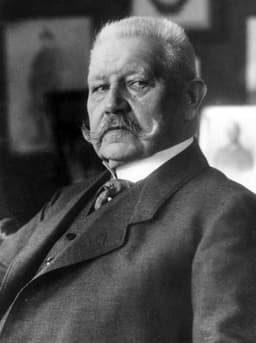
Paul von Hindenburg
General · Modern
62.2Total
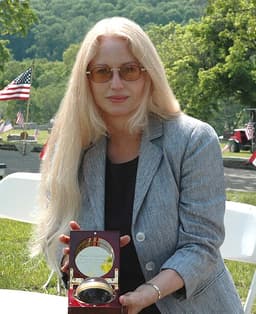
Vang Pao
General · Modern
56.3Total
Basic Information
Born
1847
1929
Died
1934
—
Era
Modern
Modern
Nationality
Germany
Laos
Occupation
General
General
Civilization
Western
Eastern
Score Comparison
Military (10%)
65.0
47.5
Political (20%)
43.7
48.0
Influence (20%)
82.0
62.0
Legacy (20%)
55.0
50.0
Leadership (15%)
64.0
64.5
Strategy (15%)
52.5
66.3
TOTAL
62.2
56.3
Paul von Hindenburg — Complete Timeline
1914 AD
Battle of TannenbergWar
Hindenburg, with Ludendorff as chief of staff, commanded the German Eighth Army to a decisive victory over the Russian Second Army in East Prussia. The battle halted the Russian invasion and made Hindenburg a national hero.
World War IEastern FrontVictory
Impact: regional
1916 AD
Appointed Chief of the General StaffPolitical Action◆ Major
Hindenburg was appointed Chief of the General Staff of the German Army, replacing Erich von Falkenhayn. He and Ludendorff effectively became military dictators of Germany, directing all aspects of the war effort.
World War ICommandPower
Impact: national
1925 AD
Elected President of GermanyPolitical Action◆ Major
Hindenburg was elected as the second President of the Weimar Republic, defeating Wilhelm Marx in a runoff. His presidency marked a shift toward conservative and authoritarian rule, undermining the republic's democratic foundations.
Weimar RepublicElectionConservatism
Impact: national
1933 AD
Appointed Adolf Hitler as ChancellorPolitical Action
Hindenburg appointed Adolf Hitler as Chancellor of Germany, heading a coalition cabinet. This decision, made under political pressure and intrigue, enabled Hitler to consolidate power and ultimately dismantle the Weimar Republic.
Nazi RiseWeimar RepublicPower Transfer
Impact: globaldestructive
Reichstag Fire DecreePolitical Action◆ Major
Hindenburg signed the Reichstag Fire Decree, suspending civil liberties and allowing the Nazi regime to arrest political opponents. This decree was a key step in establishing the Nazi dictatorship.
Nazi DictatorshipCivil LibertiesRepression
Impact: nationaldestructive
Vang Pao — Complete Timeline
1961 AD
Formation of the CIA-Backed Secret ArmyWar◆ Major
Vang Pao, a Hmong military leader, organized a secret army funded by the CIA to fight against the Pathet Lao and North Vietnamese forces. The army, composed mainly of Hmong tribesmen, conducted guerrilla warfare and rescued downed American pilots in Laos.
Secret WarCIAHmongGuerrilla
Impact: regionaldestructive
1970 AD
Battle of Long TiengWar◆ Major
Vang Pao's forces defended the CIA base at Long Tieng against a major offensive by the Pathet Lao and North Vietnamese. The battle was one of the largest of the Laotian Civil War, with heavy casualties on both sides. The base was held but at great cost.
BattleLong TiengCIA Base
Impact: regionaldestructive
1975 AD
Exile to the United StatesPolitical Action◆ Major
After the communist victory in Laos, Vang Pao fled to the United States, settling in California. He led the Hmong diaspora community and continued to advocate for Hmong rights and opposition to the Lao government. His exile marked the end of the secret army.
ExileHmong DiasporaUS
Impact: globaltragic
2007 AD
Arrest for Plotting to Overthrow Lao GovernmentPolitical Action◆ Major
Vang Pao was arrested in the United States on charges of plotting to overthrow the Lao government using weapons and mercenaries. The case drew attention to ongoing tensions between the Hmong diaspora and the Lao regime. Charges were later dropped in 2009.
ArrestPlotHmongUS Justice
Impact: globaldestructive
Expert Analysis
Origins
Paul von Hindenburg was born in 1847 in Posen, Prussia, into an aristocratic Junker family with a long military tradition. He attended the cadet corps and was commissioned as a second lieutenant in 1866. His early career included service in the Austro-Prussian War and Franco-Prussian War. Hindenburg retired from the army in 1911, at age 64, as a general.
Vang Pao was born in 1929 in Nong Het, Laos, into a Hmong farming family. He had little formal education but trained as a soldier under French colonial forces. By the 1950s, he had risen to become a commander in the Royal Lao Army. His early life was shaped by the Hmong tradition of clan loyalty and resistance to outside control.
Rise to Power
Hindenburg's rise came during World War I. Recalled from retirement in 1914, he was given command of the German Eighth Army in East Prussia. With Erich Ludendorff as his chief of staff, he won the Battle of Tannenberg in August 1914, destroying the Russian Second Army. This victory made him a national hero. In 1916, he was appointed Chief of the General Staff, effectively becoming Germany's military leader. After the war, he was elected President of the Weimar Republic in 1925, defeating Wilhelm Marx.
Vang Pao's rise began in the 1960s when the CIA sought allies against communist forces in Laos. He organized Hmong villagers into a secret army, receiving U.S. funding and air support. By 1963, he commanded over 30,000 irregulars. His forces defended key CIA bases, especially at Long Tieng. His rise was tied to the U.S. covert war, making him a key figure in the Laotian Civil War.
Leadership & Governance
Hindenburg's leadership style was formal and hierarchical. As president, he governed conservatively, using emergency decrees under Article 48 to bypass the Reichstag. He appointed chancellors from the right, culminating in his appointment of Adolf Hitler on January 30, 1933. He signed the Reichstag Fire Decree in February 1933, suspending civil liberties. His governance score of 43.7 reflects his role in undermining Weimar democracy.
Vang Pao led through personal charisma and clan networks. He organized Hmong society for war, using traditional leadership structures. His forces were highly motivated but dependent on U.S. supplies. After the war, he led the Hmong diaspora in the U.S., but his arrest in 2007 for plotting to overthrow Laos damaged his reputation. His political score is 48.0, higher than Hindenburg's, but his influence was limited to the Hmong community.
Triumph & Tragedy
Hindenburg's greatest triumph was the victory at Tannenberg (1914), which crushed Russian forces and made him a symbol of German resistance. His greatest tragedy was appointing Hitler chancellor, a decision that led to the Nazi dictatorship and World War II. His legacy is permanently tarnished by this act.
Vang Pao's triumph was leading the Hmong secret army to tie down North Vietnamese forces, contributing to U.S. goals in the Vietnam War. His tragedy was the eventual communist victory in Laos in 1975, leading to reprisals against Hmong who had fought on the U.S. side. Thousands died, and he spent the rest of his life in exile. His arrest in 2007 also marred his later years.
Character & Destiny
Hindenburg was cautious, conservative, and bound by duty to his class. He saw Hitler as a tool he could control. His advanced age (86 in 1933) and declining mental faculties made him susceptible to manipulation. Historians assess him as a figure who failed to uphold democratic norms, scoring 64.0 in leadership.
Vang Pao was determined, resourceful, and loyal to his people. He adapted traditional Hmong warfare to modern conflict. His destiny was tied to the U.S. Cold War strategy, which ultimately abandoned Laos. He scored 64.5 in leadership, slightly above Hindenburg.
Legacy
Hindenburg's legacy is mixed: a military hero who became a tragic enabler of Nazism. The Hindenburg Line, a defensive fortification, is named after him. His presidency marks the end of the Weimar Republic. His influence score of 82.0 reflects his role in German history, but his legacy score of 55.0 shows the negative impact.
Vang Pao's legacy is strong among the Hmong diaspora. He is remembered as a leader who fought for their survival. The Hmong secret army is a subject of study in Cold War history. His influence score of 62.0 is lower than Hindenburg's, but his legacy score of 50.0 reflects his limited global impact.
Conclusion
Paul von Hindenburg had greater impact on world history, with a total score of 62.2 compared to Vang Pao's 56.3. His decisions directly enabled Hitler's rise, leading to World War II and the Holocaust. Vang Pao's impact, while significant for the Hmong, was regional and tied to a lost cause. Hindenburg's failure of leadership changed the course of the 20th century, making him the more consequential figure.
Rankings
🥇
Paul von HindenburgLeader
Mil: 65.0Pol: 43.7Inf: 82.0
62.2
🥈
Vang Pao
Mil: 47.5Pol: 48.0Inf: 62.0
56.3
+5.9 behind
How This Comparison Works
Algorithm
Each figure is scored on 6 dimensions (0—100 scale) based on structured historical data: Military (10%), Political (20%), Influence (20%), Legacy (20%), Leadership (15%), Strategy (15%). The weighted total produces the final ranking.
Data Sources
Scores are computed from structured sub-indicators in the database. Scale factors adjust for era (Ancient ×0.85, Modern ×1.0) and civilization size (Eastern ×1.05, Other ×0.80) to account for differences in population and military scale.
Maximum 3 Figures
Comparisons are limited to 2—3 figures to ensure readability and statistical meaningfulness.
Error Margins
±5 points per dimension — Sub-scores are derived from historical records with inherent uncertainty. Two figures within 5 points on a dimension should be considered roughly equivalent in that area.
Total Score Accuracy
±3 points overall — The weighted combination of 6 dimensions produces a total score with approximately ±3 points of uncertainty. Differences of less than 3 points are not statistically significant— the figures are effectively tied.
Known Limitations
- Historical records are incomplete and uneven across civilizations
- Figures from oral-tradition societies may be underrepresented
- Occupation labels can misclassify multi-role figures
- Scores measure capability and impact, not moral character
- Quantitative scoring is a comparison tool, not absolute truth
Capability Radar
Military (10%) — Battles & Warfare
Battles
75
60
Win Rate
70
55
Expansion
40
30
Political (20%) — Governance & Reform
Reform
20
30
Diplomacy
40
55
Economy
30
20
Influence (20%) — Cultural & Global Reach
Cultural
40
55
Global
70
45
Legacy (20%) — Historical Impact
Historical
75
50
Longevity
60
40
Leadership (15%) — Power & Stability
Tenure
65
45
Stability
10
25
Strategy (15%) — Tactics & Innovation
Strategy
65
70
Tactics
60
65
Reform
30
40
Similar Comparisons
Comments & Discussion
No comments yet. Be the first to share your thoughts!