Loading...
Miltiades vs Pompey the Great
Pompey the Great leads by 3.9 pts · 2 figures compared
…

Miltiades
General · Ancient
54.0Total
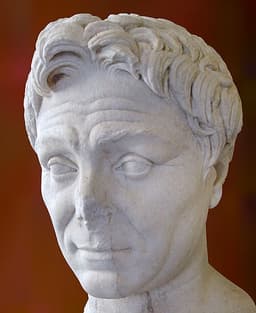
Pompey the Great
General · Ancient
57.9Total
Basic Information
Born
-550
-106
Died
-489
-48
Era
Ancient
Ancient
Nationality
Greece
Roman Republic
Occupation
General
General
Civilization
Western
Western
Score Comparison
Military (10%)
78.0
88.0
Political (20%)
25.0
68.0
Influence (20%)
61.0
55.0
Legacy (20%)
58.0
40.0
Leadership (15%)
40.4
48.8
Strategy (15%)
66.3
78.4
TOTAL
54.0
57.9
Miltiades — Complete Timeline
490 BC
Battle of MarathonWar
Miltiades commanded the Athenian army against the Persian invasion force at Marathon. Despite being outnumbered, the Athenians achieved a decisive victory, killing approximately 6,400 Persians while losing only 192 men. This victory halted the first Persian invasion of Greece.
Greco-Persian WarsAthenian VictoryMarathon
Impact: global
489 BC
Expedition to ParosWar
Miltiades led an Athenian naval expedition against the island of Paros, which had supported the Persians. The siege failed, and Miltiades was wounded. Upon returning to Athens, he was prosecuted for deceiving the people.
Athenian ExpeditionFailureTrial
destructive
Trial and ConvictionPolitical Action◆ Major
Miltiades was put on trial in Athens for misleading the assembly regarding the Parian expedition. He was convicted and fined a large sum. Unable to pay, he was imprisoned, where he died from his wounds.
TrialAthenian DemocracyFall from Grace
Impact: nationaltragic
Pompey the Great — Complete Timeline
67 BC
Clearing the Mediterranean of PiratesWar◆ Major
Pompey was granted extraordinary command under the Lex Gabinia to eliminate piracy in the Mediterranean. He divided the sea into sectors and within three months destroyed pirate fleets and captured their strongholds, restoring Roman trade routes and grain supply.
PiracyRoman NavyGrain Supply
Impact: regionalconstructive
66 BC
Conquest of the East (Third Mithridatic War)War◆ Major
Pompey took command against Mithridates VI of Pontus, defeating him and forcing his suicide. He then annexed Syria, captured Jerusalem, and established Roman provinces in the East. He organized the region into client kingdoms and provinces, extending Roman hegemony to the Euphrates.
Eastern ConquestRoman EmpireClient Kingdoms
Impact: global
60 BC
Formation of the First TriumviratePolitical Action◆ Major
Pompey, Caesar, and Crassus formed a political alliance to advance their individual ambitions. Pompey sought ratification of his Eastern settlements and land for his veterans. The pact dominated Roman politics for a decade until Crassus's death in 53 BC.
AllianceRoman PoliticsPower Sharing
Impact: global
48 BC
Battle of PharsalusWar
Pompey commanded the senatorial army against Caesar at Pharsalus in Greece. Despite numerical superiority, his forces were defeated by Caesar's veterans. Pompey fled to Egypt, expecting refuge, but was assassinated on the orders of the Egyptian court upon arrival.
Roman Civil WarDefeatDeath
Impact: globaltragic
Assassination in EgyptPolitical Action◆ Major
After his defeat at Pharsalus, Pompey landed in Egypt seeking refuge. On September 28, 48 BC, he was stabbed to death by former Roman soldiers serving the Egyptian king Ptolemy XIII, who hoped to curry favor with Caesar. His head was presented to Caesar.
AssassinationEgyptCivil War
Impact: regionaltragic
Expert Analysis
Origins
Miltiades was born around 550 BCE into the wealthy Athenian Philaidae clan. His father Cimon was a prominent figure, and Miltiades grew up with political connections and military training. He served as a tyrant in the Thracian Chersonese, gaining experience in command and diplomacy. His early exposure to Persian power shaped his later strategies.
Pompey the Great was born Gnaeus Pompeius Magnus on September 29, 106 BCE in Picenum, Italy. His father Gnaeus Pompeius Strabo was a successful general and consul, but died in 87 BCE, leaving Pompey to navigate the turbulent Marian-Sullan civil wars. Pompey raised three legions from his father's veterans, demonstrating early resourcefulness.
Rise to Power
Miltiades rose to prominence through his victory at the Battle of Marathon in 490 BCE. As one of the ten Athenian generals (strategoi), he convinced the polemarch Callimachus to attack the Persian forces. The Athenians achieved a decisive victory, killing 6,400 Persians while losing only 192 men. This triumph made Miltiades the most influential figure in Athens for a brief period. However, his rise was cut short by his failed expedition to Paros and subsequent trial.
Pompey's rise was more sustained. He first gained fame by suppressing the followers of Marius in Sicily and Africa in 82-81 BCE, earning the nickname "the teenage butcher" from Sulla. He then demanded a triumph, which Sulla reluctantly granted. Pompey's major turning point came with the Lex Gabinia in 67 BCE, granting him extraordinary command to clear the Mediterranean of pirates. He succeeded within three months, dividing the sea into sectors and using coordinated sweeps. This led to the Lex Manilia in 66 BCE, giving him command against Mithridates VI. Pompey defeated Mithridates, annexed Syria, captured Jerusalem, and established Roman provinces in the East.
Leadership & Governance
Miltiades' leadership was bold but flawed. At Marathon, he employed a strategic feint, weakening his center and strengthening the wings, which enveloped the Persian line. This scored 66.3 in strategy. However, his political score of 25.0 reflects poor judgment: he misled the assembly about the Parian expedition, promising easy victory, but failed and was wounded. His governance was limited; he was a military commander rather than a statesman.
Pompey's leadership combined military prowess with political ambition. His military score of 88.0 and strategy of 78.4 demonstrate his effectiveness. He was an excellent organizer, as shown in the pirate campaign. Politically, he scored 68.0, but his governance was marred by indecision. He joined the First Triumvirate with Caesar and Crassus in 60 BCE, but later broke with Caesar, leading to civil war. His leadership style was cautious; he avoided decisive action at Pharsalus, contributing to his defeat.
Triumph & Tragedy
Miltiades' greatest triumph was Marathon, a victory that saved Greece from Persian domination and boosted Athenian morale. It was a turning point in the Greco-Persian Wars. His tragedy was the Parian expedition and subsequent trial. Wounded and unable to pay the fine, he died in prison around 489 BCE. His reputation suffered, though later generations revered him.
Pompey's triumphs include clearing the Mediterranean of pirates in 67 BCE, conquering the East, and organizing Roman provinces. He celebrated three triumphs, the last in 61 BCE for his Eastern victories. His tragedy was the civil war against Caesar. Despite having a larger army at Pharsalus (45,000 vs Caesar's 22,000), he was defeated due to poor tactical decisions and cavalry mismanagement. He fled to Egypt and was assassinated on September 28, 48 BCE, by former soldiers who saw him as a liability.
Character & Destiny
Miltiades was decisive and courageous at Marathon, but hubristic afterward. His character score of 40.4 reflects his inability to sustain success. He overpromised and underdelivered, leading to his downfall. His destiny was tied to the volatile Athenian democracy, which punished failure harshly.
Pompey was a brilliant organizer but a poor political strategist in the end. His leadership score of 48.8 indicates mediocrity in crisis. He vacillated between confrontation and compromise with Caesar. His character—pride in his status as "Magnus" but reluctance to fight—led to his tragic end. He underestimated Caesar's determination and skill.
Legacy
Miltiades' legacy is primarily the Battle of Marathon, which became a symbol of Greek resistance. It inspired later generations and established Athens as a major power. His military tactics influenced later Greek commanders. However, his overall impact is limited; he scored 61.0 in influence and 58.0 in legacy. He is remembered as a one-battle hero.
Pompey's legacy is more complex. He expanded Roman power significantly, establishing provinces that lasted centuries. His administrative reforms in the East set precedents for imperial governance. However, his defeat to Caesar ended the Republic, paving the way for the Empire. His influence score of 55.0 and legacy of 40.0 reflect his overshadowing by Caesar. Nevertheless, he remains a key figure in Roman history.
Conclusion
Pompey had greater impact than Miltiades. With a total score of 57.9 vs 54.0, Pompey's achievements spanned military conquest, piracy suppression, and political maneuvering. His actions shaped the Roman Republic's final decades, while Miltiades' influence was confined to a single battle. Although Marathon was crucial, Pompey's campaigns altered the Mediterranean world for centuries. Therefore, Pompey the Great is the more significant historical figure.
Rankings
🥇
Pompey the GreatLeader
Mil: 88.0Pol: 68.0Inf: 55.0
57.9
🥈
Miltiades
Mil: 78.0Pol: 25.0Inf: 61.0
54.0
+3.9 behind
How This Comparison Works
Algorithm
Each figure is scored on 6 dimensions (0—100 scale) based on structured historical data: Military (10%), Political (20%), Influence (20%), Legacy (20%), Leadership (15%), Strategy (15%). The weighted total produces the final ranking.
Data Sources
Scores are computed from structured sub-indicators in the database. Scale factors adjust for era (Ancient ×0.85, Modern ×1.0) and civilization size (Eastern ×1.05, Other ×0.80) to account for differences in population and military scale.
Maximum 3 Figures
Comparisons are limited to 2—3 figures to ensure readability and statistical meaningfulness.
Error Margins
±5 points per dimension — Sub-scores are derived from historical records with inherent uncertainty. Two figures within 5 points on a dimension should be considered roughly equivalent in that area.
Total Score Accuracy
±3 points overall — The weighted combination of 6 dimensions produces a total score with approximately ±3 points of uncertainty. Differences of less than 3 points are not statistically significant— the figures are effectively tied.
Known Limitations
- Historical records are incomplete and uneven across civilizations
- Figures from oral-tradition societies may be underrepresented
- Occupation labels can misclassify multi-role figures
- Scores measure capability and impact, not moral character
- Quantitative scoring is a comparison tool, not absolute truth
Capability Radar
Military (10%) — Battles & Warfare
Battles
70
85
Win Rate
75
90
Expansion
40
92
Political (20%) — Governance & Reform
Reform
20
65
Diplomacy
50
80
Economy
30
70
Influence (20%) — Cultural & Global Reach
Cultural
60
75
Global
55
75
Legacy (20%) — Historical Impact
Historical
70
85
Longevity
65
80
Leadership (15%) — Power & Stability
Tenure
40
85
Stability
35
60
Strategy (15%) — Tactics & Innovation
Strategy
70
88
Tactics
85
80
Reform
30
70
Similar Comparisons
Comments & Discussion
No comments yet. Be the first to share your thoughts!