Loading...
This comparison has not been analyzed yet.
One-time AI generation (~1 minute). Scores and timeline are already available below.
Mirza Raja Jai Singh vs Mohamed Hamdan Dagalo
Mirza Raja Jai Singh leads by 14.7 pts · 2 figures compared
…

Mirza Raja Jai Singh
General · Modern
62.7Total
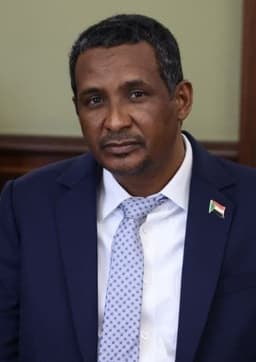
Mohamed Hamdan Dagalo
General · Modern
48.0Total
Basic Information
Born
1611
1975
Died
1667
—
Era
Modern
Modern
Nationality
India
Sudan
Occupation
General
General
Civilization
Indian
Other
Score Comparison
Military (10%)
70.0
55.0
Political (20%)
72.0
37.9
Influence (20%)
58.3
53.3
Legacy (20%)
58.0
41.7
Leadership (15%)
68.0
50.7
Strategy (15%)
56.2
55.0
TOTAL
62.7
48.0
Mirza Raja Jai Singh — Complete Timeline
1665 AD
Battle of PurandarWar◆ Major
Mirza Raja Jai Singh led the Mughal army against Shivaji at Purandar. After a siege, Shivaji surrendered and signed the Treaty of Purandar, ceding forts and agreeing to serve the Mughals.
Mughal-Maratha WarSiegeTreaty
Impact: regional
Campaign in the DeccanWar◆ Major
Jai Singh was appointed commander of the Mughal Deccan campaign. He subdued several Maratha chiefs and expanded Mughal influence, but his efforts were undermined by Aurangzeb's distrust.
Deccan CampaignMughal Expansion
Impact: regional
Treaty of PurandarPolitical Action◆ Major
Jai Singh negotiated the Treaty of Purandar with Shivaji. Shivaji surrendered 23 forts, paid indemnity, and agreed to join the Mughal campaign in the Deccan. In return, he was granted the title of Mansabdar.
TreatyShivajiMughal Empire
Impact: regional
Mohamed Hamdan Dagalo — Complete Timeline
2003 AD
Led the RSF in the Darfur ConflictWar◆ Major
Dagalo led the RSF (then Janjaweed) in the Darfur conflict, where they were accused of war crimes, including ethnic cleansing and mass atrocities against non-Arab populations. The conflict resulted in hundreds of thousands of deaths and millions displaced.
War CrimesDarfurConflict
Impact: regionaldestructive
2013 AD
Appointed Commander of the Rapid Support ForcesPolitical Action◆ Major
Mohamed Hamdan Dagalo was appointed Commander of the Rapid Support Forces (RSF), a paramilitary group formed from Janjaweed militias. The RSF became a key force in Sudan's conflicts, including the Darfur war and later the 2023 civil war.
MilitaryParamilitarySudan
Impact: national
2019 AD
Became Deputy Chairman of the Sovereignty CouncilPolitical Action◆ Major
Dagalo was appointed Deputy Chairman of the Sovereignty Council, making him the second-highest ranking official in Sudan's transitional government. This position gave him significant political power alongside General al-Burhan.
TransitionPower SharingSudan
Impact: national
2023 AD
Initiated the 2023 Sudan ConflictWar◆ Major
Dagalo's RSF launched a major offensive against the Sudanese Armed Forces in April 2023, triggering a full-scale civil war. The conflict caused widespread destruction, a humanitarian crisis, and the displacement of millions in Sudan.
Civil WarSudanConflict
Impact: regionaldestructive
This comparison has not been analyzed yet.
One-time AI generation (~1 minute). Scores and timeline are already available below.
Rankings
🥇
Mirza Raja Jai SinghLeader
Mil: 70.0Pol: 72.0Inf: 58.3
62.7
🥈
Mohamed Hamdan Dagalo
Mil: 55.0Pol: 37.9Inf: 53.3
48.0
+14.7 behind
How This Comparison Works
Algorithm
Each figure is scored on 6 dimensions (0—100 scale) based on structured historical data: Military (10%), Political (20%), Influence (20%), Legacy (20%), Leadership (15%), Strategy (15%). The weighted total produces the final ranking.
Data Sources
Scores are computed from structured sub-indicators in the database. Scale factors adjust for era (Ancient ×0.85, Modern ×1.0) and civilization size (Eastern ×1.05, Other ×0.80) to account for differences in population and military scale.
Maximum 3 Figures
Comparisons are limited to 2—3 figures to ensure readability and statistical meaningfulness.
Error Margins
±5 points per dimension — Sub-scores are derived from historical records with inherent uncertainty. Two figures within 5 points on a dimension should be considered roughly equivalent in that area.
Total Score Accuracy
±3 points overall — The weighted combination of 6 dimensions produces a total score with approximately ±3 points of uncertainty. Differences of less than 3 points are not statistically significant— the figures are effectively tied.
Known Limitations
- Historical records are incomplete and uneven across civilizations
- Figures from oral-tradition societies may be underrepresented
- Occupation labels can misclassify multi-role figures
- Scores measure capability and impact, not moral character
- Quantitative scoring is a comparison tool, not absolute truth
Capability Radar
Military (10%) — Battles & Warfare
Battles
65
45
Win Rate
55
40
Expansion
55
50
Political (20%) — Governance & Reform
Reform
50
20
Diplomacy
70
35
Economy
55
15
Influence (20%) — Cultural & Global Reach
Cultural
65
20
Global
45
30
Legacy (20%) — Historical Impact
Historical
60
25
Longevity
55
15
Leadership (15%) — Power & Stability
Tenure
60
40
Stability
60
10
Strategy (15%) — Tactics & Innovation
Strategy
68
45
Tactics
70
50
Reform
60
55
Similar Comparisons
Comments & Discussion
No comments yet. Be the first to share your thoughts!