Loading...
Mithridates I of Parthia vs Nabopolassar
Mithridates I of Parthia leads by 12.6 pts · 2 figures compared
…
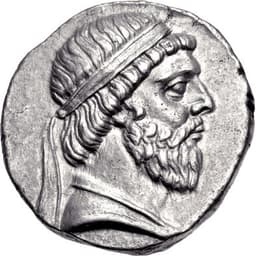
Mithridates I of Parthia
Emperor · Ancient
64.2Total

Nabopolassar
Emperor · Ancient
51.6Total
Basic Information
Born
-195
-626
Died
-132
-605
Era
Ancient
Ancient
Nationality
Parthian Empire
Babylon
Occupation
Emperor
Emperor
Civilization
Middle Eastern
Middle Eastern
Score Comparison
Military (10%)
85.0
67.3
Political (20%)
55.0
45.0
Influence (20%)
60.0
56.4
Legacy (20%)
56.0
50.0
Leadership (15%)
78.0
40.0
Strategy (15%)
67.2
55.0
TOTAL
64.2
51.6
Mithridates I of Parthia — Complete Timeline
141 BC
Conquest of Media and MesopotamiaWar
Mithridates I conquered Media and Mesopotamia from the Seleucid Empire, capturing the cities of Ecbatana and Seleucia-on-the-Tigris. These conquests transformed Parthia from a minor kingdom into a major imperial power controlling the Iranian plateau and the Tigris-Euphrates valley.
Parthian ExpansionSeleucid DeclineConquest
Impact: regionalconstructive
140 BC
Adoption of the Title 'King of Kings'Political Action◆ Major
Mithridates I adopted the Achaemenid title 'King of Kings' (Shahanshah) on his coinage and inscriptions. This act asserted Parthian legitimacy as the successor to the Persian Empire and established the ideological foundation for the Parthian Empire.
Royal TitulaturePropagandaAchaemenid Legacy
Impact: regionalconstructive
138 BC
Capture of Demetrius II NicatorWar◆ Major
Mithridates I defeated and captured the Seleucid king Demetrius II Nicator during a campaign to reclaim the eastern provinces. Demetrius was held captive in Parthia for ten years, during which Mithridates consolidated his conquests.
Seleucid-Parthian WarCaptivityPrisoner
Impact: regionalconstructive
Nabopolassar — Complete Timeline
626 BC
Revolt against AssyriaPolitical Action
Nabopolassar, a Chaldean chieftain, led a revolt against Assyrian rule in Babylon. He defeated the Assyrian garrison and declared himself king of Babylon, founding the Neo-Babylonian Empire.
RevoltIndependenceNeo-Babylonian Empire
Impact: regional
615 BC
Alliance with the MedesPolitical Action◆ Major
Nabopolassar formed an alliance with Cyaxares, king of the Medes, to jointly attack the Assyrian Empire. This alliance was sealed by the marriage of Nabopolassar's son Nebuchadnezzar II to Cyaxares' daughter Amytis.
AllianceMedesAssyrian Empire
Impact: regionalconstructive
612 BC
Sack of NinevehWar
Nabopolassar, in alliance with the Medes and Scythians, besieged and sacked the Assyrian capital Nineveh. The city was destroyed, and the Assyrian king Sinsharishkun was killed, effectively ending the Assyrian Empire.
SackNinevehEnd of Assyrian Empire
Impact: globaldestructive
609 BC
Destruction of the Assyrian Army at HarranWar◆ Major
Nabopolassar and his allies defeated the last remnants of the Assyrian army at Harran, where the Assyrians had regrouped with Egyptian support. This victory eliminated any hope of an Assyrian revival and secured Babylonian dominance.
BattleHarranAssyrian Empire
Impact: regional
Expert Analysis
Origins
Mithridates I of Parthia (r. c. 171–132 BCE) was born into the Arsacid dynasty, founded by his great-grandfather Arsaces I. His father Phriapatius ruled a modest kingdom in northeastern Iran. Little is known of his early life, but he likely received military training as a Parthian noble. In contrast, Nabopolassar (r. 626–605 BCE) was a Chaldean chieftain from the Bit-Yakin tribe in southern Mesopotamia. His origins were obscure; he rose from the ranks of the Assyrian provincial administration. While Mithridates inherited a stable kingdom, Nabopolassar had to create his own power base from scratch.
Rise to Power
Mithridates I ascended the Parthian throne around 171 BCE, succeeding his brother Phraates I. He immediately expanded Parthian territory westward, exploiting the weakening Seleucid Empire. His key turning point was the conquest of Media in 148 BCE, capturing Ecbatana. He then took Mesopotamia, including Seleucia-on-the-Tigris, in 141 BCE. These victories established Parthia as a major power. Nabopolassar's rise began in 626 BCE when he revolted against Assyrian rule after the death of the Assyrian king Ashurbanipal. He defeated the Assyrian garrison in Babylon and declared himself king. His turning point was forming an alliance with the Medes under Cyaxares around 616 BCE. Together, they besieged Nineveh in 612 BCE, sacking the city and destroying the Assyrian Empire. Nabopolassar's military score of 67.3 reflects his effective coalition warfare, while Mithridates's score of 85.0 highlights his direct conquests.
Leadership & Governance
Mithridates I adopted the Achaemenid title "King of Kings" (Shahanshah) and minted coins with Greek and Persian motifs, blending cultures. He allowed local rulers to remain in place as vassals, a strategy that stabilized his vast empire. His political score of 55.0 indicates moderate success in administration. Nabopolassar, with a political score of 45.0, focused on restoring Babylonian temples and infrastructure. He rebuilt the Etemenanki ziggurat and promoted the cult of Marduk. His alliance with the Medes was sealed by the marriage of his son Nebuchadnezzar II to Amytis of Media, demonstrating diplomatic skill. However, his reign was primarily military, and he died before fully consolidating the empire.
Triumph & Tragedy
Mithridates I's greatest triumph was capturing the Seleucid king Demetrius II Nicator in 138 BCE, after Demetrius attempted to reclaim the east. This victory solidified Parthian control over Mesopotamia. However, his failure to fully integrate the conquered territories led to rebellions after his death. His legacy score of 56.0 reflects this mixed outcome. Nabopolassar's triumph was the destruction of Nineveh and the end of Assyrian domination. His tragedy was that he did not live to see the peak of his empire; he died in 605 BCE, leaving his son Nebuchadnezzar II to defeat the Egyptians at Carchemish. Nabopolassar's legacy score of 50.0 indicates a short reign with limited long-term institutional impact.
Character & Destiny
Mithridates I was a pragmatic conqueror. He knew when to use force and when to show clemency, as seen in his treatment of captured Greek cities. His adoption of Persian titles and Hellenistic coinage shows cultural adaptability. His leadership score of 78.0 suggests he inspired loyalty among his troops. Nabopolassar was a rebel leader driven by ambition. He risked everything by revolting against Assyria and succeeded through alliances. His leadership score of 40.0 indicates he may have relied heavily on his allies, particularly the Medes. Both men's characters were shaped by their circumstances: Mithridates built on an existing kingdom, while Nabopolassar had to destroy an old order.
Legacy
Mithridates I transformed Parthia from a minor kingdom into an empire that rivaled Rome for centuries. His conquests laid the foundation for the Parthian Empire's golden age. The title "King of Kings" continued under his successors. Nabopolassar's legacy is the Neo-Babylonian Empire, which flourished under his son Nebuchadnezzar II. However, the empire lasted only until 539 BCE, when Cyrus the Great conquered Babylon. Nabopolassar's influence score of 56.4 is lower than Mithridates's 60.0, as Parthia had a longer-lasting impact on the region.
Conclusion
Mithridates I had a greater impact than Nabopolassar. His military score of 85.0 and total score of 64.2 surpass Nabopolassar's 67.3 and 51.6. While Nabopolassar ended the Assyrian Empire, his own empire was short-lived. Mithridates established Parthia as a major power that endured for nearly 500 years, shaping the history of Iran and the Middle East. The Parthian Empire's resistance to Rome influenced the development of both civilizations. Thus, Mithridates I is the more significant figure in terms of lasting historical impact.
Rankings
🥇
Mithridates I of ParthiaLeader
Mil: 85.0Pol: 55.0Inf: 60.0
64.2
🥈
Nabopolassar
Mil: 67.3Pol: 45.0Inf: 56.4
51.6
+12.6 behind
How This Comparison Works
Algorithm
Each figure is scored on 6 dimensions (0—100 scale) based on structured historical data: Military (10%), Political (20%), Influence (20%), Legacy (20%), Leadership (15%), Strategy (15%). The weighted total produces the final ranking.
Data Sources
Scores are computed from structured sub-indicators in the database. Scale factors adjust for era (Ancient ×0.85, Modern ×1.0) and civilization size (Eastern ×1.05, Other ×0.80) to account for differences in population and military scale.
Maximum 3 Figures
Comparisons are limited to 2—3 figures to ensure readability and statistical meaningfulness.
Error Margins
±5 points per dimension — Sub-scores are derived from historical records with inherent uncertainty. Two figures within 5 points on a dimension should be considered roughly equivalent in that area.
Total Score Accuracy
±3 points overall — The weighted combination of 6 dimensions produces a total score with approximately ±3 points of uncertainty. Differences of less than 3 points are not statistically significant— the figures are effectively tied.
Known Limitations
- Historical records are incomplete and uneven across civilizations
- Figures from oral-tradition societies may be underrepresented
- Occupation labels can misclassify multi-role figures
- Scores measure capability and impact, not moral character
- Quantitative scoring is a comparison tool, not absolute truth
Capability Radar
Military (10%) — Battles & Warfare
Battles
75
65
Win Rate
80
70
Expansion
90
70
Political (20%) — Governance & Reform
Reform
60
65
Diplomacy
75
70
Economy
65
60
Influence (20%) — Cultural & Global Reach
Cultural
55
50
Global
65
50
Legacy (20%) — Historical Impact
Historical
70
65
Longevity
60
55
Leadership (15%) — Power & Stability
Tenure
70
60
Stability
70
55
Strategy (15%) — Tactics & Innovation
Strategy
85
75
Tactics
70
60
Reform
65
55
Similar Comparisons
Comments & Discussion
No comments yet. Be the first to share your thoughts!