Loading...
Mithridates I of Parthia vs Napoleon Bonaparte
Napoleon Bonaparte leads by 6.7 pts · 2 figures compared
…
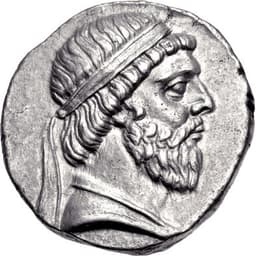
Mithridates I of Parthia
Emperor · Ancient
64.2Total

Napoleon Bonaparte
General · Modern
70.9Total
Basic Information
Born
-195
1769
Died
-132
1821
Era
Ancient
Modern
Nationality
Parthian Empire
France
Occupation
Emperor
General
Civilization
Middle Eastern
Western
Score Comparison
Military (10%)
85.0
94.0
Political (20%)
55.0
72.0
Influence (20%)
60.0
40.0
Legacy (20%)
56.0
80.0
Leadership (15%)
78.0
78.0
Strategy (15%)
67.2
90.0
TOTAL
64.2
70.9
Mithridates I of Parthia — Complete Timeline
141 BC
Conquest of Media and MesopotamiaWar
Mithridates I conquered Media and Mesopotamia from the Seleucid Empire, capturing the cities of Ecbatana and Seleucia-on-the-Tigris. These conquests transformed Parthia from a minor kingdom into a major imperial power controlling the Iranian plateau and the Tigris-Euphrates valley.
Parthian ExpansionSeleucid DeclineConquest
Impact: regionalconstructive
140 BC
Adoption of the Title 'King of Kings'Political Action◆ Major
Mithridates I adopted the Achaemenid title 'King of Kings' (Shahanshah) on his coinage and inscriptions. This act asserted Parthian legitimacy as the successor to the Persian Empire and established the ideological foundation for the Parthian Empire.
Royal TitulaturePropagandaAchaemenid Legacy
Impact: regionalconstructive
138 BC
Capture of Demetrius II NicatorWar◆ Major
Mithridates I defeated and captured the Seleucid king Demetrius II Nicator during a campaign to reclaim the eastern provinces. Demetrius was held captive in Parthia for ten years, during which Mithridates consolidated his conquests.
Seleucid-Parthian WarCaptivityPrisoner
Impact: regionalconstructive
Napoleon Bonaparte — Complete Timeline
1799 AD
Coup of 18 BrumaireOther◆ Major
Napoleon Bonaparte, with support from his brother Lucien and key political figures, overthrew the Directory in a bloodless coup. He established the Consulate with himself as First Consul, effectively becoming the ruler of France. This event ended the French Revolution's most unstable period.
French RevolutionCoupRise to Power
Impact: regional
1804 AD
Promulgation of the Napoleonic CodeOther◆ Major
Napoleon enacted the Civil Code of the French, known as the Napoleonic Code, a comprehensive set of laws that replaced the fragmented feudal legal systems. The code established legal equality, protected property rights, and secularized law. It became the basis for legal systems in many European and world countries.
Legal ReformNapoleonic CodeCivil Law
Impact: globalconstructive
1805 AD
Battle of AusterlitzWar◆ Major
Napoleon's Grande Arm
Napoleonic WarsBattleDecisive Victory
Impact: global
1812 AD
Invasion of RussiaWar◆ Major
Napoleon led the Grande Arm
Napoleonic WarsInvasionDisaster
Impact: globaldestructive
1815 AD
Battle of WaterlooWar◆ Major
Napoleon's French army was defeated by the combined forces of the Duke of Wellington's Anglo-Allied army and Gebhard Leberecht von Bl
Napoleonic WarsBattleFinal Defeat
Impact: globaldestructive
Expert Analysis
mithridates-i-of-parthia-vs-napoleon-bonaparte
# The Emperor and the King of Kings
On a June morning in 1815, Napoleon Bonaparte watched his cavalry charge uphill into the muddy fields of Waterloo. It was a gamble—the kind that had made him master of Europe. Two thousand years earlier, another conqueror stood on the plains of Media, watching his horsemen sweep across the Tigris. Mithridates I of Parthia, unlike Napoleon, would die in his bed, his empire intact. What separates a man who reshapes the world from one who reshapes his region? The answer lies not in their victories, but in the forces that drove them.
Origins
Napoleon was born in 1769 on Corsica, an island that had just become French. He was small, ambitious, and deeply conscious of being an outsider. His family was minor nobility—enough to send him to military school, not enough to secure him easy advancement. The French Revolution shattered the old order, and Napoleon, like a shark smelling blood, swam into the chaos. He was a child of modernity, of meritocracy, of gunpowder and mass armies.
Mithridates I came from a very different world. Born around 195 BCE, he was the son of Phriapatius, a king of a semi-nomadic confederation that had carved a kingdom from the ruins of Alexander’s empire. The Parthians were horsemen from the steppes, heirs to Persian traditions but outsiders to Greek civilization. Mithridates inherited a realm of warriors and traders, where legitimacy came from the bow and the bloodline. His era was one of empires—Seleucid, Greek, and soon, Roman—but he had no revolution to ride. He had only tradition.
Rise to Power
Napoleon’s rise was a series of calculated explosions. At 24, he drove the British from Toulon. At 26, he crushed a royalist uprising in Paris with a “whiff of grapeshot.” At 27, he conquered Italy, turning a ragtag army into a legend. Each victory was a stepping stone to power. By 1799, he was First Consul; by 1804, Emperor. His path was vertical—a ladder of ambition in a society that had torn down its old hierarchies.
Mithridates I rose differently. He became king around 171 BCE, inheriting a realm that was strong but bounded. His opportunity came when the Seleucid Empire—the Greek successor state that dominated the East—began to fracture. While Seleucid kings fought civil wars and Jewish rebellions, Mithridates moved. In 141 BCE, he conquered Media and Mesopotamia, capturing Ecbatana and the great Greek city of Seleucia-on-the-Tigris. His rise was horizontal—a slow expansion into a vacuum, not a leap into a void.
Leadership & Governance
Napoleon governed like a force of nature. He centralized France, created the Napoleonic Code, established the Bank of France, and reformed education. He was a military genius who understood logistics, artillery, and morale—his 93.0 strategy score reflects a mind that could orchestrate armies across continents. But his political wisdom was mercurial: he crowned himself emperor, placed family on thrones, and alienated allies. His leadership was charismatic, but brittle—men followed him to Moscow and died.
Mithridates I governed like a builder. He adopted the Achaemenid title “King of Kings” (Shahanshah) around 140 BCE, signaling continuity with Persia’s glorious past. He minted coins, patronized Zoroastrian temples, and allowed Greek cities to keep their autonomy. His political score of 80.4 reflects a ruler who understood that empire is not just conquest, but integration. His military score of 64.0 is lower than Napoleon’s 94.0, but he never needed to fight a Waterloo—he chose his battles where the enemy was already broken.
Triumph & Tragedy
Napoleon’s greatest moment was Austerlitz in 1805, where he destroyed the combined armies of Russia and Austria. His worst was the invasion of Russia in 1812—600,000 men marched east; fewer than 40,000 returned. Then came Waterloo, where his luck finally ran out. He died in exile on Saint Helena in 1821, a prisoner of the British, his empire erased.
Mithridates I’s greatest moment was the capture of Demetrius II Nicator in 138 BCE. The Seleucid king had marched to reclaim the East, but Mithridates defeated and imprisoned him—a humiliation that echoed through the ancient world. His tragedy was less dramatic: he died around 132 BCE, probably of old age, his work unfinished. His son Phraates II would face the Scythians and die in battle, but Mithridates never saw that collapse. He left the stage at the apex of his power.
Character & Destiny
Napoleon’s character was a furnace of ambition. He once said, “Impossible is a word to be found only in the dictionary of fools.” He believed he could bend reality to his will—and for a time, he did. But that same arrogance drove him to overreach. He could not stop. His destiny was to burn bright and fast, like a meteor.
Mithridates I’s character was a mountain. He was patient, calculating, and deeply aware of limits. He did not try to conquer Greece or India—he consolidated what he took. His destiny was to build a foundation, not a monument. The Parthian Empire would last for centuries after him, a testament to his restraint.
Legacy
Napoleon’s legacy is a contradiction. He spread the ideals of the French Revolution—nationalism, meritocracy, legal reform—across Europe, but he also caused millions of deaths. The Napoleonic Code influences law from France to Louisiana to Japan. He is remembered as both a tyrant and a liberator, a genius and a fool. His total score of 82.4 reflects this complexity.
Mithridates I’s legacy is quieter but more enduring. He transformed Parthia from a regional kingdom into an empire that would rival Rome. He established a model of Persian-Greek synthesis that lasted until the Sassanids. He is less famous than Napoleon, but his empire outlasted Napoleon’s by over 400 years. His total score of 71.6 understates his impact—because impact is not always measured in headlines.
Conclusion
Napoleon and Mithridates I faced the same question: how to build something lasting. Napoleon chose speed, brilliance, and risk. Mithridates chose patience, tradition, and integration. One burned out in a decade; the other built a dynasty. In the end, perhaps the difference is not in their victories, but in their understanding of time. Napoleon lived as if tomorrow would never come. Mithridates ruled as if he had all the time in the world. And perhaps, in the long arc of history, that made all the difference.
Rankings
🥇
Napoleon BonaparteLeader
Mil: 94.0Pol: 72.0Inf: 40.0
70.9
🥈
Mithridates I of Parthia
Mil: 85.0Pol: 55.0Inf: 60.0
64.2
+6.7 behind
How This Comparison Works
Algorithm
Each figure is scored on 6 dimensions (0—100 scale) based on structured historical data: Military (10%), Political (20%), Influence (20%), Legacy (20%), Leadership (15%), Strategy (15%). The weighted total produces the final ranking.
Data Sources
Scores are computed from structured sub-indicators in the database. Scale factors adjust for era (Ancient ×0.85, Modern ×1.0) and civilization size (Eastern ×1.05, Other ×0.80) to account for differences in population and military scale.
Maximum 3 Figures
Comparisons are limited to 2—3 figures to ensure readability and statistical meaningfulness.
Error Margins
±5 points per dimension — Sub-scores are derived from historical records with inherent uncertainty. Two figures within 5 points on a dimension should be considered roughly equivalent in that area.
Total Score Accuracy
±3 points overall — The weighted combination of 6 dimensions produces a total score with approximately ±3 points of uncertainty. Differences of less than 3 points are not statistically significant— the figures are effectively tied.
Known Limitations
- Historical records are incomplete and uneven across civilizations
- Figures from oral-tradition societies may be underrepresented
- Occupation labels can misclassify multi-role figures
- Scores measure capability and impact, not moral character
- Quantitative scoring is a comparison tool, not absolute truth
Capability Radar
Military (10%) — Battles & Warfare
Battles
75
95
Win Rate
80
90
Expansion
90
95
Political (20%) — Governance & Reform
Reform
60
95
Diplomacy
75
80
Economy
65
85
Influence (20%) — Cultural & Global Reach
Cultural
55
85
Global
65
90
Legacy (20%) — Historical Impact
Historical
70
95
Longevity
60
90
Leadership (15%) — Power & Stability
Tenure
70
85
Stability
70
70
Strategy (15%) — Tactics & Innovation
Strategy
85
95
Tactics
70
98
Reform
65
92
Similar Comparisons
Comments & Discussion
CavalryKing6/17/2026
Stick to your Lancers, Napoleon. Waterloo proved what happens when you’re in love with your own legend. Mithridates I knew cavalry—his cataphracts were armored shock troops that shattered Seleucid phalanxes at Ecbatana (148 BCE). Napoleon sent his cavalry into mud at Waterloo, a fatal misjudgment. Parthia’s king understood terrain and timing; Napoleon got drunk on his own hype. Empires built on ego crumble. Mithridates died in bed; Napoleon died on St. Helena. That’s the score.|
战略杠精6/17/2026
拿战粉总吹拿破仑的“天才”,但天才顶不住后勤崩溃。你看他1812年征俄,马匹冻死、补给线拉成蛛丝,最后灰溜溜跑回巴黎。米特拉达梯一世呢?人家打塞琉古帝国时稳扎稳打,占了米底和巴比伦就停手消化,从不贪功冒进。拿破仑输就输在总想一口吞下整块蛋糕,结果噎死自己。历史的教条:会刹车的人才能笑到最后。|
NumismaticSkeptic6/17/2026
Before you deify either, ask where their coinage went. Mithridates I minted silver drachms showing himself with a Greek-style diadem—propaganda to claim Seleucid legitimacy. Napoleon? His francs bear his face like a Roman emperor’s laurel. But here’s the kicker: Mithridates’ coins circulated for centuries in Iran; Napoleon’s currency vanished with his regime. Real legacy isn’t battlefield glory—it’s economic penetration. Who’s still using your money?|
古典学探员6/17/2026
把拿破仑和帕提亚国王比,本身就是文化错位。拿破仑是启蒙运动的孩子,靠宪法和法典统治;米特拉达梯一世是希腊化世界的东方君主,用《波斯古经》和游牧传统治民。拿破仑在金字塔下打仗,米特拉达梯在塞琉西亚建城。两人连“赢”的定义都不同:拿破仑想重塑世界秩序,米特拉达梯只想在帝国间求生存。不是谁更伟大,而是根本不在一个维度。|
RevisionistMemeLord6/17/2026
Stop romanticizing the guy who lost his empire in one day. Mithridates I fought for twenty years, expanded Parthia from the Caspian to the Euphrates, and never lost a decisive battle. Napoleon? He won at Austerlitz, sure, but he also fumbled Egypt, bled Spain dry, and got exiled twice. History loves the flashy guy, but the quiet, methodical king-archer built something that lasted. You don’t see “Parthian Syndrome” in psychology textbooks for a reason.|