Loading...
Mohamed Abdel Ghani el-Gamasy vs Takeda Shingen
Takeda Shingen leads by 3.6 pts · 2 figures compared
…
Mohamed Abdel Ghani el-Gamasy
General · Modern
58.2Total

Takeda Shingen
General · Modern
61.8Total
Basic Information
Born
1921
1521
Died
—
1573
Era
Modern
Modern
Nationality
Egypt
Japan
Occupation
General
General
Civilization
Middle Eastern
Eastern
Score Comparison
Military (10%)
70.0
74.7
Political (20%)
46.6
59.3
Influence (20%)
60.0
56.7
Legacy (20%)
50.0
55.0
Leadership (15%)
64.5
70.0
Strategy (15%)
70.0
70.0
TOTAL
58.2
61.8
Mohamed Abdel Ghani el-Gamasy — Complete Timeline
1973 AD
1973 October War CommandWar◆ Major
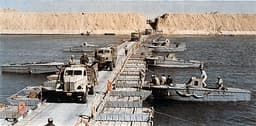
Gamasy served as a senior commander in the Egyptian Second Army during the October War. He directed operations on the northern sector of the Suez Canal front.
October WarMilitary CommandEgypt
Impact: regional
1974 AD
Chief of Staff of Egyptian Armed ForcesPolitical Action
Gamasy was appointed Chief of Staff of the Egyptian Armed Forces after the October War. He oversaw the post-war reorganization and modernization of the military.
Military AppointmentPost-WarEgypt
Impact: national
Sinai Disengagement NegotiationsPolitical Action◆ Major
Gamasy led the Egyptian military delegation in the disengagement talks with Israel. The negotiations resulted in the Sinai I and II agreements, reducing tensions.
DiplomacySinaiDisengagement
Impact: regionalconstructive
Takeda Shingen — Complete Timeline
1547 AD
Promulgation of the Kōshū Hatto (Law Code of Kai Province)Reform◆ Major
Takeda Shingen issued the K
Legal CodeGovernanceKai Province
Impact: regionalconstructive
1550 AD
Construction of the Kōfu CastleOther
Takeda Shingen ordered the construction of K
CastleFortificationAdministration
Impact: regionalconstructive
1561 AD
Battle of Kawanakajima (Fourth)War◆ Major
Takeda Shingen fought his most famous battle against Uesugi Kenshin at the fourth Battle of Kawanakajima. The battle was a bloody stalemate with heavy losses on both sides. It cemented the rivalry between the two daimyo and is one of the most celebrated battles of the Sengoku period.
BattleRivalrySengoku Period
Impact: regional
1568 AD
Invasion of Suruga ProvinceWar◆ Major
Takeda Shingen invaded Suruga Province, the domain of his former ally Imagawa Yoshimoto. This expansionist move broke the longstanding alliance between the Takeda and Imagawa clans. It significantly increased Takeda territory and access to the sea, but also created new enemies.
InvasionExpansionAlliance Broken
Impact: regional
1573 AD
Battle of MikatagaharaWar◆ Major
Takeda Shingen defeated Tokugawa Ieyasu's forces at the Battle of Mikatagahara in Totomi Province. Shingen's superior cavalry tactics routed Ieyasu's army, forcing Ieyasu to flee. This victory brought Shingen close to the Tokugawa heartland and threatened the Oda-Tokugawa alliance.
BattleCavalryTokugawa Ieyasu
Impact: regional
Expert Analysis
Origins
Mohamed Abdel Ghani el-Gamasy was born in 1921 in Cairo, Egypt, into a military family. He graduated from the Egyptian Military Academy in 1939 and served in the 1948 Arab-Israeli War and the 1956 Suez Crisis. His early career included training in the Soviet Union, which influenced his strategic thinking.
Takeda Shingen was born in 1521 in Kai Province (modern Yamanashi Prefecture), Japan, as the first son of Takeda Nobutora, a daimyo. He was exiled at age 20 and overthrew his father to become head of the Takeda clan. He studied military tactics and law, later codifying the Kōshū Hatto.
Rise to Power
Gamasy rose through the ranks of the Egyptian military, becoming a key figure under President Anwar Sadat. He was instrumental in planning the 1973 October War, serving as Chief of Staff of the Second Army. His detailed planning of the crossing of the Suez Canal earned him recognition. After the war, he led disengagement negotiations with Israel, securing the Sinai I and II agreements.
Shingen rose to power by overthrowing his father in 1541 and unifying Kai Province. He expanded through strategic alliances and military campaigns. His victory at the Battle of Mikatagahara in 1573 over Tokugawa Ieyasu demonstrated his tactical prowess. He invaded Suruga in 1568, breaking the alliance with Imagawa Yoshimoto.
Leadership & Governance
Gamasy's leadership was methodical and collaborative. He coordinated with other commanders like Saad el-Shazly and relied on detailed planning. Post-war, he oversaw military reorganization, emphasizing modernization and professionalization. His governance approach focused on rebuilding and negotiation.
Shingen ruled Kai Province with a firm hand, implementing the Kōshū Hatto legal code that regulated land, taxation, and samurai conduct. He was known for his strategic patience and ability to inspire loyalty. He used cavalry effectively, but his leadership was also marked by ruthlessness, as seen in his betrayal of former allies.
Triumph & Tragedy
Gamasy's greatest triumph was the 1973 crossing of the Suez Canal, which surprised Israeli forces and restored Egyptian pride. He scored 70.0 in military and 64.5 in leadership. However, his failure to fully exploit the victory due to political constraints and the subsequent Israeli counter-crossing was a major setback. The war's mixed outcome led to his eventual marginalization in Egyptian politics.
Shingen's triumphs include the fourth Battle of Kawanakajima (1561), a costly stalemate that demonstrated his resilience, and the victory at Mikatagahara. He scored 74.7 in military and 70.0 in leadership. His tragedy was his death in 1573 at age 52 from illness, just as he was poised to challenge the Oda clan. His death led to the decline of the Takeda clan, which was defeated five years later.
Character & Destiny
Gamasy was pragmatic and disciplined, focusing on operational planning. His character suited the post-war diplomatic role, but he lacked the political ambition to survive Sadat's shifting alliances. His destiny was tied to the limited success of the October War.
Shingen was ambitious and calculating, known as the 'Tiger of Kai.' His character drove his expansionist policies, but his untimely death prevented him from achieving national unification. Historians note his strategic acumen but also his overreliance on personal leadership.
Legacy
Gamasy's legacy is tied to the 1973 war and the peace process. The Sinai agreements he negotiated led to the 1979 Egypt-Israel peace treaty, fundamentally altering Middle Eastern geopolitics. He scored 50.0 in legacy and 60.0 in influence.
Shingen's legacy endures as a symbol of Sengoku-era military prowess. His legal code influenced later Tokugawa policies. He scored 55.0 in legacy and 56.7 in influence. His life inspired countless works of fiction and history.
Conclusion
While Takeda Shingen achieved a higher total score of 61.8 compared to Gamasy's 58.2, Gamasy's impact on modern history through the 1973 war and subsequent peace process is more consequential. Shingen's military brilliance (74.7) was confined to a fragmented Japan, whereas Gamasy's actions reshaped a region. Therefore, Mohamed Abdel Ghani el-Gamasy had greater historical impact.
Rankings
🥇
Takeda ShingenLeader
Mil: 74.7Pol: 59.3Inf: 56.7
61.8
🥈
Mohamed Abdel Ghani el-Gamasy
Mil: 70.0Pol: 46.6Inf: 60.0
58.2
+3.6 behind
How This Comparison Works
Algorithm
Each figure is scored on 6 dimensions (0—100 scale) based on structured historical data: Military (10%), Political (20%), Influence (20%), Legacy (20%), Leadership (15%), Strategy (15%). The weighted total produces the final ranking.
Data Sources
Scores are computed from structured sub-indicators in the database. Scale factors adjust for era (Ancient ×0.85, Modern ×1.0) and civilization size (Eastern ×1.05, Other ×0.80) to account for differences in population and military scale.
Maximum 3 Figures
Comparisons are limited to 2—3 figures to ensure readability and statistical meaningfulness.
Error Margins
±5 points per dimension — Sub-scores are derived from historical records with inherent uncertainty. Two figures within 5 points on a dimension should be considered roughly equivalent in that area.
Total Score Accuracy
±3 points overall — The weighted combination of 6 dimensions produces a total score with approximately ±3 points of uncertainty. Differences of less than 3 points are not statistically significant— the figures are effectively tied.
Known Limitations
- Historical records are incomplete and uneven across civilizations
- Figures from oral-tradition societies may be underrepresented
- Occupation labels can misclassify multi-role figures
- Scores measure capability and impact, not moral character
- Quantitative scoring is a comparison tool, not absolute truth
Capability Radar
Military (10%) — Battles & Warfare
Battles
70
75
Win Rate
75
70
Expansion
30
65
Political (20%) — Governance & Reform
Reform
30
65
Diplomacy
50
70
Economy
20
60
Influence (20%) — Cultural & Global Reach
Cultural
30
65
Global
40
50
Legacy (20%) — Historical Impact
Historical
55
70
Longevity
40
60
Leadership (15%) — Power & Stability
Tenure
40
60
Stability
30
55
Strategy (15%) — Tactics & Innovation
Strategy
85
80
Tactics
80
85
Reform
70
70
Similar Comparisons
Comments & Discussion
No comments yet. Be the first to share your thoughts!