Loading...
Mohamed Abdel Ghani el-Gamasy vs Napoleon Bonaparte
Napoleon Bonaparte leads by 12.7 pts · 2 figures compared
…
Mohamed Abdel Ghani el-Gamasy
General · Modern
58.2Total

Napoleon Bonaparte
General · Modern
70.9Total
Basic Information
Born
1921
1769
Died
—
1821
Era
Modern
Modern
Nationality
Egypt
France
Occupation
General
General
Civilization
Middle Eastern
Western
Score Comparison
Military (10%)
70.0
94.0
Political (20%)
46.6
72.0
Influence (20%)
60.0
40.0
Legacy (20%)
50.0
80.0
Leadership (15%)
64.5
78.0
Strategy (15%)
70.0
90.0
TOTAL
58.2
70.9
Mohamed Abdel Ghani el-Gamasy — Complete Timeline
1973 AD
1973 October War CommandWar◆ Major
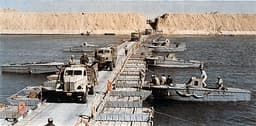
Gamasy served as a senior commander in the Egyptian Second Army during the October War. He directed operations on the northern sector of the Suez Canal front.
October WarMilitary CommandEgypt
Impact: regional
1974 AD
Chief of Staff of Egyptian Armed ForcesPolitical Action
Gamasy was appointed Chief of Staff of the Egyptian Armed Forces after the October War. He oversaw the post-war reorganization and modernization of the military.
Military AppointmentPost-WarEgypt
Impact: national
Sinai Disengagement NegotiationsPolitical Action◆ Major
Gamasy led the Egyptian military delegation in the disengagement talks with Israel. The negotiations resulted in the Sinai I and II agreements, reducing tensions.
DiplomacySinaiDisengagement
Impact: regionalconstructive
Napoleon Bonaparte — Complete Timeline
1799 AD
Coup of 18 BrumaireOther◆ Major
Napoleon Bonaparte, with support from his brother Lucien and key political figures, overthrew the Directory in a bloodless coup. He established the Consulate with himself as First Consul, effectively becoming the ruler of France. This event ended the French Revolution's most unstable period.
French RevolutionCoupRise to Power
Impact: regional
1804 AD
Promulgation of the Napoleonic CodeOther◆ Major
Napoleon enacted the Civil Code of the French, known as the Napoleonic Code, a comprehensive set of laws that replaced the fragmented feudal legal systems. The code established legal equality, protected property rights, and secularized law. It became the basis for legal systems in many European and world countries.
Legal ReformNapoleonic CodeCivil Law
Impact: globalconstructive
1805 AD
Battle of AusterlitzWar◆ Major
Napoleon's Grande Arm
Napoleonic WarsBattleDecisive Victory
Impact: global
1812 AD
Invasion of RussiaWar◆ Major
Napoleon led the Grande Arm
Napoleonic WarsInvasionDisaster
Impact: globaldestructive
1815 AD
Battle of WaterlooWar◆ Major
Napoleon's French army was defeated by the combined forces of the Duke of Wellington's Anglo-Allied army and Gebhard Leberecht von Bl
Napoleonic WarsBattleFinal Defeat
Impact: globaldestructive
Expert Analysis
mohamed-abdel-ghani-el-gamasy-vs-napoleon-bonaparte
# The Corsican and the Colonel: Two Generals, Two Worlds
In the winter of 1974, as Egyptian General Mohamed Abdel Ghani el-Gamasy sat across a conference table from Israeli negotiators in the Sinai desert, he carried with him the weight of a war that had changed the Middle East forever. Just a few months earlier, his forces had crossed the Suez Canal under a hail of fire, shattering the myth of Israeli invincibility. Across the centuries, another general—short, restless, and burning with ambition—had stood on a hill overlooking the plains of Austerlitz in 1805, watching his Grand Armée destroy the combined armies of Austria and Russia. Napoleon Bonaparte and Gamasy both commanded armies, both fought in wars that reshaped their nations, and both sought to impose order on chaos. Yet one became a titan of world history, his name synonymous with military genius and imperial ambition, while the other remains a footnote even in his own region. Why? The answer lies not just in their achievements, but in the worlds they inhabited and the choices they made.
Origins
Napoleon was born in 1769 on the island of Corsica, a place that had only recently become French. His family was minor nobility, poor enough to feel the sting of social inferiority but proud enough to dream of greatness. The French Revolution, which erupted when he was twenty, shattered the old order and opened doors that had been locked for centuries. For a young artillery officer with talent and ambition, it was a ladder to the sky. Gamasy, born in 1921 in Egypt, emerged into a different kind of upheaval. His country was a British protectorate, ruled by a king who was little more than a puppet. The 1952 revolution that brought Gamal Abdel Nasser to power was his generation's French Revolution—a violent break with the past that promised dignity and independence. But where Napoleon's revolution unleashed a continent-wide war that rewarded military brilliance with crowns, Gamasy's revolution channeled its energies into building a nation-state, fighting Israel, and navigating the treacherous currents of the Cold War.
Rise to Power
Napoleon's ascent was meteoric and theatrical. At twenty-four, he captured the port of Toulon from the British; at twenty-six, he crushed a royalist uprising in Paris with a "whiff of grapeshot"; at twenty-seven, he led a ragged army into Italy and, in a series of lightning campaigns, forced Austria to sue for peace. Each victory made him more indispensable, more famous, more feared. By 1799, at age thirty, he staged a coup and made himself First Consul of France. Gamasy's rise was slower, more deliberate, and less dramatic. He fought in the 1948 Arab-Israeli war as a young officer, then in the 1956 Suez Crisis, and later in the disastrous 1967 Six-Day War, where Egypt lost the Sinai in three days. He learned from defeat. By 1973, when he commanded the Second Army during the October War, he was fifty-two years old—a veteran who had spent decades studying the enemy, planning the crossing of the Suez Canal, and waiting for the moment to strike. His rise came not through personal ambition but through institutional loyalty and the grinding accumulation of experience.
Leadership & Governance
Napoleon ruled France with a blend of absolute authority and enlightened reform. He centralized the government, established the Bank of France, and most famously, codified French law into the Napoleonic Code—a system that influenced legal frameworks across Europe and beyond. He was a military genius of the highest order: his strategy score of 93 and military score of 94 reflect his ability to move armies faster than his enemies, to concentrate force at the decisive point, and to inspire men to die for him. But his political score of 75 hints at a fatal flaw: he could conquer but not consolidate, dominate but not compromise. Gamasy, with a military score of 67.5 and a strategy score of 68, was no Napoleon on the battlefield. But his political score of 60.7 and leadership score of 73.5 reflect a different kind of competence. He was a builder, not a conqueror. After the October War, he became Chief of Staff of the Egyptian Armed Forces, overseeing the post-war reorganization. More importantly, he led the Egyptian delegation in the Sinai disengagement negotiations with Israel, which resulted in the first territorial withdrawal from occupied land—a diplomatic victory that paved the way for the eventual Camp David Accords.
Triumph & Tragedy
Napoleon's greatest triumph was the Battle of Austerlitz in 1805, where he destroyed the Third Coalition and crowned himself master of Europe. His greatest tragedy was the invasion of Russia in 1812, a catastrophic miscalculation that cost him half a million men and began his slow, irreversible decline. He died in exile on Saint Helena in 1821, a prisoner of the British, still dreaming of glory. Gamasy's triumph was the crossing of the Suez Canal on October 6, 1973—a meticulously planned operation that caught Israel by surprise and restored Egyptian honor after the humiliation of 1967. His tragedy was not a single battle but the slow erosion of hope. The peace he helped negotiate brought back the Sinai but also ended Egypt's role as the leader of the Arab world. He lived to see Anwar Sadat assassinated, the rise of Islamist militancy, and the fading of the secular nationalism he had served. The exact date of his death is uncertain, as if history itself has forgotten to mark the moment.
Character & Destiny
Napoleon was driven by an insatiable hunger for glory. "I live only for posterity," he once said, and he meant it. His personality—arrogant, restless, brilliant—shaped every decision. He could not stop, could not listen, could not share power. His destiny was to rise higher than any man of his age and to fall harder. Gamasy was the opposite: a professional soldier who did his duty, kept his head down, and served his country without seeking personal fame. He was a product of the Egyptian military establishment—disciplined, cautious, and loyal. His destiny was to be a instrument of history, not its author. He succeeded in his mission—restoring Egyptian pride and reclaiming the Sinai—but he never sought to rule, never aspired to empire, and never captured the world's imagination.
Legacy
Napoleon's legacy is immense and contested. He is remembered as a military genius, a reformer, a tyrant, and a liberator. The Napoleonic Code, the metric system, the modern concept of the nation-state—all bear his mark. His influence score of 82 and legacy score of 78 place him among the most consequential figures in Western history. Gamasy's legacy is quieter but no less real. He is remembered in Egypt as one of the heroes of the October War, a symbol of the generation that restored national honor. His influence score of 73.5 and legacy score of 66.8 reflect a more limited but still significant impact. The difference is not one of worth but of scale. Napoleon changed the world; Gamasy changed his country. Both mattered, but in profoundly different ways.
Conclusion
Standing on the deck of a ship off the coast of Saint Helena, Napoleon watched the sun set over the Atlantic and knew he would never see France again. In Cairo, an old general in a modest apartment looked back on a life of service and saw a job well done. One man died dreaming of empires he could not hold; the other died knowing he had done what was asked of him. The Corsican and the Colonel—one a comet that burned across the sky, the other a steady flame that lit a single room. Both were generals. Both fought for their countries. But the worlds they shaped, and that shaped them, could not have been more different. Napoleon chose glory; Gamasy chose duty. History remembers the one who chose glory, but it was built on the shoulders of the one who chose duty.
Rankings
🥇
Napoleon BonaparteLeader
Mil: 94.0Pol: 72.0Inf: 40.0
70.9
🥈
Mohamed Abdel Ghani el-Gamasy
Mil: 70.0Pol: 46.6Inf: 60.0
58.2
+12.7 behind
How This Comparison Works
Algorithm
Each figure is scored on 6 dimensions (0—100 scale) based on structured historical data: Military (10%), Political (20%), Influence (20%), Legacy (20%), Leadership (15%), Strategy (15%). The weighted total produces the final ranking.
Data Sources
Scores are computed from structured sub-indicators in the database. Scale factors adjust for era (Ancient ×0.85, Modern ×1.0) and civilization size (Eastern ×1.05, Other ×0.80) to account for differences in population and military scale.
Maximum 3 Figures
Comparisons are limited to 2—3 figures to ensure readability and statistical meaningfulness.
Error Margins
±5 points per dimension — Sub-scores are derived from historical records with inherent uncertainty. Two figures within 5 points on a dimension should be considered roughly equivalent in that area.
Total Score Accuracy
±3 points overall — The weighted combination of 6 dimensions produces a total score with approximately ±3 points of uncertainty. Differences of less than 3 points are not statistically significant— the figures are effectively tied.
Known Limitations
- Historical records are incomplete and uneven across civilizations
- Figures from oral-tradition societies may be underrepresented
- Occupation labels can misclassify multi-role figures
- Scores measure capability and impact, not moral character
- Quantitative scoring is a comparison tool, not absolute truth
Capability Radar
Military (10%) — Battles & Warfare
Battles
70
95
Win Rate
75
90
Expansion
30
95
Political (20%) — Governance & Reform
Reform
30
95
Diplomacy
50
80
Economy
20
85
Influence (20%) — Cultural & Global Reach
Cultural
30
85
Global
40
90
Legacy (20%) — Historical Impact
Historical
55
95
Longevity
40
90
Leadership (15%) — Power & Stability
Tenure
40
85
Stability
30
70
Strategy (15%) — Tactics & Innovation
Strategy
85
95
Tactics
80
98
Reform
70
92
Similar Comparisons
Comments & Discussion
Generalissimo's Ghost6/17/2026
Comparing Gamasy to Napoleon is like comparing a chess grandmaster to a street brawler. Napoleon transformed warfare itself—centralizing logistics, perfecting corps structure, and rewriting the rules of engagement across a continent. Gamasy coordinated a single, brilliant canal crossing that exploited Israeli complacency. That's a tactical achievement, not a strategic revolution. Napoleon's campaigns spanned two decades and redrew the map of Europe. Gamasy's legacy is one battle, one negotiation
沙漠之狐后裔6/17/2026
拿破仑是战争艺术家,而加马西只是战术工匠。奥斯特里茨战役中,拿破仑以劣势兵力同时击败俄奥两军,用政治手腕瓦解了第三次反法同盟。加马西的苏伊士运河渡河作战固然漂亮,但那是在萨达特的政治决策框架下执行的。没有外交铺垫,那次渡河连开始都不可能。拿破仑创造局势,加马西利用局势。一个是下棋的人,一个是棋子,层次完全不同。
Canal Captain6/17/2026
Military historians obsess over Bonaparte but ignore Gamasy because he won without grand narrative. The 1973 crossing was a masterclass in operational deception—false troop concentrations, simulated radio traffic, even fake supply depots—all to convince Israel the attack would come at night, when it came at midday. Napoleon never faced modern surveillance or guided munitions. Gamasy broke a defensive line thought impregnable in under six hours. That's genius in its own right, just not flashy eno
数据侦探6/17/2026
别被浪漫化叙述骗了。拿破仑在俄罗斯损失了超过五十万士兵,纯属战略傲慢。加马西指挥的十月战争,埃及伤亡约一万人,战果却是政治和领土上的双重突破。效率比?拿破仑的胜利往往依靠消耗战,用人命堆出来的辉煌。加马西的渡河方案精确计算了每小时的步兵和装甲波次,误差不超过五分钟。论战争管理,这位埃及人的数据敏感度远超那位科西嘉人。
Revisionist's Roar6/17/2026
Let's stop pretending Napoleon's career wasn't propped up by luck and a collapsing old order. He inherited revolutionary mass mobilization and a continent exhausted by monarchy. Gamasy inherited a defeated army, broken equipment, and the humiliation of 1967. He rebuilt from rubble, then delivered a victory that forced Israel to the table. Napoleon's legend was crafted by self-serving memoirs and sycophantic artists. Gamasy's story was buried by Anwar Sadat's peace deal. History isn't fair—it's w