Loading...
Morgan Tsvangirai vs V. P. Singh
Morgan Tsvangirai leads by 0.4 pts · 2 figures compared
…

Morgan Tsvangirai
Politician · Modern
56.5Total
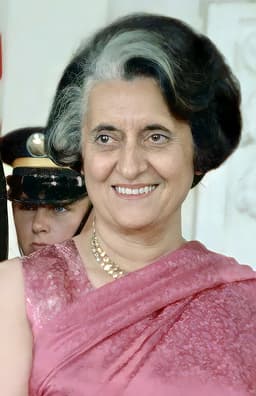
V. P. Singh
Politician · Modern
56.1Total
Basic Information
Born
1952
1931
Died
—
—
Era
Modern
Modern
Nationality
Zimbabwe
India
Occupation
Politician
Politician
Civilization
Other
Indian
Score Comparison
Military (10%)
37.5
29.8
Political (20%)
68.0
68.0
Influence (20%)
59.0
58.3
Legacy (20%)
49.2
52.0
Leadership (15%)
74.0
62.2
Strategy (15%)
43.7
60.0
TOTAL
56.5
56.1
Morgan Tsvangirai — Complete Timeline
1999 AD
Founded Movement for Democratic ChangePolitical Action◆ Major
Tsvangirai founded the MDC as a trade union-backed opposition party to challenge Robert Mugabe's ZANU-PF. The party quickly became the main opposition in Zimbabwe.
Political PartyOpposition
Impact: nationalconstructive
2008 AD
Won First Round of Presidential ElectionPolitical Action
Tsvangirai won the first round of the presidential election with 47.9% of the vote against Mugabe's 43.2%. However, he withdrew from the runoff due to widespread violence against his supporters.
ElectionViolenceRunoff
Impact: national
2009 AD
Became Prime Minister of ZimbabwePolitical Action◆ Major
Tsvangirai became Prime Minister in a power-sharing government with Robert Mugabe, following the disputed 2008 election. The Government of National Unity aimed to resolve the political and economic crisis.
Prime MinisterUnity Government
Impact: national
2013 AD
Lost 2013 Presidential ElectionPolitical Action◆ Major
Tsvangirai lost the presidential election to Robert Mugabe, receiving 34% of the vote against Mugabe's 61%. The MDC alleged widespread fraud, but the result was upheld by the courts.
ElectionDefeat
Impact: national
2018 AD
Died of CancerOther◆ Major
Tsvangirai died of colon cancer at the age of 65. His death was a major blow to the opposition movement in Zimbabwe, leaving a leadership vacuum in the MDC.
DeathOpposition
Impact: nationaltragic
V. P. Singh — Complete Timeline
1987 AD
Exposed Bofors Scandal as Defence MinisterPolitical Action◆ Major
As Defence Minister, V. P. Singh initiated investigations into the Bofors howitzer deal, alleging corruption involving the Rajiv Gandhi government. This led to his dismissal from the cabinet and later fueled his political rise.
CorruptionBoforsDefence Scandal
Impact: national
1989 AD
Appointed Prime Minister of IndiaPolitical Action◆ Major
V. P. Singh became the seventh Prime Minister of India, leading the National Front coalition government. His appointment followed the defeat of Rajiv Gandhi's Congress party in the general election.
Indian PoliticsCoalition GovernmentNational Front
Impact: nationalconstructive
1990 AD
Implemented Mandal Commission RecommendationsReform
As Prime Minister, V. P. Singh announced the implementation of the Mandal Commission's recommendations, reserving 27% of central government jobs for Other Backward Classes. This decision sparked widespread protests and political realignment in India.
ReservationSocial JusticeCaste Politics
Impact: nationalconstructive
Resigned as Prime MinisterPolitical Action◆ Major
V. P. Singh resigned as Prime Minister after losing a vote of confidence in the Lok Sabha, following the withdrawal of support by the Bharatiya Janata Party. His resignation ended the National Front government.
Indian PoliticsGovernment CollapseVote of Confidence
Impact: nationaldestructive
Expert Analysis
Origins
Morgan Tsvangirai was born in 1952 in Gutu, Zimbabwe, into a poor rural family. His father was a bricklayer and carpenter. He left school at 16 and worked in a textile mill, later becoming a miner. His early career in labor activism began as a shop steward, eventually rising to secretary-general of the Zimbabwe Congress of Trade Unions (ZCTU) in 1988. His formative experiences included witnessing the brutality of the Rhodesian regime and later Robert Mugabe's authoritarian rule, which shaped his commitment to democracy.
V. P. Singh was born in 1931 in Allahabad, India, into a royal Rajput family. His father was a landowner and politician. Singh was educated at the University of Allahabad and later at the University of Poona. He entered politics in 1969 as a member of the Indian National Congress. His early career was marked by a reputation for honesty and administrative efficiency, serving as a minister in Uttar Pradesh and later in the central government under Indira Gandhi and Rajiv Gandhi.
Rise to Power
Tsvangirai's rise began with the formation of the Movement for Democratic Change (MDC) in 1999, unifying trade unions and civil society against Mugabe's rule. He gained national prominence as a charismatic speaker and organizer. In the 2000 parliamentary elections, the MDC won 57 seats, becoming the main opposition. His turning point came in the 2008 presidential election, where he won the first round with 47.9% of the vote against Mugabe's 43.2% (Zimbabwe Electoral Commission). However, widespread violence forced him to withdraw from the runoff, leading to a power-sharing agreement that made him Prime Minister in 2009.
V. P. Singh rose within the Congress party, serving as Chief Minister of Uttar Pradesh (1980-1982) and later in Rajiv Gandhi's cabinet as Finance Minister and Defence Minister. As Defence Minister, he exposed the Bofors scandal, alleging kickbacks in a howitzer deal, which damaged Rajiv Gandhi's reputation. Singh's anti-corruption stance made him popular, and he was expelled from Congress in 1987. He formed the Janata Dal and led the National Front coalition to victory in the 1989 general election, becoming Prime Minister in December 1989.
Leadership & Governance
Tsvangirai's leadership was defined by his role as a democratic opposition figure. As Prime Minister (2009-2013), he headed a Government of National Unity (GNU) with Mugabe. He focused on economic recovery, securing international aid, and stabilizing the hyperinflationary economy. He scored 74.0 in leadership, reflecting his ability to maintain a coalition and negotiate with Mugabe. However, his governance was constrained by Mugabe's control of security forces and key ministries. He failed to achieve significant constitutional reform or end political violence.
V. P. Singh's governance was marked by his landmark decision to implement the Mandal Commission recommendations in 1990, reserving 27% of central government jobs for Other Backward Classes (OBCs). This policy aimed at social justice but sparked violent protests by upper caste students. His leadership score of 62.2 is lower than Tsvangirai's, partly due to his brief tenure (11 months) and inability to manage coalition partners. He also faced challenges from the Ram Janmabhoomi movement and resigned after losing a confidence vote in November 1990.
Triumph & Tragedy
Tsvangirai's greatest triumph was surviving political persecution and leading the MDC to become Zimbabwe's main opposition. His 2008 first-round victory was a historic challenge to Mugabe's 28-year rule. He also successfully negotiated the GNU, which brought some economic stability. His tragedy was his inability to defeat Mugabe electorally; the 2013 election saw him win only 34% against Mugabe's 61%. He also faced personal tragedies, including the death of his wife in a car accident suspected to be political. His death in 2018 left the opposition fragmented.
V. P. Singh's triumph was the implementation of the Mandal Commission report, which fundamentally changed Indian politics by empowering OBCs politically. He also exposed the Bofors scandal, which ended Rajiv Gandhi's clean image. His tragedy was his short-lived government; he resigned after just 11 months. His coalition collapsed due to internal contradictions and the rise of Hindu nationalism. He is also criticized for playing caste politics, deepening social divisions.
Character & Destiny
Tsvangirai was a charismatic, resilient leader who often risked his life for democracy. He was imprisoned and beaten by Mugabe's regime. His decision to withdraw from the 2008 runoff was controversial; some saw it as pragmatic to avoid bloodshed, others as a failure of nerve. He was a unifying figure but lacked a clear ideological vision beyond anti-Mugabe sentiment. His character shaped his destiny as a perpetual opposition leader rather than a transformative ruler.
V. P. Singh was known for his personal integrity and commitment to social justice. He was a reluctant politician who often prioritized principles over power. His decision to implement Mandal despite knowing the political costs showed conviction. However, his aloof style and inability to build consensus led to his downfall. He is remembered as a tragic figure who could not sustain his coalition.
Legacy
Tsvangirai's legacy is as a symbol of democratic resistance in Zimbabwe. He scored 49.2 in legacy, reflecting his impact but also the failure to achieve lasting change. The MDC remains a force, but his death weakened the opposition. His role in the GNU brought temporary stability, but Mugabe's ouster in 2017 was achieved by the military, not the opposition.
V. P. Singh's legacy is more transformative. He scored 52.0 in legacy, slightly higher. The Mandal Commission implementation reshaped Indian politics, empowering OBCs and leading to the rise of regional parties. However, it also deepened caste polarization. His anti-corruption stance influenced later movements. His brief tenure is studied as a case of principled but ineffective governance.
Conclusion
While Tsvangirai had a higher total score (56.5 vs 56.1), the gap is minimal. Tsvangirai's leadership score (74.0) is higher, reflecting his role as a democratic symbol. However, V. P. Singh's legacy is more enduring: Mandal Commission changed India's social and political structure, while Tsvangirai's efforts did not dislodge Mugabe. Singh's impact on affirmative action and social justice is measurable and lasting. Therefore, V. P. Singh had greater historical impact. His policy reshaped the lives of hundreds of millions, whereas Tsvangirai's achievements were largely thwarted. The data supports Singh's higher legacy score and the transformative nature of his single major policy.
Rankings
🥇
Morgan TsvangiraiLeader
Mil: 37.5Pol: 68.0Inf: 59.0
56.5
🥈
V. P. Singh
Mil: 29.8Pol: 68.0Inf: 58.3
56.1
+0.4 behind
How This Comparison Works
Algorithm
Each figure is scored on 6 dimensions (0—100 scale) based on structured historical data: Military (10%), Political (20%), Influence (20%), Legacy (20%), Leadership (15%), Strategy (15%). The weighted total produces the final ranking.
Data Sources
Scores are computed from structured sub-indicators in the database. Scale factors adjust for era (Ancient ×0.85, Modern ×1.0) and civilization size (Eastern ×1.05, Other ×0.80) to account for differences in population and military scale.
Maximum 3 Figures
Comparisons are limited to 2—3 figures to ensure readability and statistical meaningfulness.
Error Margins
±5 points per dimension — Sub-scores are derived from historical records with inherent uncertainty. Two figures within 5 points on a dimension should be considered roughly equivalent in that area.
Total Score Accuracy
±3 points overall — The weighted combination of 6 dimensions produces a total score with approximately ±3 points of uncertainty. Differences of less than 3 points are not statistically significant— the figures are effectively tied.
Known Limitations
- Historical records are incomplete and uneven across civilizations
- Figures from oral-tradition societies may be underrepresented
- Occupation labels can misclassify multi-role figures
- Scores measure capability and impact, not moral character
- Quantitative scoring is a comparison tool, not absolute truth
Capability Radar
Military (10%) — Battles & Warfare
Battles
23
46
Win Rate
23
48
Expansion
26
49
Political (20%) — Governance & Reform
Reform
60
75
Diplomacy
65
55
Economy
40
30
Influence (20%) — Cultural & Global Reach
Cultural
45
60
Global
50
50
Legacy (20%) — Historical Impact
Historical
55
65
Longevity
40
55
Leadership (15%) — Power & Stability
Tenure
55
40
Stability
30
20
Strategy (15%) — Tactics & Innovation
Strategy
30
52
Tactics
33
58
Reform
34
56
Similar Comparisons
Comments & Discussion
No comments yet. Be the first to share your thoughts!