Loading...
Muhammad II of Khwarezm vs Philip IV of France
Philip IV of France leads by 1.9 pts · 2 figures compared
…
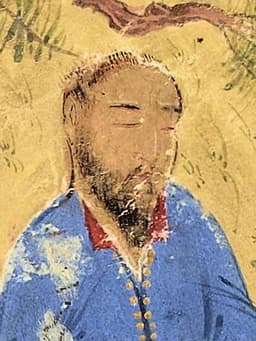
Muhammad II of Khwarezm
Emperor · Medieval
54.5Total
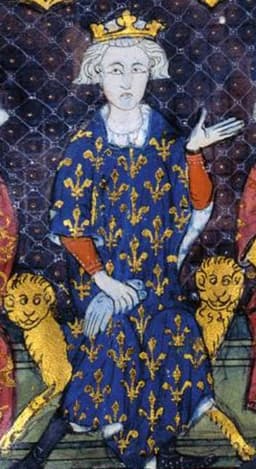
Philip IV of France
Emperor · Medieval
56.4Total
Basic Information
Born
1169
1268
Died
1220
1314
Era
Medieval
Medieval
Nationality
Khwarezmian Empire
France
Occupation
Emperor
Emperor
Civilization
Middle Eastern
Western
Score Comparison
Military (10%)
55.0
38.3
Political (20%)
40.8
45.0
Influence (20%)
60.0
60.0
Legacy (20%)
49.2
56.0
Leadership (15%)
74.0
72.0
Strategy (15%)
45.0
60.0
TOTAL
54.5
56.4
Muhammad II of Khwarezm — Complete Timeline
1218 AD
Conflict with Genghis KhanPolitical Action
Muhammad II executed Mongol envoys sent by Genghis Khan to establish trade relations. This act provoked the Mongol invasion of the Khwarezmian Empire, leading to one of the most devastating conquests in history.
DiplomacyMongol InvasionProvocation
Impact: globaldestructive
1219 AD
Mongol Invasion of KhwarezmWar
Genghis Khan invaded the Khwarezmian Empire with a massive army. Muhammad II failed to mount a coordinated defense, and the Mongols captured and destroyed major cities including Samarkand, Bukhara, and Urgench, massacring millions.
InvasionMongolDestruction
Impact: globaltragic
1220 AD
Flight and DeathOther◆ Major
Muhammad II fled westward as the Mongols advanced, abandoning his empire. He died on an island in the Caspian Sea, possibly from pneumonia or assassination, leaving his son Jalal ad-Din to continue the resistance.
FlightDeathCollapse
Impact: regionaltragic
Philip IV of France — Complete Timeline
1302 AD
Conflict with Pope Boniface VIIIPolitical Action◆ Major
Philip IV clashed with Pope Boniface VIII over taxation of the clergy and royal authority. Boniface issued the bull Unam Sanctam, asserting papal supremacy. Philip sent agents to arrest the Pope at Anagni. Boniface died shortly after, and Philip secured a more compliant pope.
PapacyConflictUnam Sanctam
Impact: globaldestructive
Convocation of the Estates GeneralPolitical Action◆ Major
Philip IV convened the first Estates General of France to gain support against Pope Boniface VIII. The assembly included clergy, nobles, and commoners. This marked the first time the three estates were formally summoned together in French history.
Estates GeneralAssemblyFrance
Impact: national
1307 AD
Suppression of the Knights TemplarPolitical Action◆ Major
Philip IV ordered the mass arrest of Knights Templar in France on charges of heresy, blasphemy, and sodomy. Templars were tortured to extract confessions. The order was dissolved by Pope Clement V in 1312, and its wealth was seized by the French crown.
Knights TemplarPersecutionHeresy
Impact: globaldestructive
1308 AD
Marriage of Isabella of FrancePolitical Action
Philip IV arranged the marriage of his daughter Isabella to King Edward II of England. The marriage was intended to strengthen the alliance between France and England. Isabella later became a key figure in the deposition of Edward II.
MarriageAllianceEngland
Impact: regional
Expert Analysis
Origins
Muhammad II of Khwarezm (born 1169) was the son of Ala ad-Din Tekish, who founded the Khwarezmian Empire. He inherited a realm stretching from Persia to Central Asia. Educated in Islamic law and administration, he expanded his empire through conquest. Philip IV of France (born 1268) was the son of Philip III and Isabella of Aragon. He inherited a strong monarchy and was educated in theology and law. His reign saw the centralization of royal power.
Rise to Power
Muhammad II ascended the throne in 1200 after his father's death. He quickly consolidated power, defeating the Kara-Khitai and expanding into Afghanistan and Iran. By 1210, he had become the most powerful ruler in the Islamic world, claiming the title of Sultan. Philip IV became king in 1285 at age 17. He immediately faced conflicts with England and the Church. His marriage to Joan I of Navarre brought him the kingdom of Navarre. He skillfully used legal and financial means to strengthen the crown.
Leadership & Governance
Muhammad II ruled as an autocratic sultan, relying on a vast bureaucracy and military. He centralized tax collection but alienated local governors. His governance was reactive; he failed to create a unified defense against the Mongols. Philip IV, by contrast, modernized French governance. He created the Estates General (1302) to legitimize taxes and policies. He employed legists (trained lawyers) to assert royal jurisdiction over the Church. His suppression of the Knights Templar in 1307 demonstrated his ruthless efficiency. Muhammad II scored 74.0 in leadership, Philip 72.0, but Philip's political score of 45.0 edged Muhammad's 40.8.
Triumph & Tragedy
Muhammad II's greatest triumph was expanding the Khwarezmian Empire to its peak, controlling key Silk Road cities. His tragedy was his catastrophic conflict with Genghis Khan. After executing Mongol envoys in 1218, he faced the full Mongol invasion (1219-1221). His indecisive defense led to the fall of Samarkand, Bukhara, and Urgench. He fled and died on an island in the Caspian Sea (1220), leaving his empire destroyed. Philip IV's triumph was crushing the Knights Templar, seizing their wealth, and defying the Pope. His tragedy was the failure of his foreign policy: wars with England and Flanders drained resources. His daughter Isabella's marriage to Edward II led to future conflict. Philip's legacy score of 56.0 tops Muhammad's 49.2.
Character & Destiny
Muhammad II was arrogant and indecisive. He underestimated Genghis Khan and failed to unite his forces. His character led to his downfall: he chose flight over fight. Philip IV was cold, calculating, and persistent. Known as "Philip the Fair," he was more bureaucrat than warrior. His determination to assert royal power over the Church and nobility shaped his destiny. He died in 1314 after a hunting accident, leaving a centralized monarchy.
Legacy
Muhammad II is remembered as the ruler whose actions triggered the Mongol invasion that devastated the Islamic world. His empire vanished, but the Mongol conquest reshaped Asia. Philip IV's legacy is the strengthening of the French monarchy. He established the Estates General, expanded royal justice, and curbed papal power. His persecution of the Templars set a precedent for state control over religious orders. Philip's influence on French state-building is lasting; Muhammad's influence is primarily as a cautionary tale. Philip scores 56.0 in legacy, Muhammad 49.2.
Conclusion
Philip IV of France had a greater impact on history. While Muhammad II's actions had dramatic consequences, they were largely negative and short-lived. Philip IV's political innovations, such as the Estates General and royal supremacy over the Church, shaped the development of the modern state. His total score of 56.4 surpasses Muhammad's 54.5. Philip's legacy endures in French institutions, whereas Muhammad's empire was erased by the Mongols. The data supports Philip as the more influential ruler.
Rankings
🥇
Philip IV of FranceLeader
Mil: 38.3Pol: 45.0Inf: 60.0
56.4
🥈
Muhammad II of Khwarezm
Mil: 55.0Pol: 40.8Inf: 60.0
54.5
+1.9 behind
How This Comparison Works
Algorithm
Each figure is scored on 6 dimensions (0—100 scale) based on structured historical data: Military (10%), Political (20%), Influence (20%), Legacy (20%), Leadership (15%), Strategy (15%). The weighted total produces the final ranking.
Data Sources
Scores are computed from structured sub-indicators in the database. Scale factors adjust for era (Ancient ×0.85, Modern ×1.0) and civilization size (Eastern ×1.05, Other ×0.80) to account for differences in population and military scale.
Maximum 3 Figures
Comparisons are limited to 2—3 figures to ensure readability and statistical meaningfulness.
Error Margins
±5 points per dimension — Sub-scores are derived from historical records with inherent uncertainty. Two figures within 5 points on a dimension should be considered roughly equivalent in that area.
Total Score Accuracy
±3 points overall — The weighted combination of 6 dimensions produces a total score with approximately ±3 points of uncertainty. Differences of less than 3 points are not statistically significant— the figures are effectively tied.
Known Limitations
- Historical records are incomplete and uneven across civilizations
- Figures from oral-tradition societies may be underrepresented
- Occupation labels can misclassify multi-role figures
- Scores measure capability and impact, not moral character
- Quantitative scoring is a comparison tool, not absolute truth
Capability Radar
Military (10%) — Battles & Warfare
Battles
55
30
Win Rate
50
40
Expansion
60
30
Political (20%) — Governance & Reform
Reform
35
70
Diplomacy
20
65
Economy
40
60
Influence (20%) — Cultural & Global Reach
Cultural
30
50
Global
40
50
Legacy (20%) — Historical Impact
Historical
55
65
Longevity
30
55
Leadership (15%) — Power & Stability
Tenure
60
75
Stability
25
55
Strategy (15%) — Tactics & Innovation
Strategy
40
40
Tactics
45
35
Reform
30
45
Similar Comparisons
Comments & Discussion
No comments yet. Be the first to share your thoughts!