Loading...
Chagatai Khan vs Muhammad II of Khwarezm
Chagatai Khan leads by 0.2 pts · 2 figures compared
…
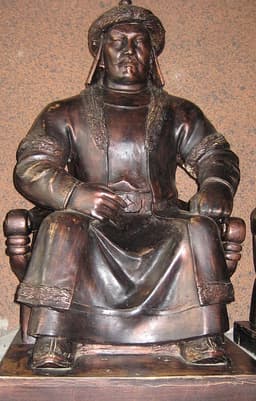
Chagatai Khan
Emperor · Medieval
54.7Total
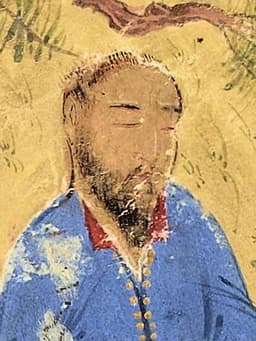
Muhammad II of Khwarezm
Emperor · Medieval
54.5Total
Basic Information
Born
1183
1169
Died
1242
1220
Era
Medieval
Medieval
Nationality
Mongol Empire
Khwarezmian Empire
Occupation
Emperor
Emperor
Civilization
Eastern
Middle Eastern
Score Comparison
Military (10%)
55.0
55.0
Political (20%)
45.1
40.8
Influence (20%)
55.7
60.0
Legacy (20%)
45.8
49.2
Leadership (15%)
74.0
74.0
Strategy (15%)
60.0
45.0
TOTAL
54.7
54.5
Chagatai Khan — Complete Timeline
1221 AD
Conflict with JochiPolitical Action
Chagatai had a longstanding rivalry with his brother Jochi, questioning Jochi's legitimacy as Genghis's son. This conflict caused tension within the Mongol royal family and influenced succession disputes after Genghis's death.
Mongol Family FeudSuccession
Impact: regionaldestructive
1227 AD
Enforcement of Yassa LawReform
Chagatai was known for strictly enforcing the Yassa, the Mongol legal code established by Genghis Khan. He imposed harsh punishments for violations, maintaining order in his khanate and preserving Mongol traditions.
Mongol LawYassa
Impact: regional
Appointed as Ruler of the Chagatai KhanatePolitical Action◆ Major
Following Genghis Khan's death, Chagatai was granted the Central Asian territories of the Mongol Empire, forming the Chagatai Khanate. He ruled from his capital at Almaligh, overseeing the region's administration and military.
Mongol EmpireSuccessionChagatai Khanate
Impact: regional
Muhammad II of Khwarezm — Complete Timeline
1218 AD
Conflict with Genghis KhanPolitical Action
Muhammad II executed Mongol envoys sent by Genghis Khan to establish trade relations. This act provoked the Mongol invasion of the Khwarezmian Empire, leading to one of the most devastating conquests in history.
DiplomacyMongol InvasionProvocation
Impact: globaldestructive
1219 AD
Mongol Invasion of KhwarezmWar
Genghis Khan invaded the Khwarezmian Empire with a massive army. Muhammad II failed to mount a coordinated defense, and the Mongols captured and destroyed major cities including Samarkand, Bukhara, and Urgench, massacring millions.
InvasionMongolDestruction
Impact: globaltragic
1220 AD
Flight and DeathOther◆ Major
Muhammad II fled westward as the Mongols advanced, abandoning his empire. He died on an island in the Caspian Sea, possibly from pneumonia or assassination, leaving his son Jalal ad-Din to continue the resistance.
FlightDeathCollapse
Impact: regionaltragic
Expert Analysis
Origins
Chagatai Khan (born c. 1183) was the second son of Genghis Khan and his principal wife Börte. Raised in the nomadic traditions of the Mongols, he learned archery and horsemanship from an early age. His mother ensured he received a strict education in Mongol law and custom. Chagatai’s early life was marked by his father’s rise to power, and he participated in campaigns against the Naimans and Merkits. He was known for his rigid adherence to Mongol traditions, a trait that would define his rule.
Muhammad II of Khwarezm (born c. 1169) was the son of Ala ad-Din Tekish, who expanded the Khwarezmian Empire from a vassal state to a major power. Muhammad inherited a realm stretching from the Caspian Sea to the Indus River. He was educated in Persian court culture and Islamic scholarship. His early reign saw consolidation of power and campaigns against the Ghurids and Qara Khitai, but his pride and overconfidence grew as his empire expanded.
Rise to Power
Chagatai’s rise was tied to his father’s conquests. He commanded troops in the invasion of the Jin Dynasty (1211–1215) and the Khwarezmian campaign (1219–1221). After Genghis Khan’s death in 1227, the Mongol Empire was divided among his sons. Chagatai received the Central Asian territories, including Transoxiana and the Tarim Basin, forming the Chagatai Khanate. He ruled from his capital near present-day Almaty, focusing on enforcing the Yassa law code. His political score of 45.1 reflects his limited role in broader Mongol politics, as his brother Ögedei became Great Khan.
Muhammad II rose to power after his father’s death in 1200. He defeated the Ghurids in 1206 and the Qara Khitai in 1210, expanding his empire to its zenith. By 1218, he controlled much of Persia and Central Asia. His military score of 55.0 is comparable to Chagatai’s 55.0, but his strategy score of 45.0 is lower. His fatal mistake came in 1218 when he executed Genghis Khan’s envoys, mistaking Mongol diplomatic overtures as weakness. This provoked the Mongol invasion that would destroy his empire.
Leadership & Governance
Chagatai’s leadership style was authoritarian and conservative. He strictly enforced the Yassa, which regulated everything from military discipline to marriage customs. He imposed harsh punishments: for example, stealing livestock could result in execution. He maintained order in his khanate but did little to promote trade or culture. His leadership score of 74.0 indicates his effectiveness in maintaining control, but his political score of 45.1 shows his inability to influence imperial succession or expand his power.
Muhammad II governed through a Persian-style bureaucracy, but his leadership was erratic. He centralized power but failed to delegate effectively. When the Mongols invaded, he scattered his forces to defend individual cities instead of concentrating them for a decisive battle. His leadership score of 74.0 matches Chagatai’s, but his strategy score of 45.0 is significantly lower. He alienated local governors and religious leaders, leading to defections during the invasion. His governance lacked the flexibility needed to face a nomadic threat.
Triumph & Tragedy
Chagatai’s greatest success was establishing the Chagatai Khanate as a stable realm that lasted for centuries. He successfully transmitted Mongol law and culture to Central Asia. His tragedy was his rivalry with his brother Jochi, which created lasting divisions within the Mongol family. After his death in 1242, the khanate declined due to internal conflicts. His legacy score of 45.8 reflects the eventual fragmentation of his realm.
Muhammad II’s triumph was building the largest empire in the Islamic world before the Mongols. At its peak, his territory rivaled that of the Abbasid Caliphate. His tragedy was his catastrophic failure in the face of the Mongol invasion. He lost his empire, his family, and his life, dying on an island in the Caspian Sea in 1220, possibly from pneumonia. His legacy score of 49.2 is slightly higher than Chagatai’s because his story became a cautionary tale of pride and mismanagement.
Character & Destiny
Chagatai was rigid, conservative, and loyal to Mongol traditions. His character made him a reliable enforcer of the Yassa but limited his political vision. He distrusted outsiders and opposed any dilution of Mongol customs. This rigidity ensured the survival of Mongol identity in Central Asia but prevented cultural synthesis. His destiny was to be a stabilizer, not an innovator.
Muhammad II was ambitious, proud, and impulsive. He misjudged the Mongols as inferior nomads and failed to prepare for a serious threat. His character led him to execute envoys, a grave violation of diplomatic immunity that sealed his fate. He could have negotiated or prepared a defense, but his arrogance blinded him. His destiny was to be a cautionary example of hubris.
Legacy
Chagatai’s legacy is the Chagatai Khanate, which lasted until the 17th century in various forms. The Yassa influenced later Mongol states, and his descendants included Tamerlane, who claimed descent to legitimize his rule. However, the khanate never matched the power of the other Mongol successor states. Chagatai’s influence score of 55.7 is moderate.
Muhammad II’s legacy is defined by his failure. The Mongol invasion of Khwarezm resulted in the destruction of cities like Samarkand and Bukhara, causing a demographic and cultural catastrophe. His empire collapsed entirely, and the region fell under Mongol rule for generations. Historians often cite his actions as a textbook example of diplomatic blunder leading to war. His influence score of 60.0 is higher than Chagatai’s because his story is more widely known.
Conclusion
In the comparison between Chagatai Khan and Muhammad II, Chagatai had a greater long-term impact on history. While Muhammad II’s empire was larger and his story more dramatic, Chagatai’s khanate endured for centuries and shaped the culture and politics of Central Asia. Chagatai’s total score of 54.7 edges out Muhammad II’s 54.5, but the gap is narrow. However, impact is not just about scores: Chagatai’s institutional legacy through the Yassa and his descendants’ rule outweighs Muhammad II’s catastrophic but brief reign. Muhammad II’s failure, while instructive, did not create lasting institutions. Therefore, Chagatai Khan emerges as the more significant historical figure.
Rankings
🥇
Chagatai KhanLeader
Mil: 55.0Pol: 45.1Inf: 55.7
54.7
🥈
Muhammad II of Khwarezm
Mil: 55.0Pol: 40.8Inf: 60.0
54.5
+0.2 behind
How This Comparison Works
Algorithm
Each figure is scored on 6 dimensions (0—100 scale) based on structured historical data: Military (10%), Political (20%), Influence (20%), Legacy (20%), Leadership (15%), Strategy (15%). The weighted total produces the final ranking.
Data Sources
Scores are computed from structured sub-indicators in the database. Scale factors adjust for era (Ancient ×0.85, Modern ×1.0) and civilization size (Eastern ×1.05, Other ×0.80) to account for differences in population and military scale.
Maximum 3 Figures
Comparisons are limited to 2—3 figures to ensure readability and statistical meaningfulness.
Error Margins
±5 points per dimension — Sub-scores are derived from historical records with inherent uncertainty. Two figures within 5 points on a dimension should be considered roughly equivalent in that area.
Total Score Accuracy
±3 points overall — The weighted combination of 6 dimensions produces a total score with approximately ±3 points of uncertainty. Differences of less than 3 points are not statistically significant— the figures are effectively tied.
Known Limitations
- Historical records are incomplete and uneven across civilizations
- Figures from oral-tradition societies may be underrepresented
- Occupation labels can misclassify multi-role figures
- Scores measure capability and impact, not moral character
- Quantitative scoring is a comparison tool, not absolute truth
Capability Radar
Military (10%) — Battles & Warfare
Battles
45
55
Win Rate
50
50
Expansion
50
60
Political (20%) — Governance & Reform
Reform
40
35
Diplomacy
45
20
Economy
40
40
Influence (20%) — Cultural & Global Reach
Cultural
35
30
Global
30
40
Legacy (20%) — Historical Impact
Historical
40
55
Longevity
35
30
Leadership (15%) — Power & Stability
Tenure
55
60
Stability
50
25
Strategy (15%) — Tactics & Innovation
Strategy
45
40
Tactics
40
45
Reform
30
30
Similar Comparisons
Comments & Discussion
No comments yet. Be the first to share your thoughts!