Loading...
Musa ibn Nusayr vs Sima Shi
Sima Shi leads by 2.3 pts · 2 figures compared
…

Musa ibn Nusayr
General · Ancient
58.8Total
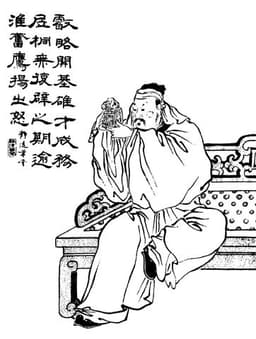
Sima Shi
General · Ancient
61.1Total
Basic Information
Born
-640
208
Died
—
255
Era
Ancient
Ancient
Nationality
Umayyad Caliphate
China
Occupation
General
General
Civilization
Middle Eastern
Eastern
Score Comparison
Military (10%)
78.0
72.0
Political (20%)
54.7
68.0
Influence (20%)
55.0
53.3
Legacy (20%)
50.0
48.3
Leadership (15%)
65.0
72.0
Strategy (15%)
68.1
75.0
TOTAL
58.8
61.1
Musa ibn Nusayr — Complete Timeline
698 AD
Conquest of North AfricaWar◆ Major
Musa ibn Nusayr was appointed governor of Ifriqiya (North Africa) by the Umayyad Caliphate. He led campaigns that subdued the Berber tribes, established Islamic rule across the Maghreb, and consolidated Umayyad control from Egypt to the Atlantic.
Umayyad CaliphateNorth AfricaConquest
Impact: regional
711 AD
Appointment of Tariq ibn ZiyadPolitical Action◆ Major
Musa ibn Nusayr appointed Tariq ibn Ziyad as commander of the initial invasion of the Iberian Peninsula. This decision led to the rapid conquest of Visigothic Spain, though Musa later became jealous of Tariq's success.
Islamic ConquestAl-AndalusAppointment
Impact: global
712 AD
Campaign in the Iberian PeninsulaWar◆ Major
Musa ibn Nusayr led a second wave of troops into the Iberian Peninsula, capturing cities such as Seville and Merida. He joined forces with Tariq ibn Ziyad and together they consolidated Umayyad control over most of the peninsula.
Islamic ConquestAl-AndalusCampaign
Impact: regional
714 AD
Recall and Fall from FavorPolitical Action◆ Major
Musa ibn Nusayr was recalled to Damascus by Caliph al-Walid I, where he faced accusations of corruption and mismanagement. He was fined and stripped of his positions, ending his career in disgrace despite his conquests.
Umayyad CaliphateRecallDisgrace
Impact: regionaltragic
Sima Shi — Complete Timeline
249 AD
Coup Against Cao ShuangPolitical Action
Sima Shi participated in his father Sima Yi's coup at Gaoping Tombs, which removed the regent Cao Shuang from power. This event marked the beginning of the Sima family's dominance over the Cao Wei state.
Three KingdomsWeiCoupSima Yi
Impact: nationaldestructive
251 AD
Suppression of Wang Ling's RebellionWar◆ Major
Sima Shi led a campaign to suppress the rebellion of Wang Ling, a Wei general who opposed the Sima family's control. Wang Ling was defeated and committed suicide, solidifying Sima Shi's authority in the Wei court.
Three KingdomsWeiRebellionSima Family
Impact: nationaldestructive
255 AD
Death from IllnessOther◆ Major
Sima Shi died from an illness while on campaign against the rebellion of Guanqiu Jian and Wen Qin. His brother Sima Zhao succeeded him as regent of Wei, continuing the Sima family's path to founding the Jin Dynasty.
Three KingdomsWeiSima ZhaoSuccession
Impact: national
Expert Analysis
Origins
Musa ibn Nusayr (c. 640-716 CE) was born into a prominent Arab family in the Umayyad Caliphate. His father served as a governor under Caliph Abd al-Malik. Musa joined the early Islamic conquests, gaining experience in military administration. He became governor of Ifriqiya (North Africa) in 698 CE, tasked with pacifying the region. Sima Shi (208-255 CE) was the eldest son of Sima Yi, a powerful strategist of Cao Wei during the Three Kingdoms period. Born into the Sima clan of gentry, he was groomed for leadership from a young age, serving in court positions and learning military tactics from his father.
Rise to Power
Musa ibn Nusayr rose to prominence through his appointment as governor of Ifriqiya by Caliph Abd al-Malik. He launched systematic campaigns against Berber tribes, extending Umayyad control to the Atlantic coast. His decisive move was appointing Tariq ibn Ziyad to lead the initial invasion of the Iberian Peninsula in 711 CE, which succeeded spectacularly. Musa then led a second expedition in 712 CE, capturing Seville and Mérida. Sima Shi rose through his father's coup at the Gaoping Tombs in 249 CE, which eliminated regent Cao Shuang. As Sima Yi's eldest son, Sima Shi became a key figure in consolidating the Sima family's control over Wei. He suppressed Wang Ling's rebellion in 251 CE, demonstrating his military capability.
Leadership & Governance
Musa ibn Nusayr governed North Africa with a blend of military force and diplomacy. He integrated Berber converts into the army, offering incentives like land and spoils. His leadership style was expansionist, prioritizing conquest. However, his governance faced accusations of corruption, leading to his recall. Sima Shi ruled as regent of Wei after his father's death in 251 CE. He maintained stability through purges and strategic marriages. His leadership was methodical, focusing on eliminating rivals and securing loyalty. Unlike Musa, Sima Shi operated within a complex court environment, using political maneuvers alongside military campaigns.
Triumph & Tragedy
Musa's greatest triumph was the conquest of North Africa and the initiation of the Umayyad conquest of Hispania, which expanded Islamic rule into Europe. His tragedy came when he was recalled to Damascus by Caliph al-Walid I, fined 100,000 dinars, and stripped of his position. He died in obscurity. Sima Shi's triumph was successfully crushing Wang Ling's rebellion, solidifying Sima family control. His tragedy was dying suddenly at age 48 from illness during a campaign against Guanqiu Jian and Wen Qin, leaving his brother Sima Zhao to complete the consolidation of power.
Character & Destiny
Musa ibn Nusayr was ambitious and decisive, but his overreach and alleged corruption led to his downfall. His appointment of Tariq ibn Ziyad showed strategic insight, but his later rivalry with Tariq weakened his position. Sima Shi was cautious and calculating, mirroring his father's patience. He avoided major risks, preferring to weaken enemies through political means. His death at a critical moment prevented him from fully reaping the rewards of his family's rise.
Legacy
Musa ibn Nusayr's conquests laid the foundation for Islamic rule in North Africa and Spain for centuries. His military scores 78.0, but his political score of 54.7 reflects his fall. Sima Shi's consolidation of power enabled the Sima clan to eventually establish the Jin Dynasty. His political score of 68.0 and strategy score of 75.0 highlight his effectiveness. However, his influence score of 53.3 is limited by his early death.
Conclusion
While Musa ibn Nusayr achieved greater territorial expansion, his impact was undermined by his personal downfall. Sima Shi, with a higher total score of 61.1 vs Musa's 58.8, demonstrated more sustainable political and strategic skills. Sima Shi's legacy directly led to the founding of the Jin Dynasty, a major shift in Chinese history. Musa's conquests were significant but did not create a lasting political structure under his lineage. Therefore, Sima Shi had a greater historical impact due to his role in establishing a new dynasty and his higher composite score.
Rankings
🥇
Sima ShiLeader
Mil: 72.0Pol: 68.0Inf: 53.3
61.1
🥈
Musa ibn Nusayr
Mil: 78.0Pol: 54.7Inf: 55.0
58.8
+2.3 behind
How This Comparison Works
Algorithm
Each figure is scored on 6 dimensions (0—100 scale) based on structured historical data: Military (10%), Political (20%), Influence (20%), Legacy (20%), Leadership (15%), Strategy (15%). The weighted total produces the final ranking.
Data Sources
Scores are computed from structured sub-indicators in the database. Scale factors adjust for era (Ancient ×0.85, Modern ×1.0) and civilization size (Eastern ×1.05, Other ×0.80) to account for differences in population and military scale.
Maximum 3 Figures
Comparisons are limited to 2—3 figures to ensure readability and statistical meaningfulness.
Error Margins
±5 points per dimension — Sub-scores are derived from historical records with inherent uncertainty. Two figures within 5 points on a dimension should be considered roughly equivalent in that area.
Total Score Accuracy
±3 points overall — The weighted combination of 6 dimensions produces a total score with approximately ±3 points of uncertainty. Differences of less than 3 points are not statistically significant— the figures are effectively tied.
Known Limitations
- Historical records are incomplete and uneven across civilizations
- Figures from oral-tradition societies may be underrepresented
- Occupation labels can misclassify multi-role figures
- Scores measure capability and impact, not moral character
- Quantitative scoring is a comparison tool, not absolute truth
Capability Radar
Military (10%) — Battles & Warfare
Battles
70
65
Win Rate
75
70
Expansion
75
65
Political (20%) — Governance & Reform
Reform
55
65
Diplomacy
70
75
Economy
60
60
Influence (20%) — Cultural & Global Reach
Cultural
55
40
Global
60
30
Legacy (20%) — Historical Impact
Historical
65
55
Longevity
50
45
Leadership (15%) — Power & Stability
Tenure
65
70
Stability
55
70
Strategy (15%) — Tactics & Innovation
Strategy
70
80
Tactics
65
75
Reform
60
60
Similar Comparisons
Comments & Discussion
No comments yet. Be the first to share your thoughts!