Loading...
This comparison has not been analyzed yet.
One-time AI generation (~1 minute). Scores and timeline are already available below.
Mustafa II vs Sayri Tupac
Mustafa II leads by 10.1 pts · 2 figures compared
…
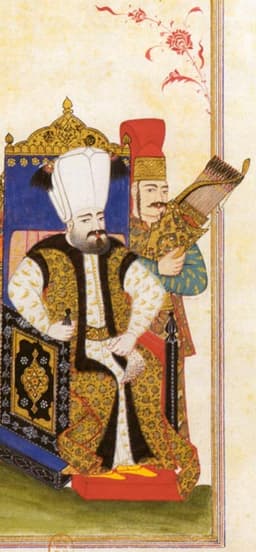
Mustafa II
Emperor · Modern
47.3Total

Sayri Tupac
Emperor · Modern
37.2Total
Basic Information
Born
1664
1535
Died
1703
1561
Era
Modern
Modern
Nationality
Ottoman Empire
Inca Empire
Occupation
Emperor
Emperor
Civilization
Middle Eastern
Western
Score Comparison
Military (10%)
38.3
17.0
Political (20%)
32.2
25.0
Influence (20%)
52.5
47.1
Legacy (20%)
42.5
35.8
Leadership (15%)
65.7
34.6
Strategy (15%)
50.0
58.5
TOTAL
47.3
37.2
Mustafa II — Complete Timeline
1695 AD
Last Campaigning Ottoman SultanWar◆ Major
Mustafa II personally led the Ottoman army in campaigns against the Habsburgs, recapturing the island of Chios in 1695. He was the last Ottoman sultan to lead a military campaign in person, a tradition that ended after his reign.
Military CampaignChiosSultan
Impact: national
1697 AD
Battle of ZentaWar◆ Major
Mustafa II's army was decisively defeated by the Habsburg forces under Prince Eugene of Savoy at Zenta. The Ottoman army was caught crossing the Tisza River and suffered heavy losses. This defeat led to the Treaty of Karlowitz.
Great Turkish WarHabsburgsPrince Eugene
Impact: regionaltragic
1699 AD
Treaty of KarlowitzPolitical Action
Mustafa II signed the Treaty of Karlowitz with the Holy League, ending the Great Turkish War. The treaty ceded Hungary, Transylvania, and Podolia to the Habsburgs, Poland, and Venice. This marked the first major territorial loss for the Ottoman Empire.
Peace TreatyTerritorial LossHoly League
Impact: regionaltragic
1703 AD
Deposed by the Edirne EventPolitical Action◆ Major
Mustafa II was deposed by a Janissary revolt known as the Edirne Event. The rebels, angry over his reliance on the grand vizier and his stay in Edirne, marched on Istanbul. He was forced to abdicate in favor of his brother Ahmed III.
DepositionEdirne EventJanissaries
Impact: nationaltragic
Sayri Tupac — Complete Timeline
1545 AD
Coronation as Sapa Inca of VilcabambaPolitical Action◆ Major
Sayri Tupac succeeded his father Manco Inca as the ruler of the Neo-Inca state in Vilcabamba. He inherited a small, isolated kingdom that continued resistance against Spanish rule in the Andes.
CoronationVilcabambaInca
Impact: regional
1557 AD
Negotiations with the Spanish ViceroyPolitical Action◆ Major
Sayri Tupac entered into negotiations with Spanish Viceroy Andr
NegotiationPeaceSpanish
Impact: regionalconstructive
1558 AD
Baptism and Acceptance of Spanish RuleCultural◆ Major
Sayri Tupac was baptized as a Christian in Lima, taking the name Diego. He formally accepted Spanish sovereignty and was granted the title of Prince of Yucay, along with encomiendas, ending the Vilcabamba resistance temporarily.
BaptismSubmissionInca
Impact: regional
1561 AD
Death of Sayri TupacOther◆ Major
Sayri Tupac died suddenly in Yucay, possibly poisoned by Spanish officials or by his own relatives. His death led to the succession of his brother Titu Cusi Yupanqui, who resumed resistance against Spanish rule.
DeathSuccessionInca
Impact: regionaltragic
This comparison has not been analyzed yet.
One-time AI generation (~1 minute). Scores and timeline are already available below.
Rankings
🥇
Mustafa IILeader
Mil: 38.3Pol: 32.2Inf: 52.5
47.3
🥈
Sayri Tupac
Mil: 17.0Pol: 25.0Inf: 47.1
37.2
+10.1 behind
How This Comparison Works
Algorithm
Each figure is scored on 6 dimensions (0—100 scale) based on structured historical data: Military (10%), Political (20%), Influence (20%), Legacy (20%), Leadership (15%), Strategy (15%). The weighted total produces the final ranking.
Data Sources
Scores are computed from structured sub-indicators in the database. Scale factors adjust for era (Ancient ×0.85, Modern ×1.0) and civilization size (Eastern ×1.05, Other ×0.80) to account for differences in population and military scale.
Maximum 3 Figures
Comparisons are limited to 2—3 figures to ensure readability and statistical meaningfulness.
Error Margins
±5 points per dimension — Sub-scores are derived from historical records with inherent uncertainty. Two figures within 5 points on a dimension should be considered roughly equivalent in that area.
Total Score Accuracy
±3 points overall — The weighted combination of 6 dimensions produces a total score with approximately ±3 points of uncertainty. Differences of less than 3 points are not statistically significant— the figures are effectively tied.
Known Limitations
- Historical records are incomplete and uneven across civilizations
- Figures from oral-tradition societies may be underrepresented
- Occupation labels can misclassify multi-role figures
- Scores measure capability and impact, not moral character
- Quantitative scoring is a comparison tool, not absolute truth
Capability Radar
Military (10%) — Battles & Warfare
Battles
45
39
Win Rate
40
40
Expansion
25
45
Political (20%) — Governance & Reform
Reform
15
5
Diplomacy
30
15
Economy
20
5
Influence (20%) — Cultural & Global Reach
Cultural
30
5
Global
25
5
Legacy (20%) — Historical Impact
Historical
35
10
Longevity
20
5
Leadership (15%) — Power & Stability
Tenure
40
10
Stability
25
10
Strategy (15%) — Tactics & Innovation
Strategy
30
42
Tactics
35
51
Reform
20
50
Similar Comparisons
Comments & Discussion
No comments yet. Be the first to share your thoughts!