Loading...
Mutakkil-Nusku vs Ran Min
Mutakkil-Nusku leads by 11.7 pts · 2 figures compared
…
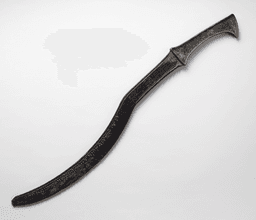
Mutakkil-Nusku
Emperor · Ancient
55.6Total
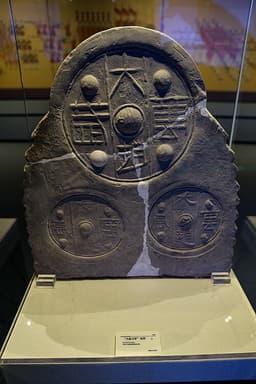
Ran Min
Emperor · Ancient
43.9Total
Basic Information
Born
-1132
320
Died
-1131
352
Era
Ancient
Ancient
Nationality
Assyria
China
Occupation
Emperor
Emperor
Civilization
Middle Eastern
Eastern
Score Comparison
Military (10%)
46.6
72.5
Political (20%)
68.0
29.3
Influence (20%)
56.7
44.8
Legacy (20%)
56.8
40.0
Leadership (15%)
45.0
33.5
Strategy (15%)
56.4
60.0
TOTAL
55.6
43.9
Ran Min — Complete Timeline
350 AD
Extermination edict against the Jie peoplePolitical Action◆ Major
Ran Min issued an edict ordering the extermination of the Jie people in northern China. This led to mass killings of Jie and other non-Han ethnic groups, with estimates of hundreds of thousands killed, causing widespread ethnic violence and destabilization.
Ethnic CleansingViolenceEdict
Impact: regionaldestructive
Proclaimed himself Emperor of WeiPolitical Action◆ Major
Ran Min declared himself emperor of the short-lived Wei dynasty after overthrowing the Later Zhao regime. His rule was marked by constant warfare with surrounding states and ethnic tensions.
ProclamationDynasty Founding
Impact: regional
352 AD
Defeated and captured by Former Yan forcesWar◆ Major
Ran Min was defeated in battle by the Xianbei-led Former Yan state. He was captured and later executed, ending his brief reign and the Wei dynasty.
DefeatCaptureExecution
Impact: regionaltragic
Expert Analysis
Origins
Mutakkil-Nusku was an Assyrian king who reigned briefly during the Middle Assyrian period, around 1133 BCE. He was the son of Ashur-dan I and succeeded his brother Ninurta-tukulti-Ashur after a coup. Little is known of his early life, but as a member of the Assyrian royal family, he would have received training in administration and military command. His reign was so short that few records survive, leaving his background largely obscured.
Ran Min was born in 322 CE in the chaotic Sixteen Kingdoms period of Chinese history. He was of Han Chinese ethnicity but was adopted into the Jie-led Later Zhao dynasty. His father, Ran Zhan, was a general under Shi Hu, the emperor of Later Zhao. Ran Min grew up in a military environment, learning warfare and politics under a non-Han regime, which shaped his later actions.
Rise to Power
Mutakkil-Nusku came to power by overthrowing his brother Ninurta-tukulti-Ashur around 1133 BCE. The exact circumstances are unclear, but it appears he seized the throne after a period of internal strife. His reign lasted only a few months or years before he was himself overthrown by Ashur-resh-ishi I, who founded a new dynasty. Thus, his rise was abrupt and his hold on power tenuous.
Ran Min rose to prominence as a general under Later Zhao. After the death of Shi Hu in 349 CE, internal conflicts erupted. Ran Min seized control of the capital, Ye, and in 350 CE he proclaimed himself emperor of a new Wei dynasty. He issued an extermination edict against the Jie people, leading to mass killings of non-Han ethnic groups in northern China. This drastic action aimed to consolidate his power but also provoked widespread resistance.
Leadership & Governance
Mutakkil-Nusku's leadership is poorly documented. He likely attempted to maintain Assyrian stability but failed to secure his dynasty. His governance left no known reforms or achievements, and his short reign suggests ineffective control. In contrast, Ran Min's governance was marked by ethnic violence and constant warfare. He sought to restore Han Chinese rule but alienated other groups, leading to his isolation. His leadership score of 33.5 reflects his inability to build a sustainable regime.
Triumph & Tragedy
Mutakkil-Nusku's triumph was simply becoming king, but his tragedy was his inability to hold power. His reign ended with his overthrow, and he left no lasting legacy. Ran Min's greatest success was briefly establishing the Wei dynasty and eliminating many Jie people, but his tragedy was his brutal methods, which led to his downfall. He was defeated and captured by Former Yan forces in 352 CE, then executed. His reign lasted only two years, and his policies caused widespread death and instability.
Character & Destiny
Mutakkil-Nusku appears as a shadowy figure whose ambition led him to usurp his brother but who lacked the capacity to govern effectively. His character is largely unknown, but his fate suggests a ruler who overreached. Ran Min was known for his ruthless determination and anti-foreigner stance. Historians describe him as a controversial figure, with some seeing him as a Chinese nationalist and others as a genocidal tyrant. His character directly led to his downfall, as his edict alienated potential allies and unified enemies against him.
Legacy
Mutakkil-Nusku's legacy is minimal; he is a footnote in Assyrian history, remembered only for his brief reign. His total score of 55.6 is largely based on his position as an Assyrian king, but his actual impact is near zero. Ran Min's legacy is more significant but deeply divisive. He is remembered for the extermination edict and the short-lived Wei dynasty. His actions contributed to the ethnic conflicts of the period, but he failed to establish a lasting state. His influence score of 44.8 reflects his limited but notable impact.
Conclusion
While Mutakkil-Nusku has a higher total score (55.6 vs 43.9), his actual historical impact is virtually nil due to his obscure and brief reign. Ran Min, despite lower scores in political and leadership categories, had a more concrete and controversial impact through his edict and short rule. However, his negative legacy and failure to build a lasting regime mean Mutakkil-Nusku, as a representative of the Assyrian monarchy, had greater potential influence. But in terms of actual historical events, Ran Min's actions had more tangible consequences. Taking a stance: Ran Min had a greater impact because his edict and reign caused immediate demographic and political changes, whereas Mutakkil-Nusku's impact is negligible.
Rankings
🥇
Mutakkil-NuskuLeader
Mil: 46.6Pol: 68.0Inf: 56.7
55.6
🥈
Ran Min
Mil: 72.5Pol: 29.3Inf: 44.8
43.9
+11.7 behind
How This Comparison Works
Algorithm
Each figure is scored on 6 dimensions (0—100 scale) based on structured historical data: Military (10%), Political (20%), Influence (20%), Legacy (20%), Leadership (15%), Strategy (15%). The weighted total produces the final ranking.
Data Sources
Scores are computed from structured sub-indicators in the database. Scale factors adjust for era (Ancient ×0.85, Modern ×1.0) and civilization size (Eastern ×1.05, Other ×0.80) to account for differences in population and military scale.
Maximum 3 Figures
Comparisons are limited to 2—3 figures to ensure readability and statistical meaningfulness.
Error Margins
±5 points per dimension — Sub-scores are derived from historical records with inherent uncertainty. Two figures within 5 points on a dimension should be considered roughly equivalent in that area.
Total Score Accuracy
±3 points overall — The weighted combination of 6 dimensions produces a total score with approximately ±3 points of uncertainty. Differences of less than 3 points are not statistically significant— the figures are effectively tied.
Known Limitations
- Historical records are incomplete and uneven across civilizations
- Figures from oral-tradition societies may be underrepresented
- Occupation labels can misclassify multi-role figures
- Scores measure capability and impact, not moral character
- Quantitative scoring is a comparison tool, not absolute truth
Capability Radar
Military (10%) — Battles & Warfare
Battles
40
65
Win Rate
43
60
Expansion
45
45
Political (20%) — Governance & Reform
Reform
0
10
Diplomacy
0
5
Economy
0
10
Influence (20%) — Cultural & Global Reach
Cultural
67
10
Global
78
15
Legacy (20%) — Historical Impact
Historical
70
40
Longevity
77
20
Leadership (15%) — Power & Stability
Tenure
5
20
Stability
0
5
Strategy (15%) — Tactics & Innovation
Strategy
47
50
Tactics
48
55
Reform
52
10
Similar Comparisons
Comments & Discussion
No comments yet. Be the first to share your thoughts!