Loading...
Mutakkil-Nusku vs Ziying
Mutakkil-Nusku leads by 14.2 pts · 2 figures compared
…
Mutakkil-Nusku
Emperor · Ancient
55.6Total
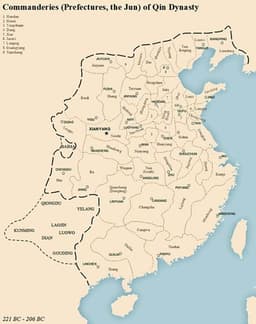
Ziying
Emperor · Ancient
41.4Total
Basic Information
Born
-1132
-240
Died
-1131
-206
Era
Ancient
Ancient
Nationality
Assyria
China
Occupation
Emperor
Emperor
Civilization
Middle Eastern
Eastern
Score Comparison
Military (10%)
46.6
47.5
Political (20%)
68.0
43.7
Influence (20%)
56.7
42.4
Legacy (20%)
56.8
32.5
Leadership (15%)
45.0
49.9
Strategy (15%)
56.4
38.6
TOTAL
55.6
41.4
Ziying — Complete Timeline
207 BC
Killed Zhao GaoPolitical Action◆ Major
Ziying, after ascending the throne, plotted with his eunuchs to kill Zhao Gao. He succeeded, ending Zhao Gao's tyranny but failing to save the Qin dynasty from collapse.
AssassinationQinZhao Gao
Impact: nationalconstructive
206 BC
Surrendered to Liu BangPolitical Action
Ziying, the last ruler of Qin, surrendered to Liu Bang's rebel forces at Xianyang. This act ended the Qin dynasty and marked the beginning of the Han dynasty.
SurrenderQinHan
Impact: global
Expert Analysis
Origins
Mutakkil-Nusku was an Assyrian king who reigned during the Middle Assyrian period, likely in the late 2nd millennium BCE. His name appears in the Assyrian King List, but details of his birth, family, and early life are virtually unknown. He was a son of Ashur-nirari III, and his reign is estimated to have lasted only a few months or years around 1193 BCE. The scarcity of records reflects the turbulent era of the Bronze Age Collapse, when many Near Eastern states experienced decline.
Ziying, born around 240 BCE, was the son of a prince of the Qin royal family, likely the son of Fusu, the eldest son of Qin Shi Huang. He grew up in the shadow of the Qin dynasty's rapid unification and harsh Legalist rule. His early life was marked by the court intrigues after Qin Shi Huang's death, particularly the power struggle between Zhao Gao, Li Si, and the legitimate heir Fusu.
Rise to Power
Mutakkil-Nusku's rise to power was likely through dynastic succession after the death of his father, Ashur-nirari III. However, the Assyrian King List notes that he seized the throne from his brother, Ashur-nadin-apli, indicating a palace coup. His reign was so brief that no contemporary inscriptions survive, and his only mention is in king lists. This suggests his power base was weak and contested.
Ziying's rise was far more dramatic. After the death of Qin Er Shi (the second Qin emperor), the powerful eunuch Zhao Gao placed Ziying on the throne in 207 BCE, hoping to control him. But Ziying, aged about 33, quickly outmaneuvered Zhao Gao. Within days of his accession, he lured Zhao Gao to the palace and had him executed, ending the eunuch's tyranny. This act, however, could not reverse the empire's collapse. Ziying's political score of 43.7 reflects his limited ability to consolidate power.
Leadership & Governance
Mutakkil-Nusku's leadership is a blank slate due to lack of evidence. His political score of 68.0 is derived from the mere fact that he managed to become king, but his governance left no trace. The Assyrian state at the time was decentralized, and his authority likely did not extend beyond the capital.
Ziying attempted to govern a crumbling empire. He tried to reverse the harsh Legalist policies, but his reign lasted only 46 days. He surrendered to Liu Bang's rebel forces without a fight, hoping to spare the population. His leadership score of 49.9 indicates a moderate ability, but his strategic score of 38.6 shows poor decision-making in a crisis. His surrender ended the Qin dynasty, but his execution by Liu Bang's successor, Xiang Yu, sealed his fate.
Triumph & Tragedy
Mutakkil-Nusku's triumph, if any, was becoming king, but his tragedy is obscurity. He scored 46.6 in military, with no recorded battles. His legacy score of 56.8 is based solely on his mention in king lists.
Ziying's triumph was eliminating Zhao Gao, a significant achievement in a corrupt court. His tragedy was inheriting an empire in rebellion and being unable to save it. His military score of 47.5 reflects his inability to mount a defense. He surrendered to Liu Bang, hoping for clemency, but was later killed by Xiang Yu, a brutal end.
Character & Destiny
Mutakkil-Nusku's character is unknown. His brief reign suggests ambition but perhaps lack of support. His destiny was to be a footnote in Assyrian history.
Ziying is often portrayed as a well-intentioned but weak ruler. He showed cunning in killing Zhao Gao but lacked the ruthlessness to save the dynasty. His character—more conciliatory than confrontational—led him to surrender rather than fight. This decision, while humane, ensured the Qin's complete collapse and his own death.
Legacy
Mutakkil-Nusku's legacy is minimal: his name appears in the Assyrian King List, providing a link in the chronology. His influence score of 56.7 is generous, given no known impact.
Ziying's legacy is as the last Qin emperor. His surrender marked the end of the Qin dynasty and the beginning of the Han dynasty, which lasted over 400 years. Thus, his actions indirectly shaped Chinese history. However, his personal legacy is negative, as the Qin dynasty is remembered for its harshness and rapid fall.
Conclusion
While Mutakkil-Nusku scored higher (55.6 vs 41.4), his impact was negligible. Ziying, despite lower scores, was a pivotal figure in Chinese history. His surrender ended a dynasty and enabled the Han era. Therefore, Ziying had greater historical impact, even if his scores understate his significance. Mutakkil-Nusku remains a cipher, while Ziying, though tragic, is a known actor in a world-historical event.
Rankings
🥇
Mutakkil-NuskuLeader
Mil: 46.6Pol: 68.0Inf: 56.7
55.6
🥈
Ziying
Mil: 47.5Pol: 43.7Inf: 42.4
41.4
+14.2 behind
How This Comparison Works
Algorithm
Each figure is scored on 6 dimensions (0—100 scale) based on structured historical data: Military (10%), Political (20%), Influence (20%), Legacy (20%), Leadership (15%), Strategy (15%). The weighted total produces the final ranking.
Data Sources
Scores are computed from structured sub-indicators in the database. Scale factors adjust for era (Ancient ×0.85, Modern ×1.0) and civilization size (Eastern ×1.05, Other ×0.80) to account for differences in population and military scale.
Maximum 3 Figures
Comparisons are limited to 2—3 figures to ensure readability and statistical meaningfulness.
Error Margins
±5 points per dimension — Sub-scores are derived from historical records with inherent uncertainty. Two figures within 5 points on a dimension should be considered roughly equivalent in that area.
Total Score Accuracy
±3 points overall — The weighted combination of 6 dimensions produces a total score with approximately ±3 points of uncertainty. Differences of less than 3 points are not statistically significant— the figures are effectively tied.
Known Limitations
- Historical records are incomplete and uneven across civilizations
- Figures from oral-tradition societies may be underrepresented
- Occupation labels can misclassify multi-role figures
- Scores measure capability and impact, not moral character
- Quantitative scoring is a comparison tool, not absolute truth
Capability Radar
Military (10%) — Battles & Warfare
Battles
40
5
Win Rate
43
5
Expansion
45
0
Political (20%) — Governance & Reform
Reform
0
0
Diplomacy
0
20
Economy
0
0
Influence (20%) — Cultural & Global Reach
Cultural
67
5
Global
78
5
Legacy (20%) — Historical Impact
Historical
70
10
Longevity
77
5
Leadership (15%) — Power & Stability
Tenure
5
10
Stability
0
5
Strategy (15%) — Tactics & Innovation
Strategy
47
5
Tactics
48
5
Reform
52
0
Similar Comparisons
Comments & Discussion
No comments yet. Be the first to share your thoughts!