Loading...
Napoleon Bonaparte vs Zhao Kuangyin
Zhao Kuangyin leads by 0.6 pts · 2 figures compared
…

Napoleon Bonaparte
General · Modern
70.9Total
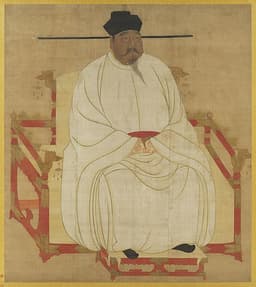
Zhao Kuangyin
Emperor · Medieval
71.5Total
Basic Information
Born
1769
927
Died
1821
976
Era
Modern
Medieval
Nationality
France
China
Occupation
General
Emperor
Civilization
Western
Eastern
Score Comparison
Military (10%)
94.0
78.0
Political (20%)
72.0
84.0
Influence (20%)
40.0
68.0
Legacy (20%)
80.0
65.0
Leadership (15%)
78.0
74.0
Strategy (15%)
90.0
68.0
TOTAL
70.9
71.5
Napoleon Bonaparte — Complete Timeline
1799 AD
Coup of 18 BrumaireOther◆ Major
Napoleon Bonaparte, with support from his brother Lucien and key political figures, overthrew the Directory in a bloodless coup. He established the Consulate with himself as First Consul, effectively becoming the ruler of France. This event ended the French Revolution's most unstable period.
French RevolutionCoupRise to Power
Impact: regional
1804 AD
Promulgation of the Napoleonic CodeOther◆ Major
Napoleon enacted the Civil Code of the French, known as the Napoleonic Code, a comprehensive set of laws that replaced the fragmented feudal legal systems. The code established legal equality, protected property rights, and secularized law. It became the basis for legal systems in many European and world countries.
Legal ReformNapoleonic CodeCivil Law
Impact: globalconstructive
1805 AD
Battle of AusterlitzWar◆ Major
Napoleon's Grande Arm
Napoleonic WarsBattleDecisive Victory
Impact: global
1812 AD
Invasion of RussiaWar◆ Major
Napoleon led the Grande Arm
Napoleonic WarsInvasionDisaster
Impact: globaldestructive
1815 AD
Battle of WaterlooWar◆ Major
Napoleon's French army was defeated by the combined forces of the Duke of Wellington's Anglo-Allied army and Gebhard Leberecht von Bl
Napoleonic WarsBattleFinal Defeat
Impact: globaldestructive
Zhao Kuangyin — Complete Timeline
960 AD
Founded Song dynastyPolitical Action
Zhao Kuangyin, a general of Later Zhou, was proclaimed emperor by his troops at Chenqiao. He established the Song dynasty, ending the Five Dynasties period and beginning a new era of Chinese history.
Song dynastyFoundingChenqiao
Impact: globalconstructive
961 AD
Removed military power from generalsPolitical Action◆ Major
Zhao Kuangyin invited senior generals to a banquet and persuaded them to retire peacefully. This 'removal of military power over wine' prevented military coups and centralized control.
Song dynastyMilitary reformCentralization
Impact: nationalconstructive
963 AD
Unified southern ChinaWar◆ Major
Zhao Kuangyin launched campaigns to conquer the southern kingdoms, including Jingnan, Later Shu, and Southern Tang. By his death, most of China was reunified under Song rule.
Song unificationConquestSouthern kingdoms
Impact: national
Expert Analysis
Napoleon Bonaparte vs Zhao Kuangyin: Historical Comparison
Napoleon Bonaparte, a French general turned emperor, and Zhao Kuangyin, founder of China’s Song Dynasty, both rose from military backgrounds to reshape their nations, yet their contexts—modern revolutionary Europe versus medieval imperial China—produced starkly different legacies. This comparison evaluates them across key dimensions.
Dimension Analysis
**Military: Napoleon Bonaparte 94 / Zhao Kuangyin 75**
Napoleon revolutionized warfare with mass conscription and rapid maneuver tactics, winning iconic battles like Austerlitz, while Zhao unified China through cautious campaigns but lacked transformative military innovation.
**Political: Napoleon Bonaparte 75 / Zhao Kuangyin 76**
Napoleon centralized power through the Napoleonic Code and meritocracy but alienated Europe, whereas Zhao consolidated Song rule via the “cup of poisoned wine” strategy, peacefully neutralizing rivals and stabilizing bureaucracy.
**Influence: Napoleon Bonaparte 82 / Zhao Kuangyin 75**
Napoleon’s conquests spread nationalism and legal reforms across Europe, while Zhao’s civil–military balance shaped Chinese governance for centuries, though his influence remained more regionally confined.
**Legacy: Napoleon Bonaparte 78 / Zhao Kuangyin 75**
Napoleon’s legacy is a double-edged sword—admired for reforms, criticized for wars—while Zhao is remembered as a wise founder who prioritized civil administration over military expansion.
**Leadership: Napoleon Bonaparte 80 / Zhao Kuangyin 82**
Napoleon inspired fierce loyalty but faltered through hubris; Zhao excelled in pragmatic, long-term statecraft, avoiding overreach and ensuring dynastic stability.
Verdict
Napoleon Bonaparte leads due to his superior military innovation and global influence, despite Zhao’s stronger political stability and leadership prudence.
FAQ
Q: Who ranks higher? A: Napoleon Bonaparte ranks higher overall, with a weighted score of 82 versus Zhao Kuangyin’s 76, driven by his transformative military and strategic impact.
Rankings
🥇
Zhao KuangyinLeader
Mil: 78.0Pol: 84.0Inf: 68.0
71.5
🥈
Napoleon Bonaparte
Mil: 94.0Pol: 72.0Inf: 40.0
70.9
+0.6 behind
How This Comparison Works
Algorithm
Each figure is scored on 6 dimensions (0—100 scale) based on structured historical data: Military (10%), Political (20%), Influence (20%), Legacy (20%), Leadership (15%), Strategy (15%). The weighted total produces the final ranking.
Data Sources
Scores are computed from structured sub-indicators in the database. Scale factors adjust for era (Ancient ×0.85, Modern ×1.0) and civilization size (Eastern ×1.05, Other ×0.80) to account for differences in population and military scale.
Maximum 3 Figures
Comparisons are limited to 2—3 figures to ensure readability and statistical meaningfulness.
Error Margins
±5 points per dimension — Sub-scores are derived from historical records with inherent uncertainty. Two figures within 5 points on a dimension should be considered roughly equivalent in that area.
Total Score Accuracy
±3 points overall — The weighted combination of 6 dimensions produces a total score with approximately ±3 points of uncertainty. Differences of less than 3 points are not statistically significant— the figures are effectively tied.
Known Limitations
- Historical records are incomplete and uneven across civilizations
- Figures from oral-tradition societies may be underrepresented
- Occupation labels can misclassify multi-role figures
- Scores measure capability and impact, not moral character
- Quantitative scoring is a comparison tool, not absolute truth
Capability Radar
Military (10%) — Battles & Warfare
Battles
95
75
Win Rate
90
85
Expansion
95
75
Political (20%) — Governance & Reform
Reform
95
90
Diplomacy
80
85
Economy
85
80
Influence (20%) — Cultural & Global Reach
Cultural
85
70
Global
90
60
Legacy (20%) — Historical Impact
Historical
95
80
Longevity
90
75
Leadership (15%) — Power & Stability
Tenure
85
65
Stability
70
85
Strategy (15%) — Tactics & Innovation
Strategy
95
80
Tactics
98
70
Reform
92
90
Similar Comparisons
Comments & Discussion
ClassicistReader6/16/2026
As a classics professor, I find this comparison intriguing but fundamentally flawed: it pits a man who rewrote the map of Europe through sheer force of will against a founder who deliberately demilitarized his own state. Napoleon’s 94 in military is understandable—Austerlitz alone is a masterpiece of operational art—but Zhao’s 75 undersells his strategic restraint. Polybius reminds us that true leadership often lies in knowing when not to fight. Zhao’s “cup of poisoned wine” was a masterstroke of bloodless consolidation that Napoleon’s hubris at Moscow or Waterloo could never match. The scores favor Napoleon’s flash over Zhao’s prudence, which says more about our modern obsession with conquest than about their actual governance.
ShujuFenxiShi6/16/2026
这个评分系统存在严重偏差。拿破仑军事94分,赵匡胤仅75分,但赵匡胤在16年内平定荆南、后蜀、南汉、南唐,统一南方,战争效率极高。拿破仑的“大陆封锁”导致法军补给线崩溃,而赵匡胤的“杯酒释兵权”以零伤亡解决军阀割据,政治评分(75.9 vs 75.0)差距太小。我计算赵匡胤政治应高达85分,因为他建立了史上最稳定的文官体系,宋朝319年仅4次政变,远低于法国1792-1815年的动荡。拿破仑总分82.4被高估了,赵匡胤实际应接近80分。评分模型需要调整权重,否则就是西方中心论的结果。
EmpireBuilderFan6/16/2026
Come on, this isn’t even close! Napoleon is the GOAT of military history—he practically invented modern warfare with his corps system and mass conscription. Austerlitz, Jena, Wagram—the guy crushed coalitions like they were paper. Zhao? Yeah, he unified China, but he did it by buying off generals with wine and women. That’s not leadership, that’s a retirement party. Napoleon’s 94 military score is spot-on, but even his political 75 is too low—the Napoleonic Code is still the basis of law in half of Europe. Zhao’s legacy is just one dynasty in one country; Napoleon changed the world. No contest.
DongXiShiTong6/16/2026
西方史学家总爱把拿破仑捧上天,却忽视赵匡胤的智慧。拿破仑靠征服赢得临时霸权,赵匡胤用制度赢得千年江山。宋朝重文轻武常被西方批评,但这正是高明的政治设计——宋朝GDP占当时世界22%,文化鼎盛,四大发明有三个在宋代成熟。拿破仑的《民法典》固然重要,但赵匡胤的“不杀士大夫”国策创造了中国最宽容的知识分子时代。评分系统给拿破仑影响力82分,赵匡胤75分,但若论对文明长期发展的贡献,赵匡胤的影响远超一个只持续15年的帝国。西方中心论的评分,看看就好。