Loading...
Naram-Sin vs Skandagupta
Naram-Sin leads by 3.8 pts · 2 figures compared
…
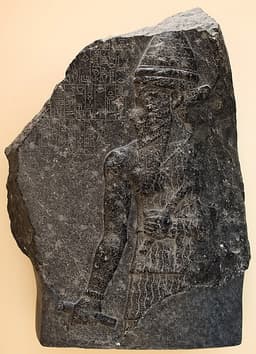
Naram-Sin
Emperor · Ancient
60.5Total

Skandagupta
Emperor · Ancient
56.7Total
Basic Information
Born
-2254
440
Died
-2218
467
Era
Ancient
Ancient
Nationality
Akkadian Empire
India
Occupation
Emperor
Emperor
Civilization
Middle Eastern
Indian
Score Comparison
Military (10%)
74.0
74.7
Political (20%)
53.8
45.0
Influence (20%)
61.0
56.4
Legacy (20%)
54.0
48.3
Leadership (15%)
68.0
68.0
Strategy (15%)
61.2
61.2
TOTAL
60.5
56.7
Naram-Sin — Complete Timeline
2254 BC
Accession to the thronePolitical Action◆ Major
Naram-Sin became king of the Akkadian Empire after the death of his father Manishtusu. He inherited a stable empire and immediately faced rebellions that he would suppress with military force.
Akkadian DynastySuccession
Impact: regional
2250 BC
Suppression of the Great RebellionWar◆ Major
Naram-Sin crushed a widespread rebellion that threatened the Akkadian Empire, as recorded in the 'Great Rebellion' texts. He defeated nine coalition armies in a single year, reasserting Akkadian control over Mesopotamia.
Military CampaignRebellion
Impact: regional
2245 BC
Conquest of the LullubiWar◆ Major
Naram-Sin led a military campaign against the Lullubi people in the Zagros Mountains. His victory is commemorated on the Victory Stele of Naram-Sin, which shows him as a god-like figure trampling his enemies.
Military CampaignVictory Stele
Impact: regional
2240 BC
Declaration of divinityCultural◆ Major
Naram-Sin declared himself a living god, the first Mesopotamian king to do so. He added the divine determinative to his name and built temples to himself, establishing a precedent for royal deification in Mesopotamia.
Royal DeificationReligious Innovation
Impact: regional
2235 BC
Construction of the Palace of Naram-SinCultural◆ Major
Naram-Sin built a massive palace at Tell Brak in Syria, one of the largest known buildings of the Bronze Age. The palace served as an administrative center for the Akkadian Empire's western territories.
ArchitectureImperial Administration
Impact: regionalconstructive
Skandagupta — Complete Timeline
455 AD
Defeated the Huna (Hephthalite) InvasionWar◆ Major
Skandagupta repelled a major invasion by the Huna (Hephthalite) nomads from Central Asia. The victory preserved the Gupta Empire's integrity and is recorded in the Junagadh rock inscription, which praises his military prowess.
BattleHuna Invasion
Impact: regional
458 AD
Repaired the Sudarshana Lake DamOther
Skandagupta ordered the repair of the Sudarshana Lake dam in Gujarat, which had been damaged by floods. The project, supervised by his governor Parnadatta, restored irrigation for agriculture and demonstrated Gupta administrative capability.
InfrastructureIrrigation
constructive
Issued the Junagadh Rock InscriptionCultural
Skandagupta commissioned the Junagadh rock inscription, which records his reign, military victories, and public works. The inscription provides key historical evidence of Gupta administration and the Huna threat.
InscriptionPropaganda
Impact: regional
460 AD
Maintained Gupta Territorial IntegrityPolitical Action◆ Major
Skandagupta successfully defended the Gupta Empire against internal rebellions and external threats, preventing its fragmentation. His reign marked the last period of Gupta unity before the empire declined under later rulers.
DefenseEmpire Maintenance
Impact: regional
Expert Analysis
Origins
Naram-Sin (r. 2254–2218 BCE) was the grandson of Sargon of Akkad, the founder of the Akkadian Empire. His father Manishtusu preceded him, but Naram-Sin ascended after his father's death. He was born into the ruling dynasty of the world's first empire, receiving training in administration and warfare from an early age. The Akkadian Empire at that time stretched from the Persian Gulf to the Mediterranean, but it faced constant rebellions from conquered city-states.
Skandagupta (r. 455–467 CE) was a son of the Gupta emperor Kumaragupta I. The Gupta Empire, often called the Golden Age of India, was at its zenith when Skandagupta was born. He grew up in a period of peace and prosperity, but the empire faced growing threats from the Huna (Hephthalite) nomads from Central Asia. Skandagupta likely received military training and was prepared for the defense of the realm. His early life is less documented, but inscriptions suggest he was chosen as successor due to his martial prowess.
Rise to Power
Naram-Sin inherited a stable empire but immediately faced a massive rebellion known as the 'Great Rebellion.' According to the Cuneiform texts, nine coalition forces led by kings from Sumer and Akkad rose against him. Naram-Sin crushed these rebellions in a series of campaigns, defeating all nine enemies. This victory solidified his authority and allowed him to expand the empire further. His military success enabled him to declare himself a living god, a unprecedented move in Mesopotamian history.
Skandagupta rose to power during a crisis. The Huna invasion under their king Toramana threatened the Gupta heartland. Skandagupta, probably as a prince, led the defense and repelled the invasion around 460 CE. His victory preserved the Gupta Empire and earned him the title 'Vikramaditya' (Sun of Valor). He then ascended the throne after Kumaragupta's death, facing internal rebellions that he also suppressed. The Junagadh rock inscription records his military campaigns and administrative measures.
Leadership & Governance
Naram-Sin ruled as an absolute monarch who claimed divine status. He added the divine determinative to his name (dingir-Naram-Sin) and built temples dedicated to himself. He centralized power, appointed governors loyal to him, and undertook massive building projects like the Palace of Tell Brak, which served as an administrative center. His governance was autocratic, relying on military force and religious authority. However, his deification alienated traditional priesthoods and city elites.
Skandagupta ruled as a traditional Gupta monarch, maintaining the existing administrative structure. He repaired the Sudarshana Lake dam in Gujarat, a public works project supervised by his governor Parnadatta. He issued the Junagadh inscription to record his deeds, following the tradition of his predecessors. His leadership was pragmatic, focusing on defense and stability rather than expansion. He did not claim divinity but used traditional titles to legitimize his rule.
Triumph & Tragedy
Naram-Sin's greatest triumph was crushing the Great Rebellion and expanding the Akkadian Empire to its greatest extent. He also conquered the Lullubi people in the Zagros Mountains, commemorated on the Victory Stele. His tragedy was that his deification and overcentralization led to resentment and eventual decline. After his death, the empire fragmented due to internal revolts and external pressures. The Akkadian Empire collapsed within a century of his reign.
Skandagupta's triumph was repelling the Huna invasion, which saved the Gupta Empire from destruction. He also maintained territorial integrity against internal rebellions. His tragedy was that his efforts were ultimately futile; after his death, the Huns returned and the Gupta Empire declined. The empire fragmented into regional kingdoms, and Skandagupta was the last great Gupta emperor. His legacy is that of a defender who delayed the inevitable collapse.
Character & Destiny
Naram-Sin was ambitious and innovative, as shown by his self-deification. He saw himself as equal to the gods, which gave him confidence but also hubris. His decision to declare divinity may have been a strategic move to centralize authority, but it backfired. Historians note that his reign marked the peak of Akkadian power but also sowed the seeds of its downfall. He scored 68.0 in leadership, reflecting his ability to command but not to sustain.
Skandagupta was a capable military leader, scoring 74.7 in military and 61.2 in strategy, similar to Naram-Sin's 74.0 and 61.2. He was defensive-minded, focusing on preserving what he inherited. His character was that of a guardian, not an innovator. He did not expand the empire or introduce major reforms. His destiny was to be the last great ruler of a golden age, remembered as a savior but not a builder.
Legacy
Naram-Sin's legacy is mixed. He is remembered as the first god-king of Mesopotamia, influencing later rulers like the Assyrian kings who also claimed divinity. His Victory Stele is a masterpiece of art and propaganda. However, his empire collapsed soon after his death, and his deification was seen as a sign of hubris in later Mesopotamian literature. He scored 54.0 in legacy, reflecting his limited long-term impact.
Skandagupta's legacy is that of a defender of the Gupta Golden Age. He is remembered in Indian history as a great warrior-king who repelled the Huns. The Junagadh inscription provides valuable historical data. However, the Gupta Empire declined after his death, and his achievements were overshadowed by the earlier Gupta rulers like Chandragupta II. He scored 48.3 in legacy, lower than Naram-Sin.
Conclusion
Naram-Sin had a greater impact than Skandagupta, as reflected in his total score of 60.5 versus Skandagupta's 56.7. Naram-Sin's innovations in kingship and his role as a god-king had a lasting influence on Mesopotamian civilization, even if his empire fell. Skandagupta, while a capable defender, was a conservative ruler who did not change the course of history. The gap of 3.8 points is significant. Naram-Sin's claim to divinity and his suppression of the Great Rebellion were transformative events, whereas Skandagupta's victory over the Huns only delayed the inevitable decline of the Gupta Empire. Therefore, Naram-Sin is the more consequential figure in world history.
Rankings
🥇
Naram-SinLeader
Mil: 74.0Pol: 53.8Inf: 61.0
60.5
🥈
Skandagupta
Mil: 74.7Pol: 45.0Inf: 56.4
56.7
+3.8 behind
How This Comparison Works
Algorithm
Each figure is scored on 6 dimensions (0—100 scale) based on structured historical data: Military (10%), Political (20%), Influence (20%), Legacy (20%), Leadership (15%), Strategy (15%). The weighted total produces the final ranking.
Data Sources
Scores are computed from structured sub-indicators in the database. Scale factors adjust for era (Ancient ×0.85, Modern ×1.0) and civilization size (Eastern ×1.05, Other ×0.80) to account for differences in population and military scale.
Maximum 3 Figures
Comparisons are limited to 2—3 figures to ensure readability and statistical meaningfulness.
Error Margins
±5 points per dimension — Sub-scores are derived from historical records with inherent uncertainty. Two figures within 5 points on a dimension should be considered roughly equivalent in that area.
Total Score Accuracy
±3 points overall — The weighted combination of 6 dimensions produces a total score with approximately ±3 points of uncertainty. Differences of less than 3 points are not statistically significant— the figures are effectively tied.
Known Limitations
- Historical records are incomplete and uneven across civilizations
- Figures from oral-tradition societies may be underrepresented
- Occupation labels can misclassify multi-role figures
- Scores measure capability and impact, not moral character
- Quantitative scoring is a comparison tool, not absolute truth
Capability Radar
Military (10%) — Battles & Warfare
Battles
75
75
Win Rate
80
80
Expansion
80
55
Political (20%) — Governance & Reform
Reform
65
60
Diplomacy
60
70
Economy
65
65
Influence (20%) — Cultural & Global Reach
Cultural
70
55
Global
55
45
Legacy (20%) — Historical Impact
Historical
75
60
Longevity
60
50
Leadership (15%) — Power & Stability
Tenure
70
65
Stability
55
60
Strategy (15%) — Tactics & Innovation
Strategy
75
75
Tactics
70
70
Reform
60
60
Similar Comparisons
Comments & Discussion
No comments yet. Be the first to share your thoughts!