Loading...
Naram-Sin vs Sun Quan
Sun Quan leads by 3.9 pts · 2 figures compared
…
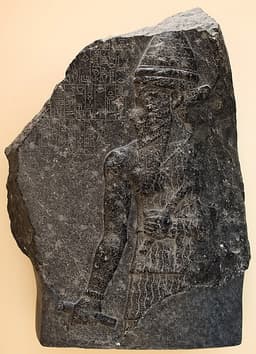
Naram-Sin
Emperor · Ancient
60.5Total
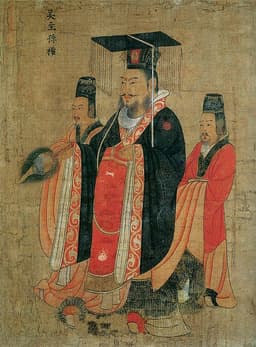
Sun Quan
Emperor · Ancient
64.4Total
Basic Information
Born
-2254
182
Died
-2218
252
Era
Ancient
Ancient
Nationality
Akkadian Empire
China
Occupation
Emperor
Emperor
Civilization
Middle Eastern
Eastern
Score Comparison
Military (10%)
74.0
67.3
Political (20%)
53.8
65.0
Influence (20%)
61.0
59.0
Legacy (20%)
54.0
58.0
Leadership (15%)
68.0
80.0
Strategy (15%)
61.2
66.3
TOTAL
60.5
64.4
Naram-Sin — Complete Timeline
2254 BC
Accession to the thronePolitical Action◆ Major
Naram-Sin became king of the Akkadian Empire after the death of his father Manishtusu. He inherited a stable empire and immediately faced rebellions that he would suppress with military force.
Akkadian DynastySuccession
Impact: regional
2250 BC
Suppression of the Great RebellionWar◆ Major
Naram-Sin crushed a widespread rebellion that threatened the Akkadian Empire, as recorded in the 'Great Rebellion' texts. He defeated nine coalition armies in a single year, reasserting Akkadian control over Mesopotamia.
Military CampaignRebellion
Impact: regional
2245 BC
Conquest of the LullubiWar◆ Major
Naram-Sin led a military campaign against the Lullubi people in the Zagros Mountains. His victory is commemorated on the Victory Stele of Naram-Sin, which shows him as a god-like figure trampling his enemies.
Military CampaignVictory Stele
Impact: regional
2240 BC
Declaration of divinityCultural◆ Major
Naram-Sin declared himself a living god, the first Mesopotamian king to do so. He added the divine determinative to his name and built temples to himself, establishing a precedent for royal deification in Mesopotamia.
Royal DeificationReligious Innovation
Impact: regional
2235 BC
Construction of the Palace of Naram-SinCultural◆ Major
Naram-Sin built a massive palace at Tell Brak in Syria, one of the largest known buildings of the Bronze Age. The palace served as an administrative center for the Akkadian Empire's western territories.
ArchitectureImperial Administration
Impact: regionalconstructive
Sun Quan — Complete Timeline
208 AD
Battle of Red CliffsWar
Sun Quan allied with Liu Bei to defeat Cao Cao's invasion at Red Cliffs. Zhou Yu commanded Sun Quan's fleet, using fire ships to destroy Cao Cao's larger navy. This victory preserved Sun Quan's independence and established the tripartite division of China.
Three KingdomsNaval battleAlliance
Impact: regional
213 AD
Battle of RuxuWar◆ Major
Cao Cao launched a naval invasion against Sun Quan's fortress at Ruxu. Sun Quan personally led a small reconnaissance force that was surrounded, but he broke out. The battle ended in a stalemate, with Cao Cao withdrawing, securing Sun Quan's control of the Yangtze.
Three KingdomsBattleDefense
Impact: regional
222 AD
Proclamation of Eastern WuPolitical Action◆ Major
Sun Quan declared himself Emperor of Wu, establishing the Eastern Wu dynasty. This formalized the Three Kingdoms period, with Wu controlling the Yangtze River basin. Sun Quan's reign lasted until 252, making him the longest-ruling of the three founding emperors.
Three KingdomsDynasty foundingImperial proclamation
Impact: regionalconstructive
Expert Analysis
Origins
Naram-Sin was born around 2254 BCE, the grandson of Sargon the Great, founder of the Akkadian Empire. His father, Manishtusu, ruled before him. He grew up in the imperial court of Akkad, inheriting a vast empire that stretched from the Persian Gulf to the Mediterranean. His early life was shaped by military training and administrative duties, preparing him to rule one of the world's first empires.
Sun Quan was born in 182 CE in Fuchun (modern Zhejiang), China, during the declining Han dynasty. His father, Sun Jian, was a general, and his older brother, Sun Ce, carved out a territory in the Jiangdong region. Sun Quan grew up amidst warfare and political intrigue, learning statecraft and military tactics from his family. He took control of the family's holdings at age 18 after Sun Ce's death.
Both rulers came from established ruling families, but Naram-Sin inherited a stable empire, while Sun Quan inherited a precarious domain under constant threat.
Rise to Power
Naram-Sin ascended the throne around 2254 BCE after his father's death. He faced immediate rebellions across the empire, which he suppressed in the 'Great Rebellion' (recorded in cuneiform texts). He defeated a coalition of nine kings from city-states like Ur, Uruk, and Lagash, reasserting Akkadian control. This victory solidified his authority and allowed him to pursue expansion.
Sun Quan rose to power after his brother Sun Ce died in 200 CE. He inherited control over the Jiangdong region, but faced threats from Cao Cao in the north and Liu Biao in Jing Province. His turning point came in 208 CE at the Battle of Red Cliffs, where he allied with Liu Bei to defeat Cao Cao's massive invasion. Sun Quan's commander Zhou Yu used fire ships to destroy Cao Cao's fleet, securing Sun Quan's position as a major power.
Naram-Sin's rise was marked by crushing internal revolts, while Sun Quan's rise involved strategic alliances and a decisive naval victory.
Leadership & Governance
Naram-Sin ruled as an absolute monarch, centralizing power and breaking with tradition by declaring himself a living god (adding the divine determinative to his name). He built temples to himself and required worship, which alienated traditional priestly elites. His governance focused on military expansion and building infrastructure, like the massive palace at Tell Brak in Syria. However, his divine claims may have undermined political stability.
Sun Quan adopted a more pragmatic leadership style. He maintained a decentralized administration, delegating authority to capable generals like Zhou Yu and Lu Xun. He promoted agriculture and trade in the Yangtze region, developing a strong navy. Politically, he balanced factions between northern immigrants and local Jiangdong elites. He scored 80.0 in leadership, the highest among his metrics, reflecting his ability to manage diverse talents.
Naram-Sin's governance was top-down and ideological; Sun Quan's was adaptive and coalition-based.
Triumph & Tragedy
Naram-Sin's greatest triumph was the suppression of the Great Rebellion, which preserved the Akkadian Empire. His conquest of the Lullubi people in the Zagros Mountains is celebrated on the Victory Stele of Naram-Sin, a masterpiece of ancient art. However, his greatest failure was likely the overextension of the empire and the resentment caused by his deification. The empire collapsed within a few decades of his death, partly due to internal decay and external pressures from Gutian invasions.
Sun Quan's triumphs include the Battle of Red Cliffs (208 CE) and the establishment of Eastern Wu in 229 CE, formalizing the Three Kingdoms. He successfully defended his territory against Cao Cao at the Battle of Ruxu (213 CE), where he personally led a reconnaissance mission. His failures include a costly campaign against the Shanyue tribes and a failed invasion of the Wei kingdom in 234 CE, which strained resources. His later years saw succession struggles and declining military effectiveness.
Both rulers had mixed legacies, but Sun Quan's state lasted 52 years after his death, while Naram-Sin's empire crumbled within a generation.
Character & Destiny
Naram-Sin was ambitious and hubristic, as seen in his self-deification. He took risks, such as campaigning in the mountains against the Lullubi, but his arrogance may have alienated allies. Historical assessments note that he was the first king to claim divine status, which set a precedent but also destabilized Mesopotamian kingship. His character of overreaching led to a fragile legacy.
Sun Quan was cautious and patient, known for his ability to wait for opportunities. He delegated authority but could be ruthless, as when he executed his heir apparent Sun He in a succession dispute. He was pragmatic, willing to ally with Liu Bei temporarily and later betray him. His character of adaptability allowed him to survive in a turbulent era, but his indecisiveness in later campaigns limited his expansion.
Naram-Sin's destiny was shaped by pride; Sun Quan's by prudence.
Legacy
Naram-Sin's legacy is mixed. He is remembered as a powerful conqueror and the first god-king, but his empire fell quickly. His Victory Stele influenced later Mesopotamian art. His military innovations, such as the use of composite bows and organized infantry, set standards. However, his deification contributed to the decline of the Akkadian Empire, and his score of 54.0 in legacy reflects limited long-term impact.
Sun Quan's legacy is more durable. He founded the Eastern Wu dynasty, which controlled the Yangtze region for 60 years. His naval strategies influenced Chinese warfare, and his administration integrated the south into Chinese civilization. He is portrayed in historical records like the "Records of the Three Kingdoms" as a capable ruler. His legacy score of 58.0 is slightly higher than Naram-Sin's, reflecting a more stable political entity.
Sun Quan outscored Naram-Sin in political (65.0 vs 53.8) and leadership (80.0 vs 68.0), which contributed to his dynasty's longevity.
Conclusion
While Naram-Sin achieved dramatic military victories and pioneered the concept of divine kingship, his empire collapsed soon after his death, and his political score of 53.8 indicates flawed governance. Sun Quan, with a total score of 64.4, built a stable state that endured for generations, demonstrating superior leadership (80.0) and political acumen. In terms of lasting impact, Sun Quan had greater influence on Chinese history, as the Three Kingdoms period shaped subsequent dynasties. Naram-Sin's innovations were significant but ephemeral. Therefore, Sun Quan had greater historical impact.
Rankings
🥇
Sun QuanLeader
Mil: 67.3Pol: 65.0Inf: 59.0
64.4
🥈
Naram-Sin
Mil: 74.0Pol: 53.8Inf: 61.0
60.5
+3.9 behind
How This Comparison Works
Algorithm
Each figure is scored on 6 dimensions (0—100 scale) based on structured historical data: Military (10%), Political (20%), Influence (20%), Legacy (20%), Leadership (15%), Strategy (15%). The weighted total produces the final ranking.
Data Sources
Scores are computed from structured sub-indicators in the database. Scale factors adjust for era (Ancient ×0.85, Modern ×1.0) and civilization size (Eastern ×1.05, Other ×0.80) to account for differences in population and military scale.
Maximum 3 Figures
Comparisons are limited to 2—3 figures to ensure readability and statistical meaningfulness.
Error Margins
±5 points per dimension — Sub-scores are derived from historical records with inherent uncertainty. Two figures within 5 points on a dimension should be considered roughly equivalent in that area.
Total Score Accuracy
±3 points overall — The weighted combination of 6 dimensions produces a total score with approximately ±3 points of uncertainty. Differences of less than 3 points are not statistically significant— the figures are effectively tied.
Known Limitations
- Historical records are incomplete and uneven across civilizations
- Figures from oral-tradition societies may be underrepresented
- Occupation labels can misclassify multi-role figures
- Scores measure capability and impact, not moral character
- Quantitative scoring is a comparison tool, not absolute truth
Capability Radar
Military (10%) — Battles & Warfare
Battles
75
70
Win Rate
80
65
Expansion
80
70
Political (20%) — Governance & Reform
Reform
65
65
Diplomacy
60
80
Economy
65
75
Influence (20%) — Cultural & Global Reach
Cultural
70
65
Global
55
60
Legacy (20%) — Historical Impact
Historical
75
75
Longevity
60
70
Leadership (15%) — Power & Stability
Tenure
70
85
Stability
55
70
Strategy (15%) — Tactics & Innovation
Strategy
75
80
Tactics
70
75
Reform
60
60
Similar Comparisons
Comments & Discussion
No comments yet. Be the first to share your thoughts!