Loading...
Nawaz Sharif vs Nuri al-Said
Nawaz Sharif leads by 2.8 pts · 2 figures compared
…
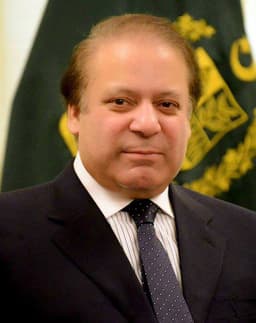
Nawaz Sharif
Politician · Modern
55.5Total

Nuri al-Said
Politician · Modern
52.7Total
Basic Information
Born
1949
1888
Died
—
1958
Era
Modern
Modern
Nationality
Pakistan
Iraq
Occupation
Politician
Politician
Civilization
Indian
Middle Eastern
Score Comparison
Military (10%)
28.9
36.6
Political (20%)
68.0
72.0
Influence (20%)
56.4
54.9
Legacy (20%)
45.0
45.0
Leadership (15%)
74.0
53.2
Strategy (15%)
60.0
53.0
TOTAL
55.5
52.7
Nawaz Sharif — Complete Timeline
1990 AD
First Term as Prime Minister of PakistanPolitical Action◆ Major
Nawaz Sharif became Prime Minister of Pakistan for the first time, leading the Islami Jamhoori Ittehad coalition. He served three non-consecutive terms: 1990-1993, 1997-1999, and 2013-2017.
Prime MinisterCoalitionFirst Term
Impact: nationalconstructive
1993 AD
Ousted by Presidential OrderPolitical Action◆ Major
President Ghulam Ishaq Khan dismissed Sharif's government under Article 58(2)(b), citing corruption and mismanagement. The Supreme Court later reinstated Sharif, but he resigned after a compromise.
DismissalArticle 58(2)(b)Constitutional Crisis
Impact: nationaldestructive
1998 AD
Second Term and Nuclear TestsPolitical Action
During his second term, Sharif ordered Pakistan's nuclear tests in response to India's tests. Pakistan conducted six nuclear tests in the Chagai Hills, becoming a declared nuclear weapons state.
Nuclear TestsChagaiNuclear Weapons
Impact: globalconstructive
1999 AD
Ousted by the 1999 Military CoupPolitical Action
General Pervez Musharraf led a military coup, overthrowing Sharif's government. Sharif was arrested, tried for hijacking and terrorism, and sentenced to life imprisonment, later exiled to Saudi Arabia.
Military CoupArrestExile
Impact: nationaldestructive
2013 AD
Third Term as Prime MinisterPolitical Action◆ Major
Sharif returned to power for a third term after PML-N won the 2013 elections. His government focused on infrastructure projects like the China-Pakistan Economic Corridor (CPEC).
Third TermPML-NCPEC
Impact: nationalconstructive
2017 AD
Disqualified from Office by the Supreme CourtPolitical Action◆ Major
The Supreme Court of Pakistan disqualified Sharif from holding public office over the Panama Papers scandal, citing dishonesty. He resigned as prime minister and was later sentenced to prison.
DisqualificationPanama PapersSupreme Court
Impact: nationaldestructive
Nuri al-Said — Complete Timeline
1930 AD
Signed Treaty of PortsmouthPolitical Action◆ Major
As Prime Minister, Nuri al-Said signed the Anglo-Iraqi Treaty of 1930, which granted Iraq independence but allowed Britain to maintain military bases and influence. The treaty was highly controversial and seen as a continuation of British control.
TreatyIndependenceBritish Influence
Impact: national
1955 AD
Led Iraq into Baghdad PactPolitical Action◆ Major
Nuri al-Said committed Iraq to the Baghdad Pact, a Western-backed anti-Soviet alliance also including Turkey, Iran, Pakistan, and the UK. This aligned Iraq firmly with the West and provoked opposition from Arab nationalists and the Soviet Union.
AllianceCold WarBaghdad Pact
Impact: regional
1958 AD
Killed in 1958 RevolutionPolitical Action
During the 14 July Revolution, Nuri al-Said attempted to flee Baghdad but was captured and killed by a mob. His death ended the Hashemite monarchy and his own long tenure as prime minister, leading to the establishment of the Republic of Iraq.
RevolutionDeathEnd of Monarchy
Impact: nationaltragic
Expert Analysis
Origins
Nawaz Sharif was born on December 25, 1949, in Lahore, Pakistan, into a wealthy Kashmiri business family. His father, Muhammad Sharif, owned Ittefaq Group, a steel conglomerate. Sharif studied law at the University of the Punjab and later entered politics through the Pakistan Muslim League (PML).
Nuri al-Said was born in 1888 in Baghdad, Ottoman Empire, into a middle-class Arab family. He attended the Ottoman Military Academy and served as an officer in the Ottoman army. After World War I, he aligned with King Faisal I of Iraq and became a key figure in the Hashemite monarchy.
Rise to Power
Sharif's political ascent began in the 1980s under military ruler Zia-ul-Haq, who appointed him Chief Minister of Punjab in 1985. He became Prime Minister in 1990 after leading the Islami Jamhoori Ittehad coalition to victory. His first term ended in 1993 when President Ghulam Ishaq Khan dismissed his government under Article 58(2)(b), citing corruption. The Supreme Court reinstated him briefly, but he resigned after a power struggle.
Nuri al-Said rose through military and administrative ranks under the Hashemite monarchy. He first became Prime Minister in 1930, at age 42, and went on to serve 14 non-consecutive terms. His power base relied on the support of the royal family, the military, and British influence. He was instrumental in negotiating the Anglo-Iraqi Treaty of 1930, which granted formal independence but preserved British military bases.
Leadership & Governance
Sharif's leadership style was populist and business-oriented. During his second term (1997-1999), he pursued economic liberalization, privatized state enterprises, and ordered Pakistan's nuclear tests in May 1998 in response to India's tests, raising his political score to 68.0. However, his governance was marked by authoritarian tendencies, including the dismissal of Army Chief Jehangir Karamat and a confrontation with President Farooq Leghari. His third term (2013-2017) focused on infrastructure, notably the China-Pakistan Economic Corridor (CPEC), but was marred by allegations of corruption.
Nuri al-Said's governance was pro-Western and monarchist. He aligned Iraq with the British and later the US through the Baghdad Pact (1955), an anti-Soviet alliance. His political score of 72.0 reflects his skill in maintaining power through patronage and manipulation of elections. He implemented some modernization, including oil revenue management, but his regime was autocratic and suppressed opposition. His leadership score of 53.2 is lower than Sharif's 74.0, indicating less effective governance.
Triumph & Tragedy
Sharif's greatest triumph was ordering the nuclear tests in 1998, which bolstered Pakistan's security and his domestic popularity. His greatest tragedy was the 1999 military coup led by General Pervez Musharraf, which ousted him and led to his imprisonment and exile. He also faced a lifetime disqualification from politics in 2017 due to corruption charges.
Nuri al-Said's triumph was his longevity in power, serving as PM 14 times over 28 years. He successfully navigated Iraq through World War II and the early Cold War. His tragedy was his violent death in the 1958 Revolution: he was captured while trying to flee, killed, and his body was mutilated by a mob. His death ended the Hashemite monarchy and marked Iraq's shift to a republic.
Character & Destiny
Sharif was pragmatic and resilient, repeatedly returning to power after setbacks. His authoritarian streak led to clashes with the military and judiciary, ultimately causing his downfall. His destiny was shaped by the conflict between civilian and military power in Pakistan.
Nuri al-Said was a cunning political survivor, but his close association with British imperialism made him a target of Arab nationalist sentiment. His character—autocratic and pro-Western—sealed his fate when the 1958 Revolution swept away the monarchy.
Legacy
Sharif's legacy is mixed: he advanced Pakistan's nuclear program and infrastructure, but his corruption allegations and authoritarianism tarnished his reputation. His influence score of 56.4 reflects his impact on Pakistani politics, though his legacy score of 45.0 is low due to his unconvincing record.
Nuri al-Said's legacy is primarily as a symbol of the old order: a pro-British, monarchist leader who failed to adapt to rising nationalism. His influence score of 54.9 is comparable to Sharif's, but his legacy is largely negative in Iraq, where he is seen as a British puppet.
Conclusion
Nawaz Sharif had marginally greater impact than Nuri al-Said, as reflected in his higher total score (55.5 vs 52.7). Sharif's decision to conduct nuclear tests permanently altered Pakistan's strategic position, while al-Said's adherence to the Baghdad Pact failed to prevent the monarchy's collapse. Sharif's leadership score (74.0) vastly exceeds al-Said's (53.2), indicating more effective governance despite similar political skills. However, both leaders ultimately failed to establish durable democratic institutions: Sharif was overthrown by the military, and al-Said was killed by revolutionaries. In the long term, Sharif's nuclear legacy gives him a slight edge, but neither leader achieved lasting positive change.
Rankings
🥇
Nawaz SharifLeader
Mil: 28.9Pol: 68.0Inf: 56.4
55.5
🥈
Nuri al-Said
Mil: 36.6Pol: 72.0Inf: 54.9
52.7
+2.8 behind
How This Comparison Works
Algorithm
Each figure is scored on 6 dimensions (0—100 scale) based on structured historical data: Military (10%), Political (20%), Influence (20%), Legacy (20%), Leadership (15%), Strategy (15%). The weighted total produces the final ranking.
Data Sources
Scores are computed from structured sub-indicators in the database. Scale factors adjust for era (Ancient ×0.85, Modern ×1.0) and civilization size (Eastern ×1.05, Other ×0.80) to account for differences in population and military scale.
Maximum 3 Figures
Comparisons are limited to 2—3 figures to ensure readability and statistical meaningfulness.
Error Margins
±5 points per dimension — Sub-scores are derived from historical records with inherent uncertainty. Two figures within 5 points on a dimension should be considered roughly equivalent in that area.
Total Score Accuracy
±3 points overall — The weighted combination of 6 dimensions produces a total score with approximately ±3 points of uncertainty. Differences of less than 3 points are not statistically significant— the figures are effectively tied.
Known Limitations
- Historical records are incomplete and uneven across civilizations
- Figures from oral-tradition societies may be underrepresented
- Occupation labels can misclassify multi-role figures
- Scores measure capability and impact, not moral character
- Quantitative scoring is a comparison tool, not absolute truth
Capability Radar
Military (10%) — Battles & Warfare
Battles
46
5
Win Rate
46
5
Expansion
51
5
Political (20%) — Governance & Reform
Reform
45
55
Diplomacy
50
65
Economy
55
50
Influence (20%) — Cultural & Global Reach
Cultural
35
30
Global
45
30
Legacy (20%) — Historical Impact
Historical
40
40
Longevity
30
20
Leadership (15%) — Power & Stability
Tenure
60
70
Stability
30
30
Strategy (15%) — Tactics & Innovation
Strategy
51
5
Tactics
55
5
Reform
59
10
Similar Comparisons
Comments & Discussion
No comments yet. Be the first to share your thoughts!