Loading...
Fernando Henrique Cardoso vs Nawaz Sharif
Fernando Henrique Cardoso leads by 6.1 pts · 2 figures compared
…

Fernando Henrique Cardoso
Politician · Modern
61.6Total
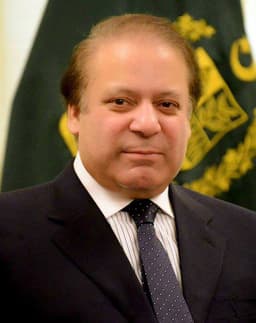
Nawaz Sharif
Politician · Modern
55.5Total
Basic Information
Born
1931
1949
Died
—
—
Era
Modern
Modern
Nationality
Brazil
Pakistan
Occupation
Politician
Politician
Civilization
Western
Indian
Score Comparison
Military (10%)
50.0
28.9
Political (20%)
82.0
68.0
Influence (20%)
61.0
56.4
Legacy (20%)
52.0
45.0
Leadership (15%)
80.0
74.0
Strategy (15%)
40.8
60.0
TOTAL
61.6
55.5
Fernando Henrique Cardoso — Complete Timeline
1993 AD
Appointed Minister of FinancePolitical Action◆ Major
Fernando Henrique Cardoso was appointed Minister of Finance by President Itamar Franco in May 1993. He was tasked with stabilizing Brazil's economy, which was suffering from hyperinflation.
Finance MinistryEconomic PolicyBrazil
Impact: nationalconstructive
1994 AD
Implemented the Plano RealReform
Cardoso led the implementation of the Plano Real (Real Plan) in 1994, a comprehensive economic stabilization program. It introduced a new currency, the real, and successfully ended hyperinflation, bringing price stability to Brazil.
Economic StabilizationPlano RealBrazil
Impact: nationalconstructive
Elected President of BrazilPolitical Action◆ Major
Cardoso was elected president of Brazil in 1994 as the candidate of the Brazilian Social Democracy Party (PSDB). He assumed office on January 1, 1995, with a mandate to continue economic reforms.
PresidencyElectionBrazil
Impact: nationalconstructive
1995 AD
Privatized State-Owned EnterprisesReform◆ Major
Cardoso's government privatized several state-owned enterprises, including the mining company Vale do Rio Doce and the telecommunications system Telebr
PrivatizationEconomic ReformBrazil
Impact: national
Created the Bolsa Escola ProgramReform◆ Major
Cardoso created the Bolsa Escola (School Grant) program in 1995, a conditional cash transfer that provided payments to poor families in exchange for keeping their children in school. This program later evolved into Bolsa Fam
Social PolicyEducationBrazil
Impact: nationalprogressive
1998 AD
Re-elected President of BrazilPolitical Action◆ Major
Cardoso was re-elected president in 1998, winning in the first round. His second term focused on fiscal austerity, privatization, and social programs, though economic growth remained modest.
Re-electionEconomic ReformBrazil
Impact: nationalconstructive
Nawaz Sharif — Complete Timeline
1990 AD
First Term as Prime Minister of PakistanPolitical Action◆ Major
Nawaz Sharif became Prime Minister of Pakistan for the first time, leading the Islami Jamhoori Ittehad coalition. He served three non-consecutive terms: 1990-1993, 1997-1999, and 2013-2017.
Prime MinisterCoalitionFirst Term
Impact: nationalconstructive
1993 AD
Ousted by Presidential OrderPolitical Action◆ Major
President Ghulam Ishaq Khan dismissed Sharif's government under Article 58(2)(b), citing corruption and mismanagement. The Supreme Court later reinstated Sharif, but he resigned after a compromise.
DismissalArticle 58(2)(b)Constitutional Crisis
Impact: nationaldestructive
1998 AD
Second Term and Nuclear TestsPolitical Action
During his second term, Sharif ordered Pakistan's nuclear tests in response to India's tests. Pakistan conducted six nuclear tests in the Chagai Hills, becoming a declared nuclear weapons state.
Nuclear TestsChagaiNuclear Weapons
Impact: globalconstructive
1999 AD
Ousted by the 1999 Military CoupPolitical Action
General Pervez Musharraf led a military coup, overthrowing Sharif's government. Sharif was arrested, tried for hijacking and terrorism, and sentenced to life imprisonment, later exiled to Saudi Arabia.
Military CoupArrestExile
Impact: nationaldestructive
2013 AD
Third Term as Prime MinisterPolitical Action◆ Major
Sharif returned to power for a third term after PML-N won the 2013 elections. His government focused on infrastructure projects like the China-Pakistan Economic Corridor (CPEC).
Third TermPML-NCPEC
Impact: nationalconstructive
2017 AD
Disqualified from Office by the Supreme CourtPolitical Action◆ Major
The Supreme Court of Pakistan disqualified Sharif from holding public office over the Panama Papers scandal, citing dishonesty. He resigned as prime minister and was later sentenced to prison.
DisqualificationPanama PapersSupreme Court
Impact: nationaldestructive
Expert Analysis
Origins
Fernando Henrique Cardoso was born in 1931 in Rio de Janeiro, Brazil, into a politically connected family; his father was a general and his mother a teacher. He studied sociology at the University of São Paulo and later earned a doctorate, becoming a prominent academic known for dependency theory. Nawaz Sharif was born in 1949 in Lahore, Pakistan, into a wealthy industrialist family; his father ran the Ittefaq Group. He studied law at the University of Punjab and later entered business, managing the family conglomerate. Cardoso's academic background contrasted with Sharif's business roots, shaping their approaches to governance.
Rise to Power
Cardoso rose to prominence as a sociologist and senator, but his key turning point came in 1993 when President Itamar Franco appointed him Minister of Finance. There, he crafted the Plano Real, which ended hyperinflation and stabilized the Brazilian economy. This success propelled him to the presidency in 1994, winning in the first round. Sharif's rise began in the 1980s under military ruler Zia-ul-Haq, who supported his political career. He became Prime Minister in 1990 after leading the Islami Jamhoori Ittehad coalition. However, his first term ended in 1993 when President Ghulam Ishaq Khan dismissed his government under Article 58(2)(b). Sharif returned for a second term in 1997, winning a landslide after a populist campaign.
Leadership & Governance
Cardoso's leadership was technocratic and reformist. As president from 1995 to 2002, he deepened economic liberalization, privatized state enterprises like Vale do Rio Doce and Telebrás, and maintained fiscal discipline. He also expanded social programs such as Bolsa Escola, a conditional cash transfer that later inspired Bolsa Família. His governance score is 80.0, reflecting his ability to implement stable policies. Sharif's leadership was more confrontational and erratic. During his second term, he ordered Pakistan's nuclear tests in 1998, which boosted his popularity but strained the economy. He also attempted to centralize power, leading to conflicts with the judiciary and military. His political score is 68.0, lower than Cardoso's 82.0, due to repeated ousters and instability.
Triumph & Tragedy
Cardoso's greatest triumph was the Plano Real, which reduced inflation from over 2,000% in 1993 to single digits by 1995, lifting millions out of poverty. His tragedy was the slow growth and high unemployment during his second term, partly due to austerity and external shocks. Sharif's triumph was overseeing Pakistan's nuclear tests in 1998, making Pakistan a declared nuclear power and elevating his stature. His tragedy was the 1999 military coup led by General Pervez Musharraf, which ousted him and led to his exile. Sharif's military score is 28.9, reflecting his poor handling of civil-military relations.
Character & Destiny
Cardoso was intellectual and pragmatic, using his academic expertise to design evidence-based policies. He prioritized stability and institutional strengthening, which helped Brazil avoid crises. His strategic score is 40.8, indicating a cautious, incremental approach. Sharif was ambitious and risk-taking, often challenging established powers. His 60.0 strategy score reflects bold moves like nuclear tests, but also miscalculations that led to his downfall. Character assessments note Cardoso's measured temperament versus Sharif's impulsive tendencies, which shaped their political fates.
Legacy
Cardoso's legacy is the stabilization of Brazil's economy and the foundation for subsequent social policies. The Plano Real's success allowed Brazil to pursue long-term growth and reduce inequality. His influence score of 61.0 reflects his impact on Latin American economic thought. Sharif's legacy is more mixed: he is remembered for making Pakistan a nuclear power but also for political instability and corruption. His legacy score of 45.0 is lower, as his achievements were overshadowed by controversies and the 1999 coup. The China-Pakistan Economic Corridor (CPEC) initiated during his third term may enhance his long-term impact.
Conclusion
Fernando Henrique Cardoso had a greater impact than Nawaz Sharif. His Plano Real fundamentally transformed Brazil's economy, creating lasting stability and enabling social progress. While Sharif's nuclear tests were significant, they did not lead to sustained economic or political development. Cardoso's total score of 61.6 surpasses Sharif's 55.5, and his leadership score of 80.0 reflects more effective governance. Cardoso's reforms endured beyond his presidency, whereas Sharif's turbulent terms left a legacy of institutional weakness. Thus, Cardoso's impact is more profound and positive.
Rankings
🥇
Fernando Henrique CardosoLeader
Mil: 50.0Pol: 82.0Inf: 61.0
61.6
🥈
Nawaz Sharif
Mil: 28.9Pol: 68.0Inf: 56.4
55.5
+6.1 behind
How This Comparison Works
Algorithm
Each figure is scored on 6 dimensions (0—100 scale) based on structured historical data: Military (10%), Political (20%), Influence (20%), Legacy (20%), Leadership (15%), Strategy (15%). The weighted total produces the final ranking.
Data Sources
Scores are computed from structured sub-indicators in the database. Scale factors adjust for era (Ancient ×0.85, Modern ×1.0) and civilization size (Eastern ×1.05, Other ×0.80) to account for differences in population and military scale.
Maximum 3 Figures
Comparisons are limited to 2—3 figures to ensure readability and statistical meaningfulness.
Error Margins
±5 points per dimension — Sub-scores are derived from historical records with inherent uncertainty. Two figures within 5 points on a dimension should be considered roughly equivalent in that area.
Total Score Accuracy
±3 points overall — The weighted combination of 6 dimensions produces a total score with approximately ±3 points of uncertainty. Differences of less than 3 points are not statistically significant— the figures are effectively tied.
Known Limitations
- Historical records are incomplete and uneven across civilizations
- Figures from oral-tradition societies may be underrepresented
- Occupation labels can misclassify multi-role figures
- Scores measure capability and impact, not moral character
- Quantitative scoring is a comparison tool, not absolute truth
Capability Radar
Military (10%) — Battles & Warfare
Battles
31
46
Win Rate
30
46
Expansion
34
51
Political (20%) — Governance & Reform
Reform
85
45
Diplomacy
75
50
Economy
90
55
Influence (20%) — Cultural & Global Reach
Cultural
40
35
Global
55
45
Legacy (20%) — Historical Impact
Historical
60
40
Longevity
50
30
Leadership (15%) — Power & Stability
Tenure
65
60
Stability
70
30
Strategy (15%) — Tactics & Innovation
Strategy
38
51
Tactics
38
55
Reform
41
59
Similar Comparisons
Comments & Discussion
No comments yet. Be the first to share your thoughts!