Loading...
Nguyen Cao Ky vs Plutarco Elias Calles
Plutarco Elias Calles leads by 9.7 pts · 2 figures compared
…
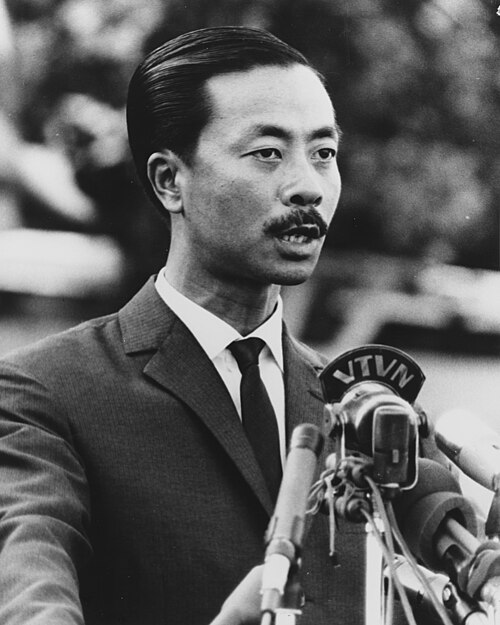
Nguyen Cao Ky
General · Modern
64.8Total
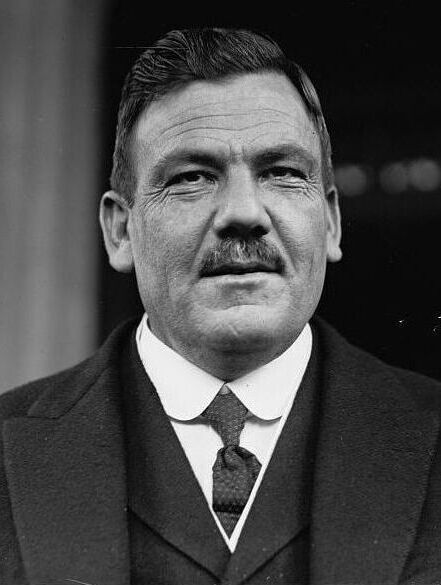
Plutarco Elias Calles
General · Modern
74.5Total
Basic Information
Born
1930
1877
Died
—
1945
Era
Modern
Modern
Nationality
Vietnam
Mexico
Occupation
General
General
Civilization
Eastern
Western
Score Comparison
Military (10%)
61.8
64.3
Political (20%)
60.2
79.8
Influence (20%)
70.9
78.0
Legacy (20%)
56.0
72.0
Leadership (15%)
76.3
75.5
Strategy (15%)
65.0
72.0
TOTAL
64.8
74.5
Rankings
🥇
Plutarco Elias CallesLeader
Mil: 64.3Pol: 79.8Inf: 78.0
74.5
🥈
Nguyen Cao Ky
Mil: 61.8Pol: 60.2Inf: 70.9
64.8
+9.7 behind
How This Comparison Works
Algorithm
Each figure is scored on 6 dimensions (0—100 scale) based on structured historical data: Military (10%), Political (20%), Influence (20%), Legacy (20%), Leadership (15%), Strategy (15%). The weighted total produces the final ranking.
Data Sources
Scores are computed from structured sub-indicators in the database. Scale factors adjust for era (Ancient ×0.85, Modern ×1.0) and civilization size (Eastern ×1.05, Other ×0.80) to account for differences in population and military scale.
Maximum 3 Figures
Comparisons are limited to 2—3 figures to ensure readability and statistical meaningfulness.
Error Margins
±5 points per dimension — Sub-scores are derived from historical records with inherent uncertainty. Two figures within 5 points on a dimension should be considered roughly equivalent in that area.
Total Score Accuracy
±3 points overall — The weighted combination of 6 dimensions produces a total score with approximately ±3 points of uncertainty. Differences of less than 3 points are not statistically significant— the figures are effectively tied.
Known Limitations
- Historical records are incomplete and uneven across civilizations
- Figures from oral-tradition societies may be underrepresented
- Occupation labels can misclassify multi-role figures
- Scores measure capability and impact, not moral character
- Quantitative scoring is a comparison tool, not absolute truth
Capability Radar
Military (10%) — Battles & Warfare
Battles
30
45
Win Rate
35
50
Expansion
10
30
Political (20%) — Governance & Reform
Reform
20
85
Diplomacy
25
65
Economy
15
60
Influence (20%) — Cultural & Global Reach
Cultural
15
70
Global
15
60
Legacy (20%) — Historical Impact
Historical
20
75
Longevity
10
70
Leadership (15%) — Power & Stability
Tenure
40
70
Stability
10
55
Strategy (15%) — Tactics & Innovation
Strategy
30
55
Tactics
40
40
Reform
25
60
Expert Analysis
Plutarco Elias Calles vs Nguyen Cao Ky
# The Iron Fist and the Lost Cause
On a dusty morning in 1926, Plutarco Elías Calles stood before the Mexican Congress and signed the law that would bear his name—a decree so severe it banned priests from wearing clerical garb in public and closed hundreds of churches. Half a world away and four decades later, Air Vice-Marshal Nguyen Cao Ky stepped onto a tarmac in Saigon, his trademark purple scarf fluttering in the tropical heat, ready to lead a coup that would plunge South Vietnam deeper into chaos. Both were generals. Both seized power in nations torn apart by revolution. But one built a dynasty that would rule for seventy years; the other built nothing that lasted beyond his own exile.
Origins
Calles was born in 1877 in Sonora, a northern Mexican state where the desert met the frontier. His father was a schoolteacher who died when Calles was young, forcing the boy into hard labor. He worked as a bartender, a baker, and a farmer before finding his calling as a school inspector. The Mexican Revolution of 1910 gave him his entrance into politics, and he rose alongside Álvaro Obregón, learning that power in Mexico came from the barrel of a gun and the control of patronage. His era was one of violent nation-building, where the old order of Porfirio Díaz had been shattered and nothing stable had yet replaced it.
Nguyen Cao Ky, born in 1930 in Hanoi, grew up under French colonial rule. His family was middle-class, and he chose a military career, training at the French air force academy in Marrakech. He returned to a Vietnam that was already splitting apart—the French were losing, the communists were rising, and the Americans were beginning to pour in. Ky was a product of the Cold War, a man shaped by foreign alliances, not domestic revolution. Where Calles learned to build power from the ground up, Ky learned to fly—literally and metaphorically—above the chaos, dependent on American planes, American money, and American approval.
Rise to Power
Calles entered the historical stage through the governorship of Sonora in 1915, where he implemented radical land reforms and crushed his enemies with cold efficiency. He was not a charismatic revolutionary like Pancho Villa or Emiliano Zapata; he was an organizer, a bureaucrat with a killer instinct. By 1924, he was elected president of Mexico, a position he used to consolidate the state’s power over the Catholic Church, the military, and the economy.
Ky’s path was more chaotic. In 1963, he was appointed commander of the South Vietnamese Air Force, a role that put him at the center of the Buddhist crisis and the coup that overthrew President Ngo Dinh Diem. Two years later, in 1965, he became prime minister of a military junta—a man in his mid-thirties, flashy and impulsive, who declared that his only hero was Hitler because he “organized his country.” It was a comment that haunted him. His rise came not through popular support but through the collapse of every alternative, backed by American officials desperate for stability.
Leadership & Governance
Calles governed with a vision of a secular, centralized Mexico. His Calles Law of 1926 triggered the Cristero War, a brutal three-year conflict in which Catholic rebels fought government forces across the countryside. Calles did not blink. He closed churches, deported priests, and executed rebels. But he also built schools, roads, and irrigation systems. His greatest political achievement came in 1929, when he founded the National Revolutionary Party (PNR)—the party that would become the Institutional Revolutionary Party (PRI) and dominate Mexican politics until 2000. Calles understood that personal rule dies with the ruler; party rule can last forever.
Ky governed without such vision. As prime minister from 1965 to 1967, he intensified the war against the Viet Cong, but his government was rife with corruption, factionalism, and dependence on American aid. He held power through military force, not institutional loyalty. When he ran for president in 1967 and lost to Nguyen Van Thieu, he accepted the vice presidency—but the two leaders despised each other. Ky’s South Vietnam was not a state being built; it was a state being propped up.
Triumph & Tragedy
Calles’s greatest moment was the founding of the PNR, which transformed Mexican politics from a battlefield of caudillos into a one-party system that could manage conflict without violence. His tragedy was the Maximato—the period from 1928 to 1934 when he ruled as the “Jefe Máximo” behind puppet presidents. He had created a system so powerful that it eventually rejected him. In 1935, President Lázaro Cárdenas, his own protégé, exiled him to the United States. The machine he built no longer needed its builder.
Ky’s triumph was his survival—he escaped Saigon in 1975 as the city fell, flying out with his family just ahead of the North Vietnamese tanks. His tragedy was everything that came before: the lost war, the corrupt government, the hundreds of thousands of dead. He spent the rest of his life in exile in California, running a liquor store and writing memoirs that tried to explain why South Vietnam had failed. No one in power listened.
Character & Destiny
Calles was a man of iron discipline and calculation. He did not seek adoration; he sought control. His personality—cold, methodical, ruthless—was perfectly suited to a nation that needed to be welded together after a decade of revolution. He could be cruel, but he was never reckless. Every move he made was designed to strengthen the state, not himself. That is why his legacy outlasted him.
Ky was a man of impulse and vanity. He wore the purple scarf because he thought it made him look like a French aviator. He made grand statements without thinking of consequences. His personality—flamboyant, impatient, insecure—was disastrous for a nation that needed steady, patient leadership. He was a fighter pilot in a job that required a statesman. The same traits that made him brave in the air made him reckless on the ground.
Legacy
Today, Calles is remembered as the founder of modern Mexico’s political system. The PRI is gone from power, but the institutions he created—the centralized presidency, the corporatist state, the secular public sphere—remain. He is neither loved nor hated; he is simply acknowledged as the architect. Mexican schoolchildren learn his name, though they may not admire him.
Ky is barely remembered at all. In Vietnam, he is a footnote to a lost war. In the United States, he became a symbol of the futility of American intervention—a man who flew his own plane out of his own country while his soldiers were left behind. His legacy score of 56.0 reflects this obscurity. He died in 2011 in a suburb of Washington, D.C., far from the rice paddies he once bombed.
Conclusion
The difference between Calles and Ky is not a matter of skill or intelligence. Both were capable men in impossible circumstances. The difference is that Calles built a system that could survive him, while Ky was merely a figure in a system that was never his own. One created a party that ruled for three generations. The other was a pilot who crashed because the plane was already falling apart. In the end, history remembers the architects, not the passengers.
Frequently Asked Questions
Who ranks highest among Plutarco Elias Calles, Nguyen Cao Ky?
Our six-dimension data-driven scoring system compares Military, Political, Influence, Legacy, Leadership, and Strategy to determine the ranking among Plutarco Elias Calles, Nguyen Cao Ky. See the full score breakdown on this page.
How accurate is this historical comparison?
Scores are computed from structured historical sub-indicators with era and civilization scale factors. The system has approximately ±3 points of uncertainty per dimension. Differences under 3 points are not statistically significant.
Nguyen Cao Ky — Complete Timeline
1963 AD
Commander of South Vietnamese Air ForcePolitical Action◆ Major
Nguyen Cao Ky was appointed commander of the Republic of Vietnam Air Force. He led the air force during the Buddhist crisis and participated in the coup that overthrew President Ngo Dinh Diem.
Air ForceCoupDiem
Impact: national
1965 AD
Appointed Prime MinisterPolitical Action◆ Major
Nguyen Cao Ky became Prime Minister of South Vietnam, leading a military junta. His government intensified the war against the Viet Cong and North Vietnam, with strong US support.
Prime MinisterMilitary juntaVietnam War
Impact: national
1967 AD
Conflict with President ThieuPolitical Action
Nguyen Cao Ky ran for president but lost to Nguyen Van Thieu, becoming vice president. The two leaders had a tense relationship, with Ky later accusing Thieu of corruption and mismanagement of the war.
ElectionThieuRivalry
Impact: nationaldestructive
1975 AD
Exile after fall of SaigonPolitical Action◆ Major
Nguyen Cao Ky fled South Vietnam as Saigon fell to North Vietnamese forces. He settled in the United States, where he became a critic of the communist government and later returned to Vietnam for visits.
ExileFall of SaigonVietnam War
Impact: nationaltragic
Plutarco Elias Calles — Complete Timeline
1915 AD
Governorship of SonoraPolitical Action
Calles served as Governor of Sonora from 1915 to 1919, implementing radical reforms including land redistribution, anti-clerical laws, and labor rights. His governorship established him as a key figure in the Sonoran dynasty and a proponent of revolutionary change.
GovernorshipSonoraReforms
Impact: regionalconstructive
1924 AD
Presidency of MexicoPolitical Action◆ Major
Calles was elected President of Mexico in 1924, serving until 1928. His administration continued revolutionary reforms, including land reform, labor rights, and secularization, but also faced opposition from the Catholic Church and conservative groups.
PresidencyMexican RevolutionReforms
Impact: nationalconstructive
1926 AD
Cristero WarWar◆ Major
Calles enforced anti-clerical laws, including the Calles Law, which restricted the Catholic Church's role in society. This sparked the Cristero War (1926-1929), a violent rebellion by Catholic peasants against the state, resulting in tens of thousands of deaths.
Cristero WarAnti-clericalismReligious Conflict
Impact: nationaldestructive
1928 AD
MaximatoPolitical Action◆ Major
After his presidency, Calles remained the de facto ruler of Mexico during the Maximato (1928-1934), controlling puppet presidents. He continued to influence policy, but his power waned as President L
MaximatoPolitical ControlCárdenas
Impact: national
1929 AD
Founding of the National Revolutionary Party (PNR)Political Action
Calles founded the National Revolutionary Party (PNR) in 1929, which later became the Institutional Revolutionary Party (PRI). This party dominated Mexican politics for over 70 years, institutionalizing the revolution's legacy and centralizing power.
Political PartyPRIInstitutionalization
Impact: nationalconstructive
Similar Comparisons
Comments & Discussion
ClassicSkeptic6/16/2026
You’re all missing the psychological edge. Calles was a system-builder—the PRI machine ran on his patronage networks, even after exile. Ky was a flamboyant performer, wearing that scarf to project a tough-guy image that fooled no one. One built institutions; the other built a costume. History remembers the builder, not the peacock.
ToughTarget6/16/2026
Calles wins hands down for sheer impact. He didn’t just crush the Church with the 1926 Law—he personally oversaw burning confessional boxes for firewood in Sonora. Ky? A French-trained pilot playing dress-up with a purple scarf, leading a failed coup that lasted a year. Calles’ Maximato controlled Mexico for decades; Ky’s legacy is a punchline. It’s not even close.
数据侦探6/16/2026
数字会说话:卡列斯统治下的墨西哥人口从1921年的1430万增至1930年的1650万,经济增长约3%年均。而阮高其执政期间,南越GDP在1965-1967年实际萎缩了2.3%。他领导下的政变不过是把西贡换了一面旗——数据从来不会撒谎,这位越南将军的“稳定”不过是废墟上的粉饰。
历史挖宝人6/16/2026
别忘了背景差异:卡列斯崛起于革命后的墨西哥,那时国家如废墟,他必须用铁腕铸造秩序,包括镇压1926-1929年的基督战争,造成约9万人伤亡。而阮高其接手的是美援支撑的脆弱政权,他的政变更像是军阀内斗——两人都挥刀,但一个砍在国家的骨头上,另一个只划破了皮。
ReformCritic6/16/2026
你们夸卡列斯太过了。他确实建立了制度,但那是贪污和镇压的机器——地主土地归还率在1930年仍低于革命前水平。阮高其至少尝试了土地改革,1966年的“新生活村”计划确实分了些地给农民。评价历史人物不能只看“持续时间”,卡列斯的七十年统治是建立在谎言和暴力上的空壳,而阮高其的失败至少是诚实的。