Loading...
This comparison has not been analyzed yet.
One-time AI generation (~1 minute). Scores and timeline are already available below.
Nian Gengyao vs Orde Wingate
Nian Gengyao leads by 10.2 pts · 2 figures compared
…
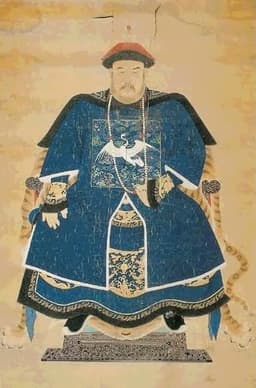
Nian Gengyao
General · Modern
54.0Total
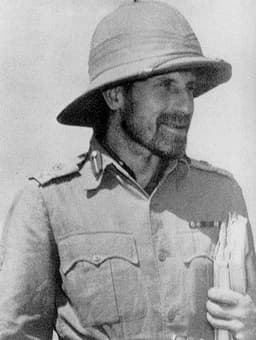
Orde Wingate
General · Modern
43.8Total
Basic Information
Born
1679
1903
Died
1726
1944
Era
Modern
Modern
Nationality
China
United Kingdom
Occupation
General
General
Civilization
Eastern
Western
Score Comparison
Military (10%)
65.0
20.0
Political (20%)
42.2
26.4
Influence (20%)
54.1
55.7
Legacy (20%)
46.7
47.5
Leadership (15%)
68.0
35.4
Strategy (15%)
57.5
67.2
TOTAL
54.0
43.8
Nian Gengyao — Complete Timeline
1720 AD
Suppressed Tibetan revolt in LhasaWar◆ Major
Nian Gengyao led Qing forces to expel Dzungar invaders from Tibet and restore the Dalai Lama's authority. This campaign secured Qing control over Tibet and demonstrated his military capability.
TibetMilitary CampaignQing Expansion
Impact: regional
1723 AD
Appointed Grand Secretary and Governor-General of SichuanPolitical Action◆ Major
Nian Gengyao was appointed to high civil and military posts, including Grand Secretary and Governor-General of Sichuan. This made him one of the most powerful officials in the Qing empire.
AppointmentHigh OfficeQing Administration
Impact: national
1726 AD
Arrested and forced to commit suicidePolitical Action
The Yongzheng Emperor accused Nian Gengyao of corruption, treason, and overstepping authority. He was arrested, stripped of rank, and forced to commit suicide, ending his career abruptly.
ExecutionPurgeImperial Disfavor
Impact: nationaltragic
Orde Wingate — Complete Timeline
1942 AD
Created the ChinditsWar◆ Major
Wingate proposed and organized the Chindits, a long-range penetration force operating behind Japanese lines in Burma. The concept involved deep jungle infiltration and supply by air, aiming to disrupt Japanese communications.
World War IIBurma CampaignSpecial Forces
Impact: regional
1943 AD
First Chindit Operation (Operation Longcloth)War◆ Major
Wingate led the first Chindit expedition into Burma. The force of 3,000 men crossed the Chindwin River and operated behind Japanese lines for three months, but suffered heavy casualties and was eventually withdrawn. The operation demonstrated the potential of long-range penetration.
World War IIBurma CampaignSpecial Operations
Impact: regional
1944 AD
Second Chindit Operation (Operation Thursday)War◆ Major
Wingate led a larger Chindit operation, with 20,000 men airlifted into Burma to support the Allied offensive. The operation disrupted Japanese supply lines but again suffered heavy casualties. Wingate's tactics were debated.
World War IIBurma CampaignSpecial Operations
Impact: regional
Died in Plane CrashOther◆ Major
Wingate died when his USAAF B-25 Mitchell crashed in the jungle of Burma. The cause was likely pilot error or mechanical failure. His death occurred during the second Chindit operation.
World War IIAviation AccidentDeath
Impact: regionaltragic
This comparison has not been analyzed yet.
One-time AI generation (~1 minute). Scores and timeline are already available below.
Rankings
🥇
Nian GengyaoLeader
Mil: 65.0Pol: 42.2Inf: 54.1
54.0
🥈
Orde Wingate
Mil: 20.0Pol: 26.4Inf: 55.7
43.8
+10.2 behind
How This Comparison Works
Algorithm
Each figure is scored on 6 dimensions (0—100 scale) based on structured historical data: Military (10%), Political (20%), Influence (20%), Legacy (20%), Leadership (15%), Strategy (15%). The weighted total produces the final ranking.
Data Sources
Scores are computed from structured sub-indicators in the database. Scale factors adjust for era (Ancient ×0.85, Modern ×1.0) and civilization size (Eastern ×1.05, Other ×0.80) to account for differences in population and military scale.
Maximum 3 Figures
Comparisons are limited to 2—3 figures to ensure readability and statistical meaningfulness.
Error Margins
±5 points per dimension — Sub-scores are derived from historical records with inherent uncertainty. Two figures within 5 points on a dimension should be considered roughly equivalent in that area.
Total Score Accuracy
±3 points overall — The weighted combination of 6 dimensions produces a total score with approximately ±3 points of uncertainty. Differences of less than 3 points are not statistically significant— the figures are effectively tied.
Known Limitations
- Historical records are incomplete and uneven across civilizations
- Figures from oral-tradition societies may be underrepresented
- Occupation labels can misclassify multi-role figures
- Scores measure capability and impact, not moral character
- Quantitative scoring is a comparison tool, not absolute truth
Capability Radar
Military (10%) — Battles & Warfare
Battles
65
45
Win Rate
70
40
Expansion
50
30
Political (20%) — Governance & Reform
Reform
20
10
Diplomacy
40
15
Economy
25
5
Influence (20%) — Cultural & Global Reach
Cultural
30
35
Global
25
30
Legacy (20%) — Historical Impact
Historical
40
45
Longevity
30
30
Leadership (15%) — Power & Stability
Tenure
45
10
Stability
30
5
Strategy (15%) — Tactics & Innovation
Strategy
55
65
Tactics
60
75
Reform
30
80
Similar Comparisons
Comments & Discussion
No comments yet. Be the first to share your thoughts!