Loading...
This comparison has not been analyzed yet.
One-time AI generation (~1 minute). Scores and timeline are already available below.
Nicos Anastasiades vs Samak Sundaravej
Nicos Anastasiades leads by 17.0 pts · 2 figures compared
…
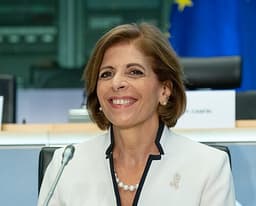
Nicos Anastasiades
Politician · Modern
53.5Total
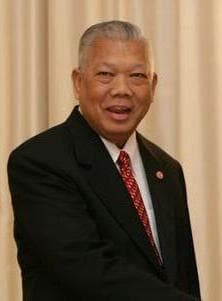
Samak Sundaravej
Politician · Modern
36.5Total
Basic Information
Born
1946
1935
Died
—
—
Era
Modern
Modern
Nationality
Cyprus
Thailand
Occupation
Politician
Politician
Civilization
Western
Eastern
Score Comparison
Military (10%)
50.0
19.9
Political (20%)
68.0
26.4
Influence (20%)
51.8
45.5
Legacy (20%)
43.3
35.0
Leadership (15%)
68.0
31.2
Strategy (15%)
42.8
57.5
TOTAL
53.5
36.5
Nicos Anastasiades — Complete Timeline
2013 AD
Elected President of CyprusPolitical Action◆ Major
Anastasiades was elected President of Cyprus in February 2013, succeeding Demetris Christofias. His election occurred during the peak of the Cypriot financial crisis, with the economy facing collapse and needing an international bailout.
ElectionFinancial Crisis
Impact: national
Negotiated the Cyprus BailoutPolitical Action◆ Major
Anastasiades negotiated a
BailoutFinancial CrisisEurozone
Impact: nationaldestructive
2015 AD
Resumed Cyprus Reunification TalksPolitical Action◆ Major
Anastasiades resumed negotiations with Turkish Cypriot leader Mustafa Ak
ReunificationDiplomacyCyprus Problem
Impact: regional
2017 AD
Crans-Montana Reunification Conference FailurePolitical Action◆ Major
The UN-facilitated reunification conference in Crans-Montana, Switzerland, ended without an agreement in July 2017. Anastasiades and Ak
ReunificationDiplomacyFailure
Impact: regionaltragic
2018 AD
Re-elected President of CyprusPolitical Action◆ Major
Anastasiades won a second five-year term in the 2018 presidential election, defeating Stavros Malas in a runoff. His re-election was seen as a mandate for continued economic recovery and reunification talks.
ElectionRe-election
Impact: national
Samak Sundaravej — Complete Timeline
2008 AD
Election as Prime MinisterPolitical Action◆ Major
Samak Sundaravej became Prime Minister after his People's Power Party won the 2007 general election. He was seen as a proxy for the exiled Thaksin Shinawatra, continuing Thaksin's populist policies and facing opposition from anti-Thaksin groups.
Prime MinisterElectionThaksin Proxy
Impact: national
Political Crisis and Yellow Shirt ProtestsPolitical Action◆ Major
Samak's government faced massive protests by the People's Alliance for Democracy (Yellow Shirts), who accused him of being a Thaksin puppet. The protests included the seizure of Government House and disrupted governance, leading to a political stalemate.
ProtestsPolitical CrisisYellow Shirts
Impact: nationaldestructive
Disqualification by the Constitutional CourtPolitical Action◆ Major
The Constitutional Court of Thailand disqualified Samak from the premiership for accepting payment for hosting a cooking show on television, violating the constitution. This ruling forced his resignation and deepened the political crisis.
DisqualificationConstitutional CourtResignation
Impact: national
This comparison has not been analyzed yet.
One-time AI generation (~1 minute). Scores and timeline are already available below.
Rankings
🥇
Nicos AnastasiadesLeader
Mil: 50.0Pol: 68.0Inf: 51.8
53.5
🥈
Samak Sundaravej
Mil: 19.9Pol: 26.4Inf: 45.5
36.5
+17.0 behind
How This Comparison Works
Algorithm
Each figure is scored on 6 dimensions (0—100 scale) based on structured historical data: Military (10%), Political (20%), Influence (20%), Legacy (20%), Leadership (15%), Strategy (15%). The weighted total produces the final ranking.
Data Sources
Scores are computed from structured sub-indicators in the database. Scale factors adjust for era (Ancient ×0.85, Modern ×1.0) and civilization size (Eastern ×1.05, Other ×0.80) to account for differences in population and military scale.
Maximum 3 Figures
Comparisons are limited to 2—3 figures to ensure readability and statistical meaningfulness.
Error Margins
±5 points per dimension — Sub-scores are derived from historical records with inherent uncertainty. Two figures within 5 points on a dimension should be considered roughly equivalent in that area.
Total Score Accuracy
±3 points overall — The weighted combination of 6 dimensions produces a total score with approximately ±3 points of uncertainty. Differences of less than 3 points are not statistically significant— the figures are effectively tied.
Known Limitations
- Historical records are incomplete and uneven across civilizations
- Figures from oral-tradition societies may be underrepresented
- Occupation labels can misclassify multi-role figures
- Scores measure capability and impact, not moral character
- Quantitative scoring is a comparison tool, not absolute truth
Capability Radar
Military (10%) — Battles & Warfare
Battles
28
53
Win Rate
30
57
Expansion
35
57
Political (20%) — Governance & Reform
Reform
55
10
Diplomacy
60
15
Economy
45
10
Influence (20%) — Cultural & Global Reach
Cultural
20
5
Global
30
5
Legacy (20%) — Historical Impact
Historical
35
5
Longevity
25
5
Leadership (15%) — Power & Stability
Tenure
65
10
Stability
40
5
Strategy (15%) — Tactics & Innovation
Strategy
38
62
Tactics
43
64
Reform
42
64
Similar Comparisons
Comments & Discussion
No comments yet. Be the first to share your thoughts!