Loading...
Oba Ozolua vs Yongle Emperor
Yongle Emperor leads by 17.0 pts · 2 figures compared
…
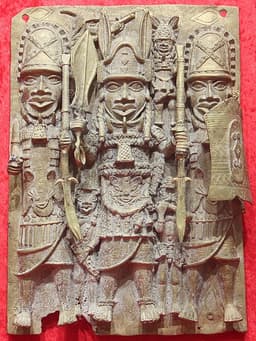
Oba Ozolua
Emperor · Medieval
56.7Total
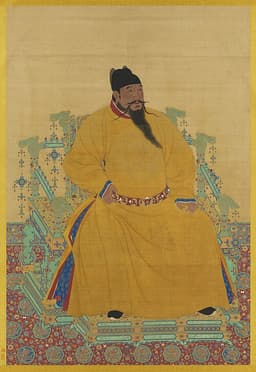
Yongle Emperor
Emperor · Medieval
73.7Total
Basic Information
Born
1473
1360
Died
1504
1424
Era
Medieval
Medieval
Nationality
Benin Kingdom
China
Occupation
Emperor
Emperor
Civilization
Other
Eastern
Score Comparison
Military (10%)
72.5
85.0
Political (20%)
43.7
78.0
Influence (20%)
55.7
75.0
Legacy (20%)
48.3
65.0
Leadership (15%)
74.0
78.0
Strategy (15%)
57.5
68.0
TOTAL
56.7
73.7
Oba Ozolua — Complete Timeline
1480 AD
Conquest of IdahWar◆ Major
Oba Ozolua led a successful military campaign against the Igala kingdom of Idah, defeating their forces and securing Benin's northern border. This victory established Benin as the dominant power in the region.
ConquestBeninIgala
Impact: regional
1485 AD
Expansion into Yoruba territoryWar◆ Major
Ozolua extended Benin's control westward into Yoruba lands, conquering towns such as Akure and Owo. These campaigns brought significant territory under Benin's influence and established tributary relationships.
ConquestBeninYoruba
Impact: regional
1490 AD
Construction of moats and wallsReform
Ozolua ordered the construction of additional defensive earthworks around Benin City, including deep moats and ramparts. These fortifications enhanced the city's defenses against potential attacks from rival kingdoms.
FortificationBenin CityDefense
constructive
Yongle Emperor — Complete Timeline
1399 AD
Jingnan CampaignWar◆ Major
Zhu Di, Prince of Yan, launched a rebellion against his nephew the Jianwen Emperor. After three years of civil war, Zhu Di captured Nanjing and usurped the throne, becoming the Yongle Emperor.
Civil warUsurpationMing dynasty
Impact: nationaldestructive
1405 AD
Commissioning of the Zheng He voyagesCultural◆ Major
Yongle commissioned Admiral Zheng He to lead a series of maritime expeditions across the Indian Ocean. The treasure fleets visited Southeast Asia, India, the Middle East, and East Africa, projecting Ming power and establishing tributary relations.
Maritime explorationDiplomacyZheng He
Impact: globalconstructive
1407 AD
Conquest of AnnamWar◆ Major
Yongle sent Ming armies to invade Annam (northern Vietnam) after a succession dispute. The Ming annexed the region as the province of Jiaozhi, but faced prolonged resistance from Vietnamese forces.
InvasionVietnamMing expansion
Impact: regionaldestructive
1408 AD
Compilation of the Yongle EncyclopediaCultural◆ Major
Yongle ordered the compilation of the Yongle Encyclopedia, a massive collection of Chinese knowledge. The work comprised over 11,000 volumes and 370 million characters, covering history, philosophy, science, and literature.
EncyclopediaCultural projectScholarship
Impact: globalconstructive
1410 AD
Campaigns against the MongolsWar◆ Major
Yongle personally led five military campaigns into the Mongolian steppe against the remnants of the Yuan dynasty. These expeditions aimed to neutralize the Mongol threat to the northern border and assert Ming dominance.
Military campaignsMongolsBorder security
Impact: regional
1421 AD
Relocation of the capital to BeijingPolitical Action◆ Major
Yongle formally moved the Ming capital from Nanjing to Beijing. He ordered the construction of the Forbidden City and expanded the city's defenses, shifting the political center of China northward.
Capital relocationUrban planningForbidden City
Impact: nationalconstructive
Expert Analysis
Origins
Oba Ozolua, born around 1450, was the son of Oba Ewuare the Great, who had transformed Benin into a powerful kingdom. Ozolua grew up in the royal court of Benin City, learning the arts of war and governance. His name "Ozolua" means "the one who brings peace" in Edo, though his reign was marked by relentless expansion. In contrast, the Yongle Emperor, born Zhu Di in 1360, was the fourth son of the Hongwu Emperor, founder of the Ming Dynasty. He was enfeoffed as Prince of Yan with his base in Beijing, a frontier region that shaped his military prowess. While Ozolua inherited a stable kingdom, Zhu Di had to navigate the treacherous politics of the Ming court after his father's death.
Rise to Power
Ozolua ascended the throne around 1481 after a period of internal strife. He quickly consolidated power by defeating rivals and launching campaigns to secure Benin's borders. His conquest of Idah around 1485 was a major turning point, where he defeated the Igala kingdom and established Benin's dominance in the north. He then turned westward, conquering Yoruba towns like Akure and Owo, extending Benin's influence. The Yongle Emperor's rise was far more tumultuous. In 1399, he launched the Jingnan Campaign against his nephew, the Jianwen Emperor, who sought to reduce the power of the princely fiefs. After three years of civil war, Zhu Di captured Nanjing in 1402 and declared himself emperor. His usurpation was controversial, but he quickly established legitimacy through effective governance.
Leadership & Governance
Ozolua ruled as a military autocrat, personally leading campaigns and enforcing strict discipline. He ordered the construction of massive earthworks, including moats and walls around Benin City, which enhanced its defenses. His governance was focused on expansion and tribute collection, with little administrative reform. In contrast, the Yongle Emperor was a master of organization. He moved the capital to Beijing in 1421, constructing the Forbidden City, a symbol of imperial power. He commissioned the Yongle Encyclopedia, a massive compilation of knowledge with over 11,000 volumes. He also launched the Zheng He voyages, sending fleets across the Indian Ocean to project Chinese power and establish tributary relationships. Yongle's leadership score of 78.0 reflects his ability to manage both military and cultural projects, while Ozolua's 74.0 shows strong but narrower leadership.
Triumph & Tragedy
Ozolua's greatest triumph was his successful expansion, bringing vast territories under Benin's control. His fortifications strengthened the capital. However, his constant warfare strained resources, and his death around 1504 led to succession disputes. The Yongle Emperor's triumphs were numerous: the conquest of Annam (northern Vietnam) in 1406–1407, the Zheng He expeditions that reached as far as Africa, and the construction of Beijing. But his failures included the costly and ultimately unsuccessful occupation of Annam, which faced constant rebellion, and the enormous expense of the voyages, which were discontinued after his death. Yongle's military score of 85.0 reflects his effectiveness, but his political score of 78.0 shows the challenges of his usurpation.
Character & Destiny
Ozolua was aggressive and expansionist, driven by a desire to emulate his father's glory. His character was that of a warrior king, but his lack of administrative focus limited his legacy. The Yongle Emperor was ambitious, ruthless, and visionary. He orchestrated a civil war to gain power and then transformed China. His character combined military brilliance with cultural patronage. However, his paranoia led him to execute scholars who criticized him. Both rulers' fates were shaped by their ambitions: Ozolua's kingdom declined after his death, while Yongle's achievements endured for centuries.
Legacy
Ozolua is remembered in Benin oral tradition as a great conqueror, but his legacy is overshadowed by his father Ewuare and his son Esigie. The earthworks he built remain, but his territorial gains were later lost. In contrast, the Yongle Emperor left a profound legacy. The Forbidden City remains a symbol of Chinese civilization. The Yongle Encyclopedia preserved vast knowledge, though much was lost. The Zheng He voyages established China's maritime reach. His relocation of the capital to Beijing shaped China's political geography for centuries. Yongle's legacy score of 65.0 is higher than Ozolua's 48.3, reflecting his greater impact.
Conclusion
While Oba Ozolua was a formidable military leader, his impact was limited to regional expansion and fortifications. The Yongle Emperor, despite his controversial rise, transformed China through administrative centralization, cultural projects, and global exploration. With a total score of 73.7 against Ozolua's 56.7, the data supports that Yongle had a greater and more lasting impact. His achievements in governance, culture, and exploration set the stage for China's later development, whereas Ozolua's conquests did not endure. Therefore, the Yongle Emperor is the more historically significant figure.
Rankings
🥇
Yongle EmperorLeader
Mil: 85.0Pol: 78.0Inf: 75.0
73.7
🥈
Oba Ozolua
Mil: 72.5Pol: 43.7Inf: 55.7
56.7
+17.0 behind
How This Comparison Works
Algorithm
Each figure is scored on 6 dimensions (0—100 scale) based on structured historical data: Military (10%), Political (20%), Influence (20%), Legacy (20%), Leadership (15%), Strategy (15%). The weighted total produces the final ranking.
Data Sources
Scores are computed from structured sub-indicators in the database. Scale factors adjust for era (Ancient ×0.85, Modern ×1.0) and civilization size (Eastern ×1.05, Other ×0.80) to account for differences in population and military scale.
Maximum 3 Figures
Comparisons are limited to 2—3 figures to ensure readability and statistical meaningfulness.
Error Margins
±5 points per dimension — Sub-scores are derived from historical records with inherent uncertainty. Two figures within 5 points on a dimension should be considered roughly equivalent in that area.
Total Score Accuracy
±3 points overall — The weighted combination of 6 dimensions produces a total score with approximately ±3 points of uncertainty. Differences of less than 3 points are not statistically significant— the figures are effectively tied.
Known Limitations
- Historical records are incomplete and uneven across civilizations
- Figures from oral-tradition societies may be underrepresented
- Occupation labels can misclassify multi-role figures
- Scores measure capability and impact, not moral character
- Quantitative scoring is a comparison tool, not absolute truth
Capability Radar
Military (10%) — Battles & Warfare
Battles
55
85
Win Rate
60
90
Expansion
65
80
Political (20%) — Governance & Reform
Reform
35
90
Diplomacy
40
85
Economy
45
85
Influence (20%) — Cultural & Global Reach
Cultural
45
85
Global
30
75
Legacy (20%) — Historical Impact
Historical
50
85
Longevity
40
80
Leadership (15%) — Power & Stability
Tenure
60
85
Stability
50
80
Strategy (15%) — Tactics & Innovation
Strategy
55
85
Tactics
50
80
Reform
40
75
Similar Comparisons
Comments & Discussion
No comments yet. Be the first to share your thoughts!