Loading...
Emperor Taizu of Liao vs Yongle Emperor
Yongle Emperor leads by 6.9 pts · 2 figures compared
…
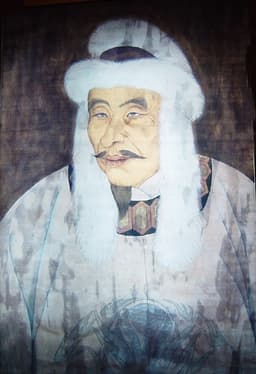
Emperor Taizu of Liao
Emperor · Medieval
66.8Total
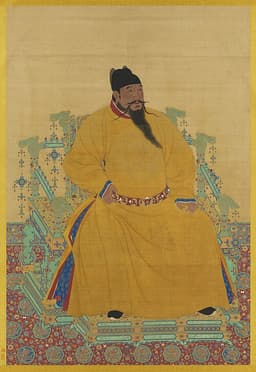
Yongle Emperor
Emperor · Medieval
73.7Total
Basic Information
Born
872
1360
Died
926
1424
Era
Medieval
Medieval
Nationality
China
China
Occupation
Emperor
Emperor
Civilization
Eastern
Eastern
Score Comparison
Military (10%)
76.0
85.0
Political (20%)
78.0
78.0
Influence (20%)
72.0
75.0
Legacy (20%)
40.0
65.0
Leadership (15%)
80.0
78.0
Strategy (15%)
75.0
68.0
TOTAL
66.8
73.7
Emperor Taizu of Liao — Complete Timeline
907 AD
Founding of the Liao DynastyPolitical Action
Abaoji, a Khitan chieftain, unified the Khitan tribes and proclaimed himself emperor, founding the Liao dynasty. This established the first major steppe-based dynasty to rule parts of northern China.
Dynasty FoundingUnification
Impact: regionalconstructive
916 AD
Establishment of the Dual Administration SystemReform◆ Major
Emperor Taizu established a dual administration system, with separate institutions for Khitan and Chinese subjects. This allowed the Liao to effectively govern both nomadic and agricultural populations, a model later adopted by other conquest dynasties.
Government ReformAdministration
Impact: regionalconstructive
920 AD
Creation of the Khitan ScriptCultural◆ Major
Emperor Taizu ordered the creation of a Khitan script, based on Chinese characters, to write the Khitan language. This script was used for official documents and inscriptions, promoting Khitan culture and administration.
Writing SystemCultural Development
Impact: regionalconstructive
926 AD
Conquest of the Bohai KingdomWar◆ Major
Emperor Taizu led a campaign that conquered the Bohai Kingdom in Manchuria. This victory expanded Liao territory eastward and eliminated a rival state, securing the Liao's eastern frontier.
ConquestExpansion
Impact: regionalconstructive
Death of Emperor TaizuPolitical Action
Emperor Taizu died during a campaign against the Bohai Kingdom. His death led to a succession struggle among his sons, but his son Yel
DeathSuccession
Impact: national
Yongle Emperor — Complete Timeline
1399 AD
Jingnan CampaignWar◆ Major
Zhu Di, Prince of Yan, launched a rebellion against his nephew the Jianwen Emperor. After three years of civil war, Zhu Di captured Nanjing and usurped the throne, becoming the Yongle Emperor.
Civil warUsurpationMing dynasty
Impact: nationaldestructive
1405 AD
Commissioning of the Zheng He voyagesCultural◆ Major
Yongle commissioned Admiral Zheng He to lead a series of maritime expeditions across the Indian Ocean. The treasure fleets visited Southeast Asia, India, the Middle East, and East Africa, projecting Ming power and establishing tributary relations.
Maritime explorationDiplomacyZheng He
Impact: globalconstructive
1407 AD
Conquest of AnnamWar◆ Major
Yongle sent Ming armies to invade Annam (northern Vietnam) after a succession dispute. The Ming annexed the region as the province of Jiaozhi, but faced prolonged resistance from Vietnamese forces.
InvasionVietnamMing expansion
Impact: regionaldestructive
1408 AD
Compilation of the Yongle EncyclopediaCultural◆ Major
Yongle ordered the compilation of the Yongle Encyclopedia, a massive collection of Chinese knowledge. The work comprised over 11,000 volumes and 370 million characters, covering history, philosophy, science, and literature.
EncyclopediaCultural projectScholarship
Impact: globalconstructive
1410 AD
Campaigns against the MongolsWar◆ Major
Yongle personally led five military campaigns into the Mongolian steppe against the remnants of the Yuan dynasty. These expeditions aimed to neutralize the Mongol threat to the northern border and assert Ming dominance.
Military campaignsMongolsBorder security
Impact: regional
1421 AD
Relocation of the capital to BeijingPolitical Action◆ Major
Yongle formally moved the Ming capital from Nanjing to Beijing. He ordered the construction of the Forbidden City and expanded the city's defenses, shifting the political center of China northward.
Capital relocationUrban planningForbidden City
Impact: nationalconstructive
Expert Analysis
Origins
Emperor Taizu of Liao, born Yelü Abaoji in 872 AD, was a chieftain of the Khitan people, a nomadic tribe from the steppes of modern-day Inner Mongolia. His early life was shaped by tribal warfare and the need to unite the fragmented Khitan clans. He was elected as leader of the Khitan in 907, drawing on his family's prestige and his own military prowess. In contrast, the Yongle Emperor, born Zhu Di in 1360, was the fourth son of the Hongwu Emperor, founder of the Ming dynasty. He grew up in the imperial court and was enfeoffed as Prince of Yan with his base in Beijing. His early life was one of privilege but also of watching his father consolidate power and eliminate rivals.
Rise to Power
Abaoji's rise began with his election as Khitan khan in 907, but he faced opposition from other tribes. He solidified power by defeating rival chieftains and incorporating their followers. In 916, he proclaimed himself emperor, founding the Liao dynasty. A key turning point was his conquest of the Bohai Kingdom in 926, which expanded Liao territory eastward. Zhu Di's rise was more dramatic: after his nephew the Jianwen Emperor attempted to reduce the power of princes, Zhu Di launched the Jingnan Campaign in 1399, a civil war that lasted three years. In 1402, he captured Nanjing and usurped the throne, becoming the Yongle Emperor. His victory was aided by his military experience as a frontier prince and the support of eunuchs.
Leadership & Governance
Abaoji's leadership was innovative for a steppe empire. He created a dual administration system, with separate institutions for Khitan and Chinese subjects. This allowed the Liao to effectively rule a multi-ethnic state. He also ordered the creation of the Khitan script in 920, based on Chinese characters, to write the Khitan language. His governance balanced nomadic traditions with Chinese bureaucratic methods. Yongle Emperor, by contrast, was a centralizer. He moved the capital from Nanjing to Beijing in 1421, building the Forbidden City and shifting the empire's focus northward. He commissioned the Yongle Encyclopedia (1408), a massive compilation of Chinese knowledge. His governance was autocratic, with a strong reliance on eunuchs and secret police.
Triumph & Tragedy
Abaoji's greatest success was unifying the Khitan and founding a dynasty that lasted over two centuries. His conquest of Bohai secured Liao's eastern flank. However, his death in 926 during a campaign against the Bohai led to a succession crisis, though his son eventually succeeded. His dual system was effective but also created tensions between Khitan and Chinese elites. Yongle's triumphs include the Zheng He voyages (1405-1433), which projected Ming power across the Indian Ocean, and the conquest of Annam (1406-1427). His tragedy was the brutal suppression of his nephew's loyalists and the heavy costs of his campaigns. The conquest of Annam proved a drain on resources and was eventually abandoned. His reliance on eunuchs led to long-term corruption.
Character & Destiny
Abaoji was pragmatic and adaptable, learning from Chinese models while preserving Khitan identity. His decisions were calculated to maintain stability. Yongle was ambitious and ruthless, driven by a desire to legitimize his usurpation. His character is marked by a mix of grand vision and paranoia. Historians note that Abaoji's ability to synthesize cultures was key to Liao's longevity, while Yongle's overreach in Annam and reliance on eunuchs sowed problems for later Ming rulers.
Legacy
Abaoji's legacy is the Liao dynasty, which ruled northern China for two centuries and influenced later steppe empires. His dual administration system was a model for later dynasties like the Yuan and Qing. The Khitan script, though now extinct, was a unique cultural achievement. Yongle's legacy is more visible: Beijing as the capital, the Forbidden City, the Zheng He voyages, and the Yongle Encyclopedia. His reign strengthened Ming power but also set precedents for isolationism after his death. In terms of numerical scores, Yongle scores higher overall (73.7 vs 66.8), particularly in military (85.0 vs 76.0) and influence (75.0 vs 72.0). However, Abaoji's leadership score (80.0) is slightly higher than Yongle's (78.0).
Conclusion
While both were transformative figures, Yongle Emperor had a greater impact on China's history due to his extensive reforms and projects. His relocation of the capital, the Zheng He voyages, and the compilation of the Yongle Encyclopedia shaped China's development. Abaoji's achievements, while foundational for the Liao, were more limited in geographical scope and long-term influence. The score gap of 6.9 points reflects this. Therefore, Yongle Emperor emerges as the more significant figure.
Rankings
🥇
Yongle EmperorLeader
Mil: 85.0Pol: 78.0Inf: 75.0
73.7
🥈
Emperor Taizu of Liao
Mil: 76.0Pol: 78.0Inf: 72.0
66.8
+6.9 behind
How This Comparison Works
Algorithm
Each figure is scored on 6 dimensions (0—100 scale) based on structured historical data: Military (10%), Political (20%), Influence (20%), Legacy (20%), Leadership (15%), Strategy (15%). The weighted total produces the final ranking.
Data Sources
Scores are computed from structured sub-indicators in the database. Scale factors adjust for era (Ancient ×0.85, Modern ×1.0) and civilization size (Eastern ×1.05, Other ×0.80) to account for differences in population and military scale.
Maximum 3 Figures
Comparisons are limited to 2—3 figures to ensure readability and statistical meaningfulness.
Error Margins
±5 points per dimension — Sub-scores are derived from historical records with inherent uncertainty. Two figures within 5 points on a dimension should be considered roughly equivalent in that area.
Total Score Accuracy
±3 points overall — The weighted combination of 6 dimensions produces a total score with approximately ±3 points of uncertainty. Differences of less than 3 points are not statistically significant— the figures are effectively tied.
Known Limitations
- Historical records are incomplete and uneven across civilizations
- Figures from oral-tradition societies may be underrepresented
- Occupation labels can misclassify multi-role figures
- Scores measure capability and impact, not moral character
- Quantitative scoring is a comparison tool, not absolute truth
Capability Radar
Military (10%) — Battles & Warfare
Battles
75
85
Win Rate
80
90
Expansion
85
80
Political (20%) — Governance & Reform
Reform
90
90
Diplomacy
80
85
Economy
75
85
Influence (20%) — Cultural & Global Reach
Cultural
65
85
Global
60
75
Legacy (20%) — Historical Impact
Historical
75
85
Longevity
70
80
Leadership (15%) — Power & Stability
Tenure
85
85
Stability
70
80
Strategy (15%) — Tactics & Innovation
Strategy
85
85
Tactics
70
80
Reform
90
75
Similar Comparisons
Comments & Discussion
No comments yet. Be the first to share your thoughts!