Loading...
Olav V of Norway vs Philip IV of Spain
Philip IV of Spain leads by 0.5 pts · 2 figures compared
…
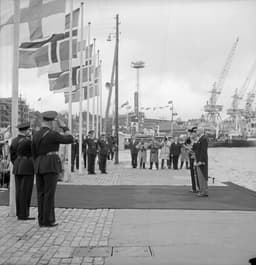
Olav V of Norway
Emperor · Modern
56.5Total

Philip IV of Spain
Emperor · Modern
57.0Total
Basic Information
Born
1903
1605
Died
1991
1665
Era
Modern
Modern
Nationality
Norway
Spain
Occupation
Emperor
Emperor
Civilization
Western
Western
Score Comparison
Military (10%)
48.2
25.9
Political (20%)
68.0
30.8
Influence (20%)
53.3
82.0
Legacy (20%)
42.5
56.0
Leadership (15%)
79.8
65.7
Strategy (15%)
55.2
54.8
TOTAL
56.5
57.0
Olav V of Norway — Complete Timeline
1957 AD
Accession to the thronePolitical Action◆ Major
Olav V became King of Norway upon the death of his father, Haakon VII. He inherited a constitutional monarchy that had been restored after World War II and was widely popular among Norwegians.
SuccessionMonarchy
Impact: national
1960 AD
Popularity as 'People's King'Cultural
Olav V was known for his informal and approachable style, often seen skiing or walking in public without security. This earned him the nickname 'Folkekongen' (People's King) and strengthened the monarchy's popularity.
MonarchyPopularityCulture
Impact: nationalconstructive
1972 AD
Leadership during the 1972 EC referendumPolitical Action
Olav V remained neutral during the Norwegian referendum on joining the European Economic Community, which was rejected by voters. His restraint helped maintain the monarchy's non-political image.
ReferendumEuropean IntegrationNeutrality
Impact: national
Philip IV of Spain — Complete Timeline
1618 AD
Outbreak of the Thirty Years' War involvementWar◆ Major
Spain under Philip IV continued its involvement in the Thirty Years' War, fighting to maintain Habsburg hegemony in Europe. The war drained Spanish resources and led to military defeats, contributing to the decline of Spanish power.
WarHabsburgDecline
Impact: globaldestructive
1621 AD
Appointment of Gaspar de Guzmán as chief ministerPolitical Action◆ Major
Upon ascending the throne, Philip IV appointed the Count-Duke of Olivares as his chief minister. This decision placed the direction of Spanish policy in Olivares's hands for over two decades, shaping the kingdom's domestic and foreign affairs.
GovernmentAppointmentOlivares
Impact: national
1623 AD
Patronage of Diego VelázquezCultural◆ Major
Philip IV appointed Diego Vel
ArtPatronageGolden Age
Impact: globalconstructive
1640 AD
Revolt of CataloniaWar◆ Major
Catalonia rebelled against Philip IV's rule, triggered by centralizing policies and the burden of war. The revolt lasted until 1652, weakening the Spanish monarchy and leading to a prolonged conflict that further strained the kingdom's finances.
RevoltCataloniaCentralization
Impact: regionaldestructive
Loss of PortugalWar
Portugal declared independence from Spain, ending the Iberian Union that had existed since 1580. Philip IV's forces failed to suppress the rebellion, and the loss of Portugal marked a significant territorial and prestige blow to the Spanish Empire.
IndependencePortugalIberian Union
Impact: regionaltragic
1648 AD
Peace of WestphaliaPolitical Action
Spain under Philip IV signed the Peace of Westphalia, ending the Eighty Years' War with the Dutch Republic. Spain recognized Dutch independence, marking the end of Spanish dominance in Europe and the beginning of its decline as a great power.
TreatyDutch IndependenceDecline
Impact: global
1665 AD
Death of Philip IVOther◆ Major
Philip IV died, leaving a weakened Spanish Empire to his young son Charles II. His reign had seen the peak and decline of Spanish power, with economic troubles, military defeats, and territorial losses marking the end of the Spanish Golden Age.
DeathSuccessionDecline
Impact: national
Expert Analysis
Origins
Olav V of Norway was born on July 2, 1903, at Appleton House in Sandringham, Norfolk, as Prince Alexander of Denmark. He was the son of Prince Carl of Denmark and Princess Maud of Wales, daughter of King Edward VII of the United Kingdom. His family background was deeply rooted in European royalty, but his upbringing emphasized simplicity and duty. He studied at the Norwegian Military Academy and later at Balliol College, Oxford, where he developed a keen interest in history and economics. His formative experiences included serving in the Norwegian Navy and witnessing the dissolution of the union between Norway and Sweden in 1905, which led to his father becoming King Haakon VII of Norway. This event shaped his understanding of constitutional monarchy and national identity.
Philip IV of Spain was born on April 8, 1605, in Valladolid, Spain, to King Philip III of Spain and Margaret of Austria. He was a member of the Habsburg dynasty, which dominated European politics. His education was overseen by the Count-Duke of Olivares, who later became his chief minister. Philip IV was trained in statecraft, military strategy, and the arts, but he lacked the rigorous discipline of his predecessors. His early exposure to the court of his father, marked by favoritism and corruption, influenced his later reliance on validos (favorites). The decline of Spanish power during his father's reign set the stage for the challenges he would face.
Rise to Power
Olav V's rise to power was gradual and tied to the stability of the Norwegian monarchy. He became Crown Prince in 1905 when his father was elected King of Norway. He served as regent during his father's absences and gained experience in state affairs. His accession to the throne occurred on September 21, 1957, upon the death of his father, Haakon VII. He inherited a constitutional monarchy that had been restored after World War I and had gained widespread legitimacy through his father's resistance during the Nazi occupation. Olav V's popularity was already high due to his wartime service and his informal, approachable demeanor.
Philip IV ascended to the throne at the age of 16 on March 31, 1621, upon the death of his father. He immediately appointed Gaspar de Guzmán, Count-Duke of Olivares, as his chief minister. This decision placed the direction of Spanish policy in the hands of a reformer who sought to centralize power and revive Spanish military dominance. Philip IV's early reign was marked by the continuation of the Thirty Years' War and the Eighty Years' War with the Dutch Republic. His rise was not contested, but his reliance on Olivares set the tone for his governance.
Leadership & Governance
Olav V's leadership style was characterized by constitutional restraint and personal accessibility. He scored 79.8 in leadership, reflecting his ability to unite the nation. He remained neutral during the 1972 Norwegian referendum on joining the European Economic Community, allowing the democratic process to unfold without royal interference. His restraint helped maintain the monarchy's apolitical status. He was known for his informal approach, often seen skiing or walking in public without security, earning him the nickname 'People's King'. He modernized the monarchy by reducing ceremony and emphasizing service.
Philip IV's governance was delegated to Olivares, who pursued ambitious reforms. Philip IV scored 65.7 in leadership, but his political score was only 30.8, reflecting his ineffective control. He pursued a policy of 'reputation' (reputación) to restore Spanish prestige, but his military campaigns drained resources. The Thirty Years' War (1618-1648) and the Eighty Years' War (1568-1648) led to the Peace of Westphalia in 1648, where Spain recognized Dutch independence. This was a major concession. Philip IV also faced the loss of Portugal in 1640, when the Portuguese nobility declared independence, ending the Iberian Union. His inability to suppress the rebellion weakened Spain further.
Triumph & Tragedy
Olav V's greatest triumph was his role in preserving the Norwegian monarchy as a unifying symbol. His leadership during the 1972 EC referendum showed his commitment to democracy. He also oversaw the post-war reconstruction and economic growth of Norway. His greatest failure was perhaps his inability to prevent the decline of the monarchy's political influence, but this was inherent to constitutional monarchy. He faced no major scandals or disasters.
Philip IV's greatest triumph was his patronage of the arts, particularly his support for Diego Velázquez, who painted masterpieces like 'Las Meninas'. This cultural legacy outshines his political failures. His tragedy was the decline of Spanish power. The Peace of Westphalia marked the end of Spanish dominance in Europe. The loss of Portugal and the ongoing wars bankrupted the treasury. His reign saw the peak and decline of Spanish power, with economic collapse and military defeat. His death in 1665 left a weakened empire to his young son Charles II, who was physically and mentally disabled.
Character & Destiny
Olav V was modest, disciplined, and deeply attached to Norway. His decision-making was guided by constitutional norms and a sense of duty. His character shaped his destiny as a beloved figurehead. He scored 68.0 in political skill, but his influence (53.3) was limited by his role. Historians praise his ability to adapt the monarchy to modern democracy.
Philip IV was cultured but indecisive, heavily reliant on Olivares. He was known for his piety and patronage, but his lack of direct involvement in governance led to mismanagement. His character—indulgent and detached—contributed to the empire's decline. He scored 82.0 in influence due to his cultural impact, but his military (25.9) and political (30.8) scores reflect his failures. Historians see him as a tragic figure who presided over Spain's golden age in arts but also its political sunset.
Legacy
Olav V's legacy is as the 'People's King' who modernized the Norwegian monarchy. His informal style set a precedent for later monarchs. He is remembered for his wartime service and his role in unifying the nation. His legacy score is 42.5, reflecting the limited direct impact of a constitutional monarch.
Philip IV's legacy is tied to the Spanish Golden Age in arts and literature. Velázquez's works remain iconic. Politically, his reign marked the end of Habsburg dominance. The loss of Portugal and the recognition of Dutch independence were lasting blows. His legacy score is 56.0, higher than Olav's due to cultural influence. However, his military and political failures are significant.
Conclusion
Olav V and Philip IV represent contrasting models of monarchy. Olav V, with a total score of 56.5, was a successful constitutional monarch who strengthened democratic institutions. Philip IV, with a total score of 57.0, had greater cultural influence but presided over imperial decline. In terms of impact on their nations' long-term trajectories, Olav V's role in stabilizing Norway's democracy is more significant than Philip IV's contributions to art. While Philip IV scored higher overall, his failures in governance outweigh his cultural achievements. Therefore, Olav V had a greater positive impact on his country's development.
Rankings
🥇
Philip IV of SpainLeader
Mil: 25.9Pol: 30.8Inf: 82.0
57.0
🥈
Olav V of Norway
Mil: 48.2Pol: 68.0Inf: 53.3
56.5
+0.5 behind
How This Comparison Works
Algorithm
Each figure is scored on 6 dimensions (0—100 scale) based on structured historical data: Military (10%), Political (20%), Influence (20%), Legacy (20%), Leadership (15%), Strategy (15%). The weighted total produces the final ranking.
Data Sources
Scores are computed from structured sub-indicators in the database. Scale factors adjust for era (Ancient ×0.85, Modern ×1.0) and civilization size (Eastern ×1.05, Other ×0.80) to account for differences in population and military scale.
Maximum 3 Figures
Comparisons are limited to 2—3 figures to ensure readability and statistical meaningfulness.
Error Margins
±5 points per dimension — Sub-scores are derived from historical records with inherent uncertainty. Two figures within 5 points on a dimension should be considered roughly equivalent in that area.
Total Score Accuracy
±3 points overall — The weighted combination of 6 dimensions produces a total score with approximately ±3 points of uncertainty. Differences of less than 3 points are not statistically significant— the figures are effectively tied.
Known Limitations
- Historical records are incomplete and uneven across civilizations
- Figures from oral-tradition societies may be underrepresented
- Occupation labels can misclassify multi-role figures
- Scores measure capability and impact, not moral character
- Quantitative scoring is a comparison tool, not absolute truth
Capability Radar
Military (10%) — Battles & Warfare
Battles
24
20
Win Rate
25
15
Expansion
30
5
Political (20%) — Governance & Reform
Reform
40
10
Diplomacy
65
20
Economy
45
15
Influence (20%) — Cultural & Global Reach
Cultural
40
75
Global
30
55
Legacy (20%) — Historical Impact
Historical
35
60
Longevity
30
60
Leadership (15%) — Power & Stability
Tenure
52
55
Stability
70
10
Strategy (15%) — Tactics & Innovation
Strategy
31
10
Tactics
36
10
Reform
41
5
Similar Comparisons
Comments & Discussion
No comments yet. Be the first to share your thoughts!