Loading...
Oliver Cromwell vs Porfirio Diaz
Oliver Cromwell leads by 9.9 pts · 2 figures compared
…
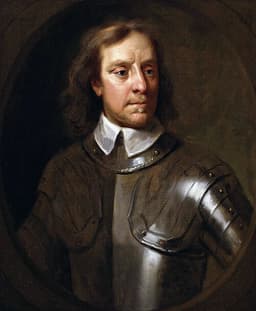
Oliver Cromwell
General · Modern
71.8Total

Porfirio Diaz
General · Modern
61.9Total
Basic Information
Born
1599
1830
Died
1658
1915
Era
Modern
Modern
Nationality
England
Mexico
Occupation
General
General
Civilization
Western
Western
Score Comparison
Military (10%)
82.0
65.0
Political (20%)
55.0
55.0
Influence (20%)
82.0
58.3
Legacy (20%)
72.0
58.0
Leadership (15%)
62.0
80.0
Strategy (15%)
75.0
60.7
TOTAL
71.8
61.9
Oliver Cromwell — Complete Timeline
1644 AD
Battle of Marston MoorWar◆ Major
Cromwell, as a cavalry commander in the Parliamentarian army, played a key role in the decisive victory over Royalist forces at Marston Moor. This battle secured Parliament's control of northern England and boosted Cromwell's military reputation.
English Civil WarParliamentarianCavalry
Impact: national
1645 AD
Battle of NasebyWar
Cromwell led the New Model Army to a decisive victory over King Charles I's forces at Naseby. This battle effectively ended the First English Civil War, leading to the capture of the king and Parliament's supremacy.
English Civil WarNew Model ArmyRoyalist Defeat
Impact: national
1649 AD
Cromwellian Conquest of IrelandWar◆ Major
Cromwell led a brutal military campaign in Ireland to suppress the Irish Confederacy and Royalist alliance. His forces massacred garrisons at Drogheda and Wexford, resulting in widespread death and land confiscation, cementing English Protestant dominance.
IrelandConquestMassacre
Impact: regionaldestructive
Execution of King Charles IPolitical Action
Cromwell was a leading figure in the trial and execution of King Charles I for treason. This unprecedented act abolished the monarchy and established the Commonwealth of England, a republican government.
RegicideCommonwealthRepublic
Impact: globaldestructive
1653 AD
Appointment as Lord ProtectorPolitical Action◆ Major
Cromwell was installed as Lord Protector of the Commonwealth of England, Scotland, and Ireland, effectively becoming head of state. He ruled as a military dictator, dissolving parliaments and imposing Puritan moral laws.
Lord ProtectorCommonwealthDictatorship
Impact: national
Porfirio Diaz — Complete Timeline
1876 AD
Plan of TuxtepecPolitical Action
Diaz issued the Plan of Tuxtepec, rebelling against President Sebastian Lerdo de Tejada's re-election. He defeated government forces and assumed the presidency, beginning a 35-year dictatorship.
CoupDictatorshipPorfiriato
Impact: nationaldestructive
1884 AD
Porfiriato Economic ModernizationReform◆ Major
Diaz implemented policies attracting foreign investment, building railroads, and expanding mining and agriculture. Mexico experienced economic growth but with increased foreign control and wealth inequality.
Economic GrowthForeign InvestmentInfrastructure
Impact: national
1910 AD
Centennial of IndependenceCultural◆ Major
Diaz celebrated Mexico's centennial with grand festivities, showcasing modernization. The event masked growing discontent, as Francisco I. Madero's anti-re-election movement gained momentum, leading to the Mexican Revolution.
CelebrationRevolution PrecursorPolitical Tension
Impact: national
1911 AD
Resignation and ExilePolitical Action
After the Treaty of Ciudad Juarez, Diaz resigned the presidency and went into exile in France. His departure ended the Porfiriato and allowed Madero to assume power, though it did not end the revolution.
End of DictatorshipExileRevolution
Impact: national
Expert Analysis
Origins
Oliver Cromwell (1599–1658) was born into a gentry family in Huntingdon, England. He studied at Cambridge but left after his father's death. His early life was marked by Puritan religious fervor and a sense of divine calling. He inherited modest estates and became a Member of Parliament in 1628.
Porfirio Diaz (1830–1915) was born in Oaxaca, Mexico, to a poor mestizo family. He studied law but left to join the military. His early career was shaped by the chaotic years of the Mexican-American War and the Reform War, where he fought against the French intervention.
Rise to Power
Cromwell rose during the English Civil War (1642–1651). As a cavalry commander, his disciplined Ironsides won victories at Marston Moor (1644) and Naseby (1645). He became a key figure in the New Model Army and later led the trial and execution of Charles I in 1649. By 1653, he dissolved the Rump Parliament and became Lord Protector, a military dictatorship.
Diaz came to power through the Plan of Tuxtepec in 1876, rebelling against President Sebastian Lerdo de Tejada. He defeated government forces and assumed the presidency, beginning a 35-year dictatorship known as the Porfiriato. He maintained power through controlled elections, co-opting elites, and repressing dissent.
Leadership & Governance
Cromwell ruled England as Lord Protector from 1653 until his death in 1658. He implemented Puritan moral reforms, including banning theatre and enforcing Sunday observance. He tolerated religious dissent for Protestants but persecuted Catholics. His governance was authoritarian, relying on the army, and he rejected the crown twice but held dictatorial power. He scored 62.0 in leadership and 55.0 in political acumen.
Diaz governed Mexico with a policy of "pan o palo" (bread or club). He attracted foreign investment, building 19,000 km of railroads and expanding mining. Economic growth averaged 3.5% annually, but wealth inequality worsened. He centralized power, suppressed local caudillos, and used the rurales to maintain order. His leadership score was 80.0, but political score was 55.0.
Triumph & Tragedy
Cromwell's greatest success was winning the Civil War and establishing the Commonwealth. His New Model Army was a model of discipline. His greatest failure was the brutal conquest of Ireland (1649–1650), where his forces massacred civilians at Drogheda and Wexford, killing over 3,500. This created lasting resentment. His military score is 82.0, but his legacy is marred by Irish atrocities.
Diaz's triumph was modernizing Mexico's economy and infrastructure. By 1910, Mexico had 24,000 km of railroads and booming mining exports. His tragedy was the growing inequality and political repression that led to the Mexican Revolution. The Centennial of Independence in 1910 masked discontent; Francisco Madero's revolt forced Diaz into exile in 1911. His military score is 65.0, and legacy score 58.0.
Character & Destiny
Cromwell was a complex figure: devout Puritan, ruthless soldier, and reluctant dictator. He believed himself God's instrument, which gave him confidence but also rigidity. His decision to execute the king was unprecedented and shaped his destiny as a regicide. He died of natural causes in 1658, but his son Richard failed to hold power, leading to the Restoration.
Diaz was pragmatic and ruthless, prioritizing order over freedom. His belief in positivist progress led him to concentrate power, believing Mexico needed a strong hand. His destiny was to be overthrown by the very forces his policies unleashed. He died in exile in Paris in 1915.
Legacy
Cromwell's legacy is divisive: in England, he is seen as a champion of parliamentary sovereignty; in Ireland, a genocidal tyrant. His military innovations influenced later armies. The Commonwealth failed, but his actions limited royal power permanently. His influence score is 82.0, and legacy 72.0.
Diaz's legacy is the Porfiriato, a period of economic growth but social decay. His policies created a modern infrastructure but also the conditions for revolution. Mexicans view him ambivalently. His influence score is 58.3, and legacy 58.0.
Conclusion
Oliver Cromwell had greater impact than Porfirio Diaz. Cromwell's military score of 82.0 vs Diaz's 65.0, and influence score of 82.0 vs 58.3, reflect his deeper and more lasting effect on political structures. Cromwell changed England's constitution, executed a king, and set precedents for parliamentary power. Diaz's modernization was significant but temporary, as his regime collapsed. Cromwell's actions reshaped the British Isles and influenced democratic thought, whereas Diaz's legacy is confined to Mexico's history. Therefore, Oliver Cromwell is the more consequential figure.
Rankings
🥇
Oliver CromwellLeader
Mil: 82.0Pol: 55.0Inf: 82.0
71.8
🥈
Porfirio Diaz
Mil: 65.0Pol: 55.0Inf: 58.3
61.9
+9.9 behind
How This Comparison Works
Algorithm
Each figure is scored on 6 dimensions (0—100 scale) based on structured historical data: Military (10%), Political (20%), Influence (20%), Legacy (20%), Leadership (15%), Strategy (15%). The weighted total produces the final ranking.
Data Sources
Scores are computed from structured sub-indicators in the database. Scale factors adjust for era (Ancient ×0.85, Modern ×1.0) and civilization size (Eastern ×1.05, Other ×0.80) to account for differences in population and military scale.
Maximum 3 Figures
Comparisons are limited to 2—3 figures to ensure readability and statistical meaningfulness.
Error Margins
±5 points per dimension — Sub-scores are derived from historical records with inherent uncertainty. Two figures within 5 points on a dimension should be considered roughly equivalent in that area.
Total Score Accuracy
±3 points overall — The weighted combination of 6 dimensions produces a total score with approximately ±3 points of uncertainty. Differences of less than 3 points are not statistically significant— the figures are effectively tied.
Known Limitations
- Historical records are incomplete and uneven across civilizations
- Figures from oral-tradition societies may be underrepresented
- Occupation labels can misclassify multi-role figures
- Scores measure capability and impact, not moral character
- Quantitative scoring is a comparison tool, not absolute truth
Capability Radar
Military (10%) — Battles & Warfare
Battles
75
65
Win Rate
80
70
Expansion
60
50
Political (20%) — Governance & Reform
Reform
75
60
Diplomacy
60
65
Economy
65
60
Influence (20%) — Cultural & Global Reach
Cultural
65
55
Global
65
55
Legacy (20%) — Historical Impact
Historical
80
65
Longevity
70
60
Leadership (15%) — Power & Stability
Tenure
70
85
Stability
55
70
Strategy (15%) — Tactics & Innovation
Strategy
82
65
Tactics
78
60
Reform
85
55
Similar Comparisons
Comments & Discussion
No comments yet. Be the first to share your thoughts!