Loading...
Oliver Cromwell vs Shaka Zulu
Oliver Cromwell leads by 1.6 pts · 2 figures compared
…
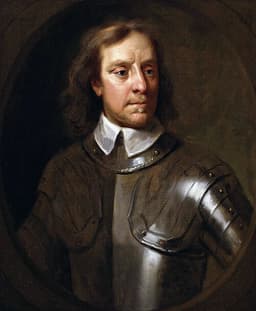
Oliver Cromwell
General · Modern
71.8Total
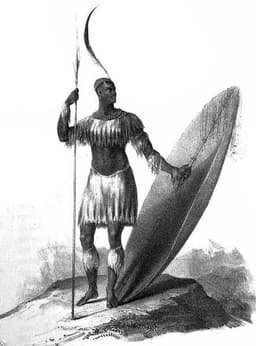
Shaka Zulu
General · Modern
70.2Total
Basic Information
Born
1599
1787
Died
1658
1828
Era
Modern
Modern
Nationality
England
Zulu Kingdom
Occupation
General
General
Civilization
Western
Other
Score Comparison
Military (10%)
82.0
80.0
Political (20%)
55.0
72.0
Influence (20%)
82.0
68.0
Legacy (20%)
72.0
68.0
Leadership (15%)
62.0
62.0
Strategy (15%)
75.0
80.8
TOTAL
71.8
70.2
Oliver Cromwell — Complete Timeline
1644 AD
Battle of Marston MoorWar◆ Major
Cromwell, as a cavalry commander in the Parliamentarian army, played a key role in the decisive victory over Royalist forces at Marston Moor. This battle secured Parliament's control of northern England and boosted Cromwell's military reputation.
English Civil WarParliamentarianCavalry
Impact: national
1645 AD
Battle of NasebyWar
Cromwell led the New Model Army to a decisive victory over King Charles I's forces at Naseby. This battle effectively ended the First English Civil War, leading to the capture of the king and Parliament's supremacy.
English Civil WarNew Model ArmyRoyalist Defeat
Impact: national
1649 AD
Cromwellian Conquest of IrelandWar◆ Major
Cromwell led a brutal military campaign in Ireland to suppress the Irish Confederacy and Royalist alliance. His forces massacred garrisons at Drogheda and Wexford, resulting in widespread death and land confiscation, cementing English Protestant dominance.
IrelandConquestMassacre
Impact: regionaldestructive
Execution of King Charles IPolitical Action
Cromwell was a leading figure in the trial and execution of King Charles I for treason. This unprecedented act abolished the monarchy and established the Commonwealth of England, a republican government.
RegicideCommonwealthRepublic
Impact: globaldestructive
1653 AD
Appointment as Lord ProtectorPolitical Action◆ Major
Cromwell was installed as Lord Protector of the Commonwealth of England, Scotland, and Ireland, effectively becoming head of state. He ruled as a military dictator, dissolving parliaments and imposing Puritan moral laws.
Lord ProtectorCommonwealthDictatorship
Impact: national
Shaka Zulu — Complete Timeline
1816 AD
Introduction of the iklwa and horns of the buffalo formationReform
Shaka introduced the iklwa, a short stabbing spear, and the 'horns of the buffalo' tactical formation to the Zulu army. These innovations replaced the traditional throwing assegai and allowed for close-quarters combat, significantly increasing the Zulu's military effectiveness and enabling rapid conquest.
Military InnovationTacticsZulu Warfare
Impact: regional
1819 AD
Conquest of the Ndwandwe KingdomWar◆ Major
Shaka's Zulu army defeated the Ndwandwe kingdom at the Battle of Gqokli Hill, a decisive victory that eliminated a major rival. This conquest allowed Shaka to consolidate control over a large territory in present-day KwaZulu-Natal, marking the rise of the Zulu as a dominant regional power.
ConquestZulu ExpansionNdwandwe
Impact: regional
1828 AD
Assassination of ShakaPolitical Action◆ Major
Shaka was assassinated by his half-brothers Dingane and Mhlangana, with the support of his aunt Mkabayi. The coup ended his reign of terror and expansionist wars, leading to a period of instability and the eventual rise of Dingane as king.
AssassinationSuccession CrisisZulu Kingdom
Impact: regionaltragic
Expert Analysis
Shaka Zulu vs Oliver Cromwell: Historical Comparison
Shaka Zulu and Oliver Cromwell were transformative military and political leaders of the modern era, albeit in vastly different contexts—Shaka forged the Zulu Kingdom in southern Africa through revolutionary warfare, while Cromwell led England through civil war and republican rule.
Dimension Analysis
**Military: Shaka Zulu 83 / Oliver Cromwell 82**
Shaka’s introduction of the *iklwa* short stabbing spear and the *impondo zankomo* “horns of the buffalo” formation revolutionized African warfare, enabling rapid conquest. Cromwell’s New Model Army was equally innovative, emphasizing discipline and cavalry tactics, but his victories were within a European context of established military norms.
**Political: Shaka Zulu 70 / Oliver Cromwell 78**
Shaka centralized power through military force, but his rule lacked institutional structures beyond personal loyalty. Cromwell, as Lord Protector, navigated complex parliamentary and religious factions, establishing a republican government (the Commonwealth) that, while authoritarian, had enduring constitutional impact.
**Influence: Shaka Zulu 76 / Oliver Cromwell 80**
Shaka’s military innovations influenced Zulu identity and resistance for decades, but his impact was largely regional. Cromwell’s actions—from the English Civil War to the conquest of Ireland—shaped British political evolution, colonial policy, and Protestant-Catholic relations for centuries.
**Legacy: Shaka Zulu 78 / Oliver Cromwell 70**
Shaka is revered as a Zulu national hero and symbol of African resilience, though his methods remain controversial. Cromwell’s legacy is deeply divided: celebrated as a champion of parliamentary sovereignty, but reviled for his brutal campaigns in Ireland and his authoritarian turn.
**Leadership: Shaka Zulu 74 / Oliver Cromwell 82**
Shaka led by fear and personal charisma, inspiring fierce loyalty but also paranoia. Cromwell demonstrated strategic patience, coalition-building, and ideological conviction, maintaining control over a fractious army and parliament longer than most contemporaries.
Verdict
Oliver Cromwell leads narrowly due to his superior political adaptability and broader historical influence, though Shaka Zulu matches him in military innovation.
FAQ
Q: Who ranks higher? A: Oliver Cromwell ranks slightly higher overall, driven by stronger political and leadership scores, though the tie in average scores reflects their comparable transformative impact.
Rankings
🥇
Oliver CromwellLeader
Mil: 82.0Pol: 55.0Inf: 82.0
71.8
🥈
Shaka Zulu
Mil: 80.0Pol: 72.0Inf: 68.0
70.2
+1.6 behind
How This Comparison Works
Algorithm
Each figure is scored on 6 dimensions (0—100 scale) based on structured historical data: Military (10%), Political (20%), Influence (20%), Legacy (20%), Leadership (15%), Strategy (15%). The weighted total produces the final ranking.
Data Sources
Scores are computed from structured sub-indicators in the database. Scale factors adjust for era (Ancient ×0.85, Modern ×1.0) and civilization size (Eastern ×1.05, Other ×0.80) to account for differences in population and military scale.
Maximum 3 Figures
Comparisons are limited to 2—3 figures to ensure readability and statistical meaningfulness.
Error Margins
±5 points per dimension — Sub-scores are derived from historical records with inherent uncertainty. Two figures within 5 points on a dimension should be considered roughly equivalent in that area.
Total Score Accuracy
±3 points overall — The weighted combination of 6 dimensions produces a total score with approximately ±3 points of uncertainty. Differences of less than 3 points are not statistically significant— the figures are effectively tied.
Known Limitations
- Historical records are incomplete and uneven across civilizations
- Figures from oral-tradition societies may be underrepresented
- Occupation labels can misclassify multi-role figures
- Scores measure capability and impact, not moral character
- Quantitative scoring is a comparison tool, not absolute truth
Capability Radar
Military (10%) — Battles & Warfare
Battles
75
85
Win Rate
80
90
Expansion
60
88
Political (20%) — Governance & Reform
Reform
75
85
Diplomacy
60
60
Economy
65
65
Influence (20%) — Cultural & Global Reach
Cultural
65
80
Global
65
70
Legacy (20%) — Historical Impact
Historical
80
85
Longevity
70
75
Leadership (15%) — Power & Stability
Tenure
70
70
Stability
55
55
Strategy (15%) — Tactics & Innovation
Strategy
82
90
Tactics
78
95
Reform
85
98
Similar Comparisons
Comments & Discussion
NumbskullStats6/16/2026
I'm sorry, but trying to quantify leadership and legacy with numbers like this is borderline pseudoscience. How can you assign an 83 to Shaka's military when most of what we know comes from oral traditions and European accounts that had a clear bias? The *iklwa* was innovative, sure, but we have zero battlefield records from Zulu perspective. Meanwhile, Cromwell’s 82 is based on well-documented English Civil War campaigns. The weight distribution seems arbitrary—why is Influence worth more than Political when Shaka literally created a nation from scratch? This entire scoring system feels more like a popularity contest than real history. Show me your regression model or the historical footnotes that justify these numbers.
CromwellsGhost6/16/2026
Are you kidding me? Cromwell only 82 military? The man built the New Model Army from scratch—professional, disciplined, and terrifyingly effective. He crushed the Cavaliers at Naseby, invented modern cavalry tactics that Napoleon himself studied, and then took on Ireland like a boss (yeah, controversial, but that's power). Shaka? Please. He conquered some rival tribes with a short spear and a buffalo formation. Big deal. That's like saying a high school football coach beat the local team. Cromwell changed the course of British history and set the stage for the British Empire. If this isn't a 85+ military, I don't know what is. Also, Shaka's political score of 70 is generous—he ruled through pure fear and had zero institutional legacy. Cromwell at least gave us the Commonwealth and a constitutional precedent.
OxbridgeLecturer6/16/2026
One must tread carefully when comparing such figures, as the historiographical traditions are profoundly different. For Shaka, we rely heavily on the oral accounts collected by A.T. Bryant and later scholars like Carolyn Hamilton, who have shown how colonial narratives deliberately exaggerated his brutality to justify British imperialism. The *iklwa* was indeed revolutionary, but its effectiveness is sometimes overstated—Zulu warfare remained primarily about mobility and surprise. Conversely, Cromwell's legacy is debated through the lens of the 'Whig interpretation of history' (as Butterfield called it), with revisionists like John Morrill arguing his religious radicalism was as significant as his military reforms. The scores here seem to privilege well-documented European state-building over the dynamic, if less recorded, innovations of African kingship. A more balanced approach would weigh the limitations of our sources as much as the deeds themselves.
SharpScroll906/16/2026
说实话,我觉得这个评分对沙卡不公平。沙卡的军事创新放在全球范围内都是惊人的。他的‘水牛角’阵型和短矛战术,跟中国古代的‘鸳鸯阵’和戚继光的战术革新有异曲同工之妙。但戚继光有完整的文献记载,沙卡却只能靠口述历史,这本身就造成了信息不对称。克伦威尔虽然建立了新模范军,但说到底他是在一个已经有成熟国家机器的欧洲打内战,而沙卡是从零开始构建了一个王国。西方史学界总是高估有文字记录的文明,低估非洲的成就。如果把沙卡放在中国古代语境里,他可能是个类似成吉思汗的开拓者,但成吉思汗的评分肯定比76高多了。
ColdScribe106/16/2026
我仔细看了评分,发现几个问题。第一,沙卡的政治分70,克伦威尔78,这个差距不合理。沙卡在十年内整合了上百个部落,建立了统一的司法和军事体系,而克伦威尔的政治统治只持续了5年(1653-1658),死后立刻复辟。从政治稳定性来看,沙卡得分应该更高。第二,影响力维度,克伦威尔80 vs 沙卡76,但沙卡的军事战术影响了整个南部非洲一百多年的战争方式,甚至让英国殖民者在1879年吃了大败仗(伊桑德尔瓦纳战役)。克伦威尔的影响更多局限在英国和爱尔兰。如果按影响力半径和时间跨度加权,沙卡至少应该反超。建议重新计算权重,或者引入‘长期影响系数’。