Loading...
Osorio Marquis vs Peng Dehuai
Peng Dehuai leads by 9.2 pts · 2 figures compared
…
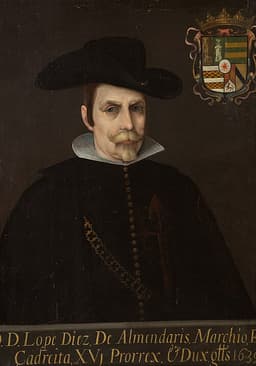
Osorio Marquis
General · Modern
55.7Total
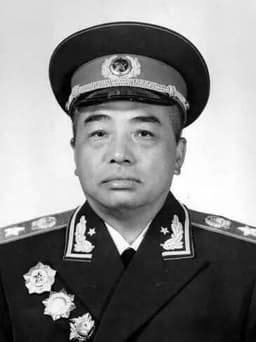
Peng Dehuai
General · Modern
64.9Total
Basic Information
Born
1808
1898
Died
1879
1974
Era
Modern
Modern
Nationality
Brazil
China
Occupation
General
General
Civilization
Western
Eastern
Score Comparison
Military (10%)
67.5
80.0
Political (20%)
43.7
62.7
Influence (20%)
59.0
65.0
Legacy (20%)
47.5
55.0
Leadership (15%)
64.5
70.0
Strategy (15%)
60.7
70.0
TOTAL
55.7
64.9
Osorio Marquis — Complete Timeline
1865 AD
Battle of YatayWar◆ Major
Osorio commanded the Brazilian cavalry in the Battle of Yatay, a key engagement in the Paraguayan War. His cavalry charge routed the Paraguayan forces, leading to a decisive Allied victory and the capture of many prisoners.
Paraguayan WarBattleCavalry Charge
Impact: regional
Appointed Commander of the Brazilian CavalryPolitical Action◆ Major
Osorio was appointed commander of the Brazilian cavalry forces in the Paraguayan War. He reorganized and trained the cavalry, making it an effective fighting force. His leadership was crucial in several battles.
Military CommandCavalryParaguayan War
Impact: regionalconstructive
1866 AD
Battle of TuyutíWar◆ Major
Osorio led the Brazilian cavalry in the Battle of Tuyut
Paraguayan WarBattleCavalry
Impact: regional
1868 AD
Battle of AvahyWar◆ Major
Osorio commanded the Brazilian cavalry in the Battle of Avahy during the Paraguayan War. His charge broke the Paraguayan lines, contributing to a decisive Allied victory. This battle demonstrated his tactical skill and leadership.
Paraguayan WarCavalry ChargeBattle
Impact: regional
Peng Dehuai — Complete Timeline
1950 AD
Commander of Chinese Forces in the Korean WarWar
Peng Dehuai was appointed commander of the Chinese People's Volunteer Army in Korea. He led Chinese forces to initial victories against UN forces, pushing them back from the Yalu River and capturing Seoul.
Korean WarMilitary Command
Impact: global
1954 AD
Minister of National Defense of the People's Republic of ChinaPolitical Action◆ Major
Peng Dehuai was appointed Minister of National Defense, overseeing the modernization of the People's Liberation Army. He advocated for professional military reforms and reduced the influence of political commissars.
GovernmentMilitary Reform
Impact: nationalconstructive
1959 AD
Criticized Mao Zedong at the Lushan ConferencePolitical Action
Peng Dehuai wrote a letter to Mao Zedong criticizing the Great Leap Forward's economic policies and their human cost. Mao responded by purging Peng, labeling him a 'right opportunist' and removing him from all posts.
Great Leap ForwardPolitical PurgeCriticism
Impact: nationaldestructive
Expert Analysis
Origins
**Osorio Marquis** was born in 1808 in Rio Grande do Sul, Brazil, into a military family. His father was a cavalry officer, and young Osorio grew up around horses and military discipline. He joined the Brazilian Army at age 15 and served in the Cisplatine War (1825-1828), gaining early combat experience. His formative years were shaped by the harsh conditions of the southern frontier, where cavalry tactics were essential for warfare.
**Peng Dehuai** was born in 1898 in Xiangtan, Hunan, China, into a poor peasant family. He had limited formal education but joined the Hunan Army as a soldier in 1916. Influenced by nationalist and later communist ideas, he participated in the Northern Expedition and joined the Chinese Communist Party in 1928. His early military experience came from the Chinese Civil War, where he fought against the Nationalists.
Rise to Power
Osorio rose through the ranks steadily, earning a reputation for courage and skill in cavalry operations. His major breakthrough came during the Paraguayan War (1864-1870). In 1865, he commanded the cavalry at the **Battle of Yatay**, where his charge routed the Paraguayan forces. This victory led to his appointment as commander of the Brazilian cavalry in 1866. He reorganized and trained the cavalry, transforming it into a disciplined force. Key turning points included the **Battle of Tuyutí** in 1866, where his cavalry repelled repeated Paraguayan attacks, and the **Battle of Avahy** in 1868, where his charge broke the enemy lines and led to a decisive victory. By 1869, he was a national hero.
Peng Dehuai's rise was tied to the Chinese Communist Party's military struggles. He became a division commander during the Long March (1934-1935) and later commanded the 8th Route Army in the Second Sino-Japanese War. His major turning point came in 1950 when he was appointed commander of the Chinese People's Volunteer Army in the Korean War. He led Chinese forces to initial successes, pushing UN forces back from the Yalu River and recapturing Pyongyang and Seoul. His reputation peaked after the war, and he was appointed Minister of National Defense in 1954.
Leadership & Governance
Osorio's leadership style was hands-on and inspirational. He led from the front, personally charging with his cavalry. He emphasized training and discipline, implementing a cavalry manual based on French doctrine. His governance approach was apolitical; he focused solely on military effectiveness. For example, he insisted on proper horse care and logistics, which improved cavalry endurance. He scored 64.5 in leadership and 60.7 in strategy.
Peng Dehuai was a professional soldier who advocated for modernizing the People's Liberation Army (PLA). He introduced Soviet-style training and equipment, and emphasized regular military education. Politically, he was a loyal party member but was willing to criticize policies. In 1959, at the **Lushan Conference**, he wrote a letter to Mao Zedong criticizing the Great Leap Forward's economic failures and human cost. This act of political courage led to his purge. His leadership score is 70.0, and his strategy score is 70.0.
Triumph & Tragedy
Osorio's greatest triumph was his role in the Paraguayan War, where his cavalry charges were decisive in several battles. He is credited with turning the Brazilian cavalry into an effective fighting force. His tragedy was that after the war, he was sidelined and died in 1879 without seeing lasting recognition. He scored 67.5 in military but only 47.5 in legacy.
Peng Dehuai's triumph was his command in the Korean War, where he fought the world's most powerful military to a stalemate. He successfully defended North Korea and inflicted heavy casualties on UN forces. His tragedy was his fall from grace after criticizing Mao. He was persecuted during the Cultural Revolution, imprisoned, and died in 1974 from mistreatment. He scored 80.0 in military and 62.7 in political.
Character & Destiny
Osorio was known for his bravery and loyalty. He was a traditional cavalry officer who believed in direct action. His character suited the 19th-century battlefield but limited his political influence. He never sought power beyond his military role. His destiny was to be a hero of a single war, then fade into relative obscurity.
Peng Dehuai was blunt and principled. He prioritized the well-being of the Chinese people over political safety. His decision to criticize Mao was a reflection of his integrity, but it sealed his fate. His character made him a tragic figure in Chinese history, but his rehabilitation after the Cultural Revolution restored his reputation.
Legacy
Osorio's legacy is primarily in Brazil, where he is remembered as the 'Father of the Brazilian Cavalry.' Several streets and a municipality are named after him. However, his impact beyond Brazil is limited. His military score of 67.5 reflects his effectiveness in a specific context.
Peng Dehuai's legacy is more complex. He is honored as a military hero in China for his role in the Korean War and the Chinese Civil War. His criticism of the Great Leap Forward is seen as a brave act of conscience. The PLA's modernization owes much to his efforts. His scores: influence 65.0, legacy 55.0. Globally, he is known for standing up to Mao.
Conclusion
Peng Dehuai had greater impact than Osorio Marquis. His military score (80.0) exceeds Osorio's (67.5), and his political courage in challenging Mao elevated his influence beyond the battlefield. While Osorio was a skilled cavalry commander in a regional war, Peng operated on a global stage, fighting the United States to a draw and influencing China's military development. Peng's total score of 64.9 versus Osorio's 55.7 reflects this disparity. Peng's legacy includes both military success and moral courage, making him a figure of historical significance beyond his era.
Rankings
🥇
Peng DehuaiLeader
Mil: 80.0Pol: 62.7Inf: 65.0
64.9
🥈
Osorio Marquis
Mil: 67.5Pol: 43.7Inf: 59.0
55.7
+9.2 behind
How This Comparison Works
Algorithm
Each figure is scored on 6 dimensions (0—100 scale) based on structured historical data: Military (10%), Political (20%), Influence (20%), Legacy (20%), Leadership (15%), Strategy (15%). The weighted total produces the final ranking.
Data Sources
Scores are computed from structured sub-indicators in the database. Scale factors adjust for era (Ancient ×0.85, Modern ×1.0) and civilization size (Eastern ×1.05, Other ×0.80) to account for differences in population and military scale.
Maximum 3 Figures
Comparisons are limited to 2—3 figures to ensure readability and statistical meaningfulness.
Error Margins
±5 points per dimension — Sub-scores are derived from historical records with inherent uncertainty. Two figures within 5 points on a dimension should be considered roughly equivalent in that area.
Total Score Accuracy
±3 points overall — The weighted combination of 6 dimensions produces a total score with approximately ±3 points of uncertainty. Differences of less than 3 points are not statistically significant— the figures are effectively tied.
Known Limitations
- Historical records are incomplete and uneven across civilizations
- Figures from oral-tradition societies may be underrepresented
- Occupation labels can misclassify multi-role figures
- Scores measure capability and impact, not moral character
- Quantitative scoring is a comparison tool, not absolute truth
Capability Radar
Military (10%) — Battles & Warfare
Battles
60
85
Win Rate
65
75
Expansion
55
60
Political (20%) — Governance & Reform
Reform
30
55
Diplomacy
35
60
Economy
25
40
Influence (20%) — Cultural & Global Reach
Cultural
40
55
Global
35
65
Legacy (20%) — Historical Impact
Historical
45
70
Longevity
30
60
Leadership (15%) — Power & Stability
Tenure
40
65
Stability
30
50
Strategy (15%) — Tactics & Innovation
Strategy
60
85
Tactics
70
80
Reform
50
70
Similar Comparisons
Comments & Discussion
No comments yet. Be the first to share your thoughts!