Loading...
Otto III vs Yelu Deguang
Yelu Deguang leads by 9.0 pts · 2 figures compared
…
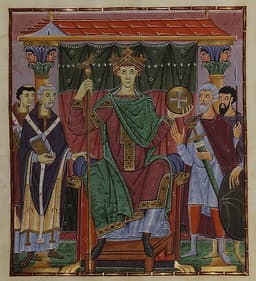
Otto III
Emperor · Medieval
43.3Total

Yelu Deguang
Emperor · Medieval
52.3Total
Basic Information
Born
980
902
Died
1002
947
Era
Medieval
Medieval
Nationality
Holy Roman Empire
Khitan Empire
Occupation
Emperor
Emperor
Civilization
Western
Eastern
Score Comparison
Military (10%)
50.0
61.7
Political (20%)
35.1
48.0
Influence (20%)
54.9
51.8
Legacy (20%)
44.2
45.0
Leadership (15%)
31.2
65.0
Strategy (15%)
35.7
50.0
TOTAL
43.3
52.3
Otto III — Complete Timeline
996 AD
Coronation as Holy Roman EmperorPolitical Action◆ Major
Otto III was crowned Holy Roman Emperor by Pope Gregory V in Rome. He was 16 years old at the time. His coronation symbolized the close relationship between the empire and the papacy. Otto aimed to restore the glory of the ancient Roman Empire.
CoronationHoly Roman EmpirePapacy
Impact: regionalconstructive
998 AD
Establishment of the 'Renovatio Imperii Romanorum'Political Action◆ Major
Otto III pursued the 'Renovatio Imperii Romanorum' (Renewal of the Roman Empire), aiming to revive Roman imperial traditions. He moved his court to Rome and adopted Roman titles and ceremonies. This policy alienated German nobles and led to conflicts.
RenovatioRoman EmpireImperial Policy
Impact: regionalconstructive
999 AD
Appointment of Pope Sylvester IIPolitical Action◆ Major
Otto III appointed his former tutor Gerbert of Aurillac as Pope Sylvester II. This appointment strengthened the alliance between the empire and the papacy. Sylvester II was a renowned scholar and supported Otto's imperial ambitions.
PapacyAppointmentScholarship
Impact: regionalconstructive
1001 AD
Revolt of the Roman NobilityPolitical Action◆ Major
Otto III faced a revolt by the Roman nobility, led by the Crescentii family. The revolt forced Otto to flee Rome and seek refuge in Pavia. This event demonstrated the fragility of his power in Italy and undermined his 'Renovatio' plans.
RevoltRomeCrisis
Impact: regionaldestructive
1002 AD
Death at Age 21Other◆ Major
Otto III died suddenly at the age of 21 in Paterno, Italy. His death was likely due to malaria. He left no heir, leading to a succession crisis. His dream of restoring the Roman Empire ended with his premature death.
DeathSuccession CrisisEnd of Reign
Impact: regionaltragic
Yelu Deguang — Complete Timeline
927 AD
Accession as Second Liao EmperorPolitical Action◆ Major
Yelu Deguang succeeded his father, Abaoji, as the second emperor of the Liao dynasty. His reign marked the continuation of Khitan expansion into northern China and the consolidation of the Liao state.
Liao dynastySuccessionKhitan
Impact: regional
947 AD
Capture of KaifengWar
Yelu Deguang led a Liao army south and captured Kaifeng, the capital of the Later Jin dynasty. He briefly held the city, but was forced to withdraw due to supply issues and resistance, marking the peak of Liao expansion into central China.
Liao conquestKaifengLater Jin
Impact: regional
Death on Retreat from KaifengOther◆ Major
After withdrawing from Kaifeng, Yelu Deguang died suddenly during the retreat. His death led to a succession crisis within the Liao dynasty, as his nephew Yelu Ruan seized power.
Liao dynastyDeathSuccession crisis
Impact: regionaltragic
Expert Analysis
Origins
Otto III was born in 980 into the Ottonian dynasty, the son of Emperor Otto II and Byzantine princess Theophanu. His father died when he was three, leaving him under the regency of his mother and grandmother. Raised in a court steeped in classical learning, he was tutored by the scholar Gerbert of Aurillac, later Pope Sylvester II. His early life was marked by political instability and the need to assert imperial authority over rebellious nobles.
Yelu Deguang, born in 902, was the second son of Abaoji, the founder of the Liao dynasty. As a Khitan prince, he was raised in a nomadic warrior culture, learning horsemanship and archery. His father unified the Khitan tribes and established a dual administration system to rule both nomads and settled Chinese. Yelu Deguang succeeded his father in 927 after a brief power struggle with his brother.
Rise to Power
Otto III was crowned King of Germany at age three and later Holy Roman Emperor in 996 at age 16 by Pope Gregory V, whom he appointed. His early reign was dominated by regents, but he began ruling independently around 994. He sought to revive the glory of ancient Rome, moving his court to Rome and appointing his tutor as pope. However, his power was fragile, relying on alliances with the Church and German nobles.
Yelu Deguang ascended the Liao throne in 927 after his father's death. He continued the expansionist policies of Abaoji, leading campaigns against the Chinese kingdoms to the south. His major achievement came in 947 when he captured Kaifeng, the capital of the Later Jin dynasty, which had been a vassal state. This victory made him the first foreign ruler to occupy a major Chinese capital.
Leadership & Governance
Otto III's leadership was idealistic and centralized. He pursued the 'Renovatio Imperii Romanorum' (Renewal of the Roman Empire), issuing decrees that revived Roman titles and ceremonies. He attempted to rule from Rome, but his lack of a power base in Italy made him vulnerable. His governance relied on a small circle of advisors, alienating German nobles. He scored 31.2 in Leadership, reflecting his inability to build lasting support.
Yelu Deguang ruled with a pragmatic blend of Khitan and Chinese traditions. He continued his father's dual administration system, using Chinese-style bureaucracy for conquered territories while maintaining tribal structures for the Khitan. His score of 65.0 in Leadership indicates effective command. However, his brief occupation of Kaifeng showed weakness: he failed to secure supply lines and faced rebellion from Chinese subjects.
Triumph & Tragedy
Otto III's triumph was his vision of a united Christian empire, symbolized by his coronation and appointment of Pope Sylvester II. He also established the Archbishopric of Gniezno in Poland, spreading Christianity eastward. His tragedy was his early death at 21, likely from malaria, which ended his reforms and plunged the empire into succession crises. His military score of 50.0 reflects limited campaigns.
Yelu Deguang's greatest triumph was capturing Kaifeng in 947, a feat that demonstrated Liao military might. He scored 61.7 in Military, higher than Otto. However, his tragedy was his death during the retreat from Kaifeng, leaving the Liao dynasty without a clear successor. The occupation lasted only a few months, and the Liao were forced to withdraw due to lack of supplies and local resistance.
Character & Destiny
Otto III was a dreamer, deeply influenced by classical and Christian ideals. His decision to move his court to Rome alienated his German base, and his reliance on a few advisors made him politically isolated. He scored 35.1 in Political, showing his poor grasp of power realities. His early death cut short a reign that might have reshaped Europe.
Yelu Deguang was a capable warrior and administrator, continuing his father's legacy. His capture of Kaifeng showed ambition, but his inability to hold it revealed strategic limitations. He scored 50.0 in Strategy. His death on retreat was a blow to Liao expansion, but his reign laid the groundwork for later Liao dominance in northern China.
Legacy
Otto III's legacy is mixed. His 'Renovatio' idea influenced later Holy Roman Emperors, but his immediate impact was minimal. The Archbishopric of Gniezno survived, strengthening Polish independence. He scored 44.2 in Legacy. Yelu Deguang's legacy is more concrete: he expanded the Liao Empire and demonstrated that northern powers could challenge Chinese states. The Liao dynasty continued for over a century, ruling parts of northern China. He scored 45.0 in Legacy, slightly higher.
Conclusion
Yelu Deguang had greater impact than Otto III. His military conquests (61.7 vs 50.0) and leadership (65.0 vs 31.2) were superior, and his actions directly shaped the balance of power in East Asia. Otto's idealistic vision failed due to early death and political naivety. While Otto's cultural influence is notable, Yelu Deguang's practical achievements in expanding the Liao empire and challenging Chinese hegemony left a more lasting mark. The score gap of 9.0 points reflects this: Yelu Deguang's total score of 52.3 against Otto's 43.3.
Rankings
🥇
Yelu DeguangLeader
Mil: 61.7Pol: 48.0Inf: 51.8
52.3
🥈
Otto III
Mil: 50.0Pol: 35.1Inf: 54.9
43.3
+9.0 behind
How This Comparison Works
Algorithm
Each figure is scored on 6 dimensions (0—100 scale) based on structured historical data: Military (10%), Political (20%), Influence (20%), Legacy (20%), Leadership (15%), Strategy (15%). The weighted total produces the final ranking.
Data Sources
Scores are computed from structured sub-indicators in the database. Scale factors adjust for era (Ancient ×0.85, Modern ×1.0) and civilization size (Eastern ×1.05, Other ×0.80) to account for differences in population and military scale.
Maximum 3 Figures
Comparisons are limited to 2—3 figures to ensure readability and statistical meaningfulness.
Error Margins
±5 points per dimension — Sub-scores are derived from historical records with inherent uncertainty. Two figures within 5 points on a dimension should be considered roughly equivalent in that area.
Total Score Accuracy
±3 points overall — The weighted combination of 6 dimensions produces a total score with approximately ±3 points of uncertainty. Differences of less than 3 points are not statistically significant— the figures are effectively tied.
Known Limitations
- Historical records are incomplete and uneven across civilizations
- Figures from oral-tradition societies may be underrepresented
- Occupation labels can misclassify multi-role figures
- Scores measure capability and impact, not moral character
- Quantitative scoring is a comparison tool, not absolute truth
Capability Radar
Military (10%) — Battles & Warfare
Battles
15
65
Win Rate
20
70
Expansion
10
70
Political (20%) — Governance & Reform
Reform
30
45
Diplomacy
40
50
Economy
20
40
Influence (20%) — Cultural & Global Reach
Cultural
30
30
Global
20
20
Legacy (20%) — Historical Impact
Historical
35
40
Longevity
20
30
Leadership (15%) — Power & Stability
Tenure
20
55
Stability
15
45
Strategy (15%) — Tactics & Innovation
Strategy
20
65
Tactics
15
60
Reform
10
40
Similar Comparisons
Comments & Discussion
No comments yet. Be the first to share your thoughts!