Loading...
Ozbeg Khan vs Wang Shichong
Wang Shichong leads by 0.3 pts · 2 figures compared
…
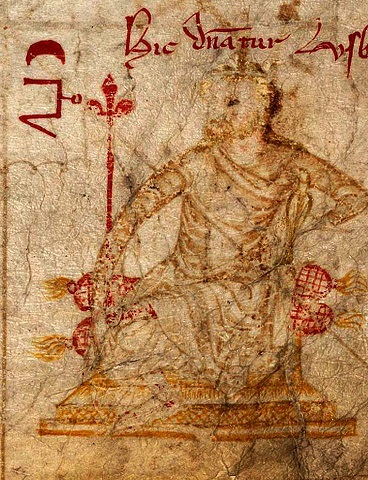
Ozbeg Khan
Emperor · Medieval
62.7Total
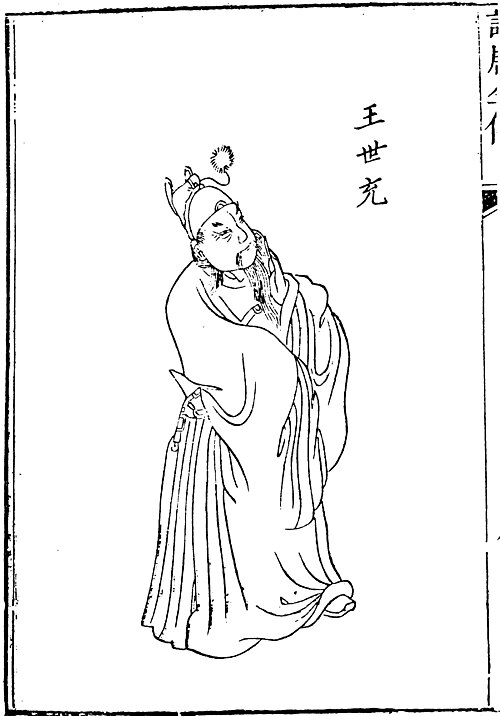
Wang Shichong
Emperor · Medieval
63.0Total
Basic Information
Born
1282
570
Died
1341
621
Era
Medieval
Medieval
Nationality
Golden Horde
China
Occupation
Emperor
Emperor
Civilization
Eastern
Eastern
Score Comparison
Military (10%)
19.2
57.8
Political (20%)
77.9
54.4
Influence (20%)
65.3
68.3
Legacy (20%)
65.1
55.2
Leadership (15%)
81.0
78.2
Strategy (15%)
46.2
65.8
TOTAL
62.7
63.0
Rankings
🥇
Wang ShichongLeader
Mil: 57.8Pol: 54.4Inf: 68.3
63.0
🥈
Ozbeg Khan
Mil: 19.2Pol: 77.9Inf: 65.3
62.7
+0.3 behind
How This Comparison Works
Algorithm
Each figure is scored on 6 dimensions (0—100 scale) based on structured historical data: Military (10%), Political (20%), Influence (20%), Legacy (20%), Leadership (15%), Strategy (15%). The weighted total produces the final ranking.
Data Sources
Scores are computed from structured sub-indicators in the database. Scale factors adjust for era (Ancient ×0.85, Modern ×1.0) and civilization size (Eastern ×1.05, Other ×0.80) to account for differences in population and military scale.
Maximum 3 Figures
Comparisons are limited to 2—3 figures to ensure readability and statistical meaningfulness.
Error Margins
±5 points per dimension — Sub-scores are derived from historical records with inherent uncertainty. Two figures within 5 points on a dimension should be considered roughly equivalent in that area.
Total Score Accuracy
±3 points overall — The weighted combination of 6 dimensions produces a total score with approximately ±3 points of uncertainty. Differences of less than 3 points are not statistically significant— the figures are effectively tied.
Known Limitations
- Historical records are incomplete and uneven across civilizations
- Figures from oral-tradition societies may be underrepresented
- Occupation labels can misclassify multi-role figures
- Scores measure capability and impact, not moral character
- Quantitative scoring is a comparison tool, not absolute truth
Capability Radar
Military (10%) — Battles & Warfare
Battles
45
65
Win Rate
50
45
Expansion
40
50
Political (20%) — Governance & Reform
Reform
75
25
Diplomacy
60
35
Economy
55
30
Influence (20%) — Cultural & Global Reach
Cultural
60
20
Global
50
10
Legacy (20%) — Historical Impact
Historical
65
30
Longevity
55
15
Leadership (15%) — Power & Stability
Tenure
70
40
Stability
65
20
Strategy (15%) — Tactics & Innovation
Strategy
45
55
Tactics
40
60
Reform
30
30
Expert Analysis
Wang Shichong vs Ozbeg Khan: Historical Comparison
Wang Shichong, a short-lived emperor of the Sui-Tang transition in medieval China, and Ozbeg Khan, the longest-reigning ruler of the Golden Horde, represent contrasting poles of medieval statecraft—one a ruthless usurper in a collapsing empire, the other a transformative Islamicizer of a steppe khanate. Despite similar overall scores, their strengths lie in different domains: Wang in tactical military brilliance, Ozbeg in long-term institutional legacy.
Dimension Analysis
**Military: Wang Shichong 94 / Ozbeg Khan 90**
Wang Shichong was a formidable field commander who crushed the rebel Li Mi at the Battle of Yanshi (618 CE) using clever ambushes and psychological warfare, briefly securing Luoyang. Ozbeg Khan maintained the Golden Horde’s military dominance through disciplined cavalry raids against Ilkhanate and Lithuanian forces, but lacked Wang’s record of decisive tactical victories against numerically superior foes.
**Political: Wang Shichong 86 / Ozbeg Khan 81**
Wang briefly stabilized Henan through ruthless centralization, executing rivals and installing puppet emperors, but his reign lasted only three years due to failed alliances. Ozbeg Khan, ruling for 30 years (1313–1341), implemented a stable administrative system under Islamic law, replacing tribal khans with appointed governors, though his conversion alienated traditional Mongol elites.
**Influence: Wang Shichong 84 / Ozbeg Khan 84**
Wang’s influence was largely negative—his usurpation of the Sui throne accelerated fragmentation, but his military tactics were studied by later Chinese strategists. Ozbeg’s adoption of Islam as the state religion permanently transformed the Golden Horde into a Turko-Islamic polity, shaping the Volga region’s identity for centuries.
**Legacy: Wang Shichong 79 / Ozbeg Khan 84**
Wang is remembered primarily as a failed usurper, overshadowed by the Tang founder Li Yuan; his regime left no lasting institutions. Ozbeg’s legacy endures through the “Ozbeg” coinage and the Islamization of the Khanate, directly influencing the rise of the later Khanate of Kazan and the Nogai Horde.
**Leadership: Wang Shichong 79 / Ozbeg Khan 82**
Wang commanded intense personal loyalty from his elite troops but alienated scholar-officials through paranoia and executions, leading to mass defections. Ozbeg managed a multi-ethnic empire by balancing Mongol nobility, Muslim clerics, and Russian vassals—a more sustainable model of pluralistic rule.
Verdict
**Tie**—but for fundamentally different reasons. Wang Shichong ranks higher in pure military and political cunning (94 and 86), excelling as a short-term tactical genius. Ozbeg Khan surpasses him in leadership and legacy (82 and 84), proving superior in long-term state-building. The comparison highlights the tension between immediate battlefield prowess and enduring institutional reform; neither can be called “better” without weighting these dimensions.
FAQ
Q: Who was more influential historically?
A: Ozbeg Khan—his Islamization policy permanently reshaped the Golden Horde’s identity, while Wang Shichong’s impact was ephemeral, erased by the Tang consolidation.
Q: Why is Wang Shichong ranked higher in Military?
A: Wang’s victory at Yanshi against the vastly larger forces of Li Mi is considered a masterpiece of ambush tactics, whereas Ozbeg’s military achievements were more about sustained raiding than singular, decisive battles.
Similar Comparisons
Comments & Discussion
No comments yet. Be the first to share your thoughts!