Loading...
Pachacuti vs Parakramabahu I
Pachacuti leads by 3.3 pts · 2 figures compared
…
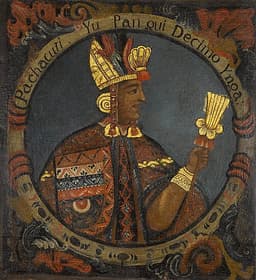
Pachacuti
Emperor · Medieval
69.4Total
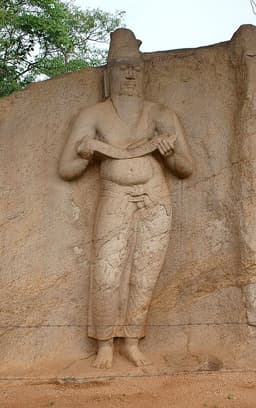
Parakramabahu I
Emperor · Medieval
66.1Total
Basic Information
Born
1418
1123
Died
1472
1186
Era
Medieval
Medieval
Nationality
Inca Empire
Sri Lanka
Occupation
Emperor
Emperor
Civilization
Other
Indian
Score Comparison
Military (10%)
78.5
82.0
Political (20%)
58.1
72.0
Influence (20%)
65.0
61.0
Legacy (20%)
72.0
52.0
Leadership (15%)
78.0
82.0
Strategy (15%)
69.2
65.4
TOTAL
69.4
66.1
Pachacuti — Complete Timeline
1438 AD
Conquest of the Chanka KingdomWar
Pachacuti led the Inca army to defeat the Chanka, a powerful rival, in a decisive battle near Cusco. This victory secured his position as Sapa Inca and initiated a period of rapid expansion, transforming the Inca from a small kingdom into a vast empire.
ConquestInca ExpansionChanka
Impact: regional
1440 AD
Reconstruction of CuscoCultural◆ Major
Pachacuti rebuilt Cusco as the imperial capital, designing it in the shape of a puma and constructing massive stone structures like Sacsayhuam
Urban PlanningArchitectureInca Empire
Impact: regionalconstructive
1450 AD
Initiation of Machu Picchu's ConstructionCultural◆ Major
Pachacuti ordered the construction of Machu Picchu, a royal estate and ceremonial site high in the Andes. The complex featured sophisticated dry-stone masonry and terraced agriculture, serving as a symbol of Inca engineering and a retreat for the emperor.
ArchitectureRoyal EstateInca Engineering
Impact: regionalconstructive
Parakramabahu I — Complete Timeline
1153 AD
Unification of Sri LankaWar
Parakramabahu I unified the entire island of Sri Lanka under his rule after a series of military campaigns. He defeated the rulers of Ruhuna and other regional kingdoms, ending a period of fragmentation.
Impact: national
1160 AD
Construction of Parakrama SamudraOther◆ Major
Parakramabahu I constructed the Parakrama Samudra, a massive man-made sea of interconnected tanks and canals near Polonnaruwa. This irrigation system, covering over 5,000 acres, was a major engineering achievement.
Impact: regionalconstructive
1165 AD
Invasion of BurmaWar◆ Major
Parakramabahu I launched a naval invasion of Burma (Pagan Kingdom) in retaliation for a trade dispute. The Sinhalese fleet captured the port of Kusumiya and sacked the city, demonstrating Sri Lanka's naval power.
Impact: regional
Reform of the Buddhist SanghaReform◆ Major
Parakramabahu I convened a council to purify the Buddhist Sangha. He expelled corrupt monks and re-established discipline, strengthening Theravada Buddhism in Sri Lanka.
Impact: nationalconstructive
1170 AD
Construction of Polonnaruwa VatadageCultural◆ Major
Parakramabahu I built the Polonnaruwa Vatadage, a circular relic house for the Tooth Relic of the Buddha. This structure is considered a masterpiece of Sinhalese architecture.
Impact: nationalconstructive
Expert Analysis
Pachacuti vs Parakramabahu I
# The Mountain and the Sea: Two Visionaries Who Built Empires from Stone and Water
In the high Andes, a king stands atop a mountain, watching his masons carve granite blocks so precisely that not even a blade of grass can slip between them. Half a world away, on a tropical island, another king wades into a newly completed reservoir, its waters stretching to the horizon like an inland sea. Both men were architects of civilizations, yet their monuments could not be more different—one reaching for the sky, the other embracing the earth. How did two near-contemporary rulers, both medieval empire-builders, leave such radically different marks on history?
Origins
Pachacuti Inca Yupanqui was born in 1418 into a world of high-altitude kingdoms. The Incas were then a modest tribe in the Cusco Valley, surrounded by hostile neighbors like the Chanka. His name, meaning "he who shakes the earth," was prophetic. He grew up not as the heir apparent—that was his brother—but as a prince watching his father's kingdom struggle for survival. The Andean environment was unforgiving: thin air, steep slopes, and fertile valleys that were fiercely contested. Survival demanded both military prowess and a reverence for the landscape itself.
Parakramabahu I, born in 1123 on the island of Sri Lanka, inherited a different geography. His land was lush, tropical, and crisscrossed by monsoon rains. But it was also fragmented. When he came of age, Sri Lanka was divided into warring principalities, each with its own king. The island's Buddhist civilization had once been glorious, but centuries of invasions from South India and internal strife had left it in ruins. Parakramabahu grew up hearing legends of a united Lanka, and he burned to restore it.
Rise to Power
Pachacuti's rise was forged in fire. In 1438, the Chanka army descended on Cusco, and the Inca ruler fled in panic. The young prince refused to retreat. Rallying the remnants of the Inca forces, Pachacuti led a desperate counterattack that shattered the Chanka. This victory was a turning point: it not only saved his people but also elevated him to the throne. His brother was cast aside, and Pachacuti became Sapa Inca. From that moment, he never stopped expanding.
Parakramabahu's path was more methodical. He spent years consolidating power in his own principality, building alliances and stockpiling resources. It was not until 1153, after a series of grueling campaigns, that he finally unified the entire island under his rule. Where Pachacuti's rise was a single, dramatic battle, Parakramabahu's was a slow, grinding chess match.
Leadership & Governance
Pachacuti ruled through a vision of order imposed on chaos. He rebuilt Cusco in 1440, designing it as a puma—a sacred animal—with stone walls so perfect they survived earthquakes for centuries. He initiated Machu Picchu in 1450, a royal estate that was both a retreat and a symbol of his power over nature. His administrative genius lay in the *mitma* system, relocating conquered peoples to break resistance, and in the *quipu*, knotted cords used for record-keeping. He was a strategist who understood that empire required not just conquest, but control.
Parakramabahu governed through water. His greatest achievement, the Parakrama Samudra (Sea of Parakrama), completed around 1160, was a massive irrigation network of tanks and canals that transformed Sri Lanka's agriculture. He declared, "Let not a drop of rain water go to the sea without being made useful to man." This was not poetry; it was policy. He also reformed the Buddhist Sangha in 1165, purging corrupt monks and reestablishing monastic discipline. Where Pachacuti built stone, Parakramabahu built systems—hydraulic and spiritual.
Triumph & Tragedy
Pachacuti's greatest triumph was transforming a minor kingdom into an empire stretching from Colombia to Chile. His tragedy was that he could not see it fall. The Inca system he created was so centralized that when Spanish conquistadors arrived decades later, a single blow to the head could shatter it.
Parakramabahu's triumph was the invasion of Burma in 1165, a naval campaign launched to avenge a trade dispute. His fleet crossed the Bay of Bengal and sacked the Pagan Kingdom's ports, proving Sri Lanka's reach. Yet his tragedy was that his empire, too, proved fragile. After his death in 1186, the island fractured again, and his irrigation systems fell into disrepair. The sea he built slowly silted up.
Character & Destiny
Pachacuti was a man of stone—unyielding, ambitious, and visionary. He believed the Inca were destined to rule, and he shaped his entire civilization around that belief. His personality demanded perfection, and his monuments reflect that obsession.
Parakramabahu was a man of water—pragmatic, adaptable, and patient. He understood that empires are built not on glory alone but on the daily flow of resources. His character was less about personal grandeur and more about systemic resilience. Yet both men shared a fatal flaw: they built for eternity, but eternity is not kind to mortals.
Legacy
Today, Pachacuti is remembered in the stones of Machu Picchu, a wonder of the world. His name is synonymous with Inca greatness. Parakramabahu is remembered in the waters of Sri Lanka's ancient tanks, still used by farmers. His name is less known globally, but his impact on his island is equally profound.
Conclusion
Standing atop Machu Picchu, one feels the weight of stone and sky. Walking beside the Parakrama Samudra, one feels the stillness of water and time. Both were built by men who understood that the truest monument is not the one that stands tallest, but the one that lasts longest. And in the end, both have endured—one as a testament to human ambition, the other as a reminder that even the mightiest empire is just a drop in the sea.
Rankings
🥇
PachacutiLeader
Mil: 78.5Pol: 58.1Inf: 65.0
69.4
🥈
Parakramabahu I
Mil: 82.0Pol: 72.0Inf: 61.0
66.1
+3.3 behind
How This Comparison Works
Algorithm
Each figure is scored on 6 dimensions (0—100 scale) based on structured historical data: Military (10%), Political (20%), Influence (20%), Legacy (20%), Leadership (15%), Strategy (15%). The weighted total produces the final ranking.
Data Sources
Scores are computed from structured sub-indicators in the database. Scale factors adjust for era (Ancient ×0.85, Modern ×1.0) and civilization size (Eastern ×1.05, Other ×0.80) to account for differences in population and military scale.
Maximum 3 Figures
Comparisons are limited to 2—3 figures to ensure readability and statistical meaningfulness.
Error Margins
±5 points per dimension — Sub-scores are derived from historical records with inherent uncertainty. Two figures within 5 points on a dimension should be considered roughly equivalent in that area.
Total Score Accuracy
±3 points overall — The weighted combination of 6 dimensions produces a total score with approximately ±3 points of uncertainty. Differences of less than 3 points are not statistically significant— the figures are effectively tied.
Known Limitations
- Historical records are incomplete and uneven across civilizations
- Figures from oral-tradition societies may be underrepresented
- Occupation labels can misclassify multi-role figures
- Scores measure capability and impact, not moral character
- Quantitative scoring is a comparison tool, not absolute truth
Capability Radar
Military (10%) — Battles & Warfare
Battles
85
75
Win Rate
90
80
Expansion
90
70
Political (20%) — Governance & Reform
Reform
92
80
Diplomacy
75
70
Economy
80
75
Influence (20%) — Cultural & Global Reach
Cultural
85
65
Global
65
40
Legacy (20%) — Historical Impact
Historical
80
70
Longevity
70
60
Leadership (15%) — Power & Stability
Tenure
85
85
Stability
82
80
Strategy (15%) — Tactics & Innovation
Strategy
88
75
Tactics
80
70
Reform
85
65
Similar Comparisons
Comments & Discussion
StoneCutterKing6/16/2026
Pachacuti’s "precision-fit stones" myth needs debunking—Inca masons left gaps deliberately for seismic flexibility, not perfection. Parakramabahu’s reservoirs, on the other hand, moved actual water, not just symbolism. One built earthquake-proof cities; the other engineered an island’s hydration. If your empire collapses when a tremor hits, you’re not a visionary, you’re just lucky in peacetime. Parakramabahu’s sea of Parakrama Samudra fed millions—Pachacuti’s Machu Picchu fed tourists.
山脊策略家6/16/2026
帕查库蒂的梯田系统才是真正改变安第斯农业的革命性工程,他引入的“米塔”劳役制度让帝国能调动十万劳力开凿台地。而波罗迦罗摩巴忽的主要工程——帕拉克拉玛海——其实依赖的是早期僧伽罗国王的灌溉网络。一个是从零构建了一套维持高原生存的系统,另一个只是把先辈的池子挖大了。别把扩建当成原创。