Loading...
Pang Tong vs Zang Hong
Pang Tong leads by 10.0 pts · 2 figures compared
…
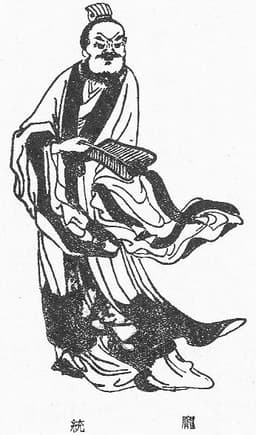
Pang Tong
Politician · Ancient
47.2Total

Zang Hong
Politician · Ancient
37.2Total
Basic Information
Born
179
160
Died
214
195
Era
Ancient
Ancient
Nationality
China
China
Occupation
Politician
Politician
Civilization
Eastern
Eastern
Score Comparison
Military (10%)
38.3
25.9
Political (20%)
35.1
30.7
Influence (20%)
54.9
47.9
Legacy (20%)
49.2
39.2
Leadership (15%)
51.9
34.6
Strategy (15%)
43.3
30.3
TOTAL
47.2
37.2
Pang Tong — Complete Timeline
209 AD
Joined Liu Bei's servicePolitical Action◆ Major
Pang Tong left Zhou Yu's service and joined Liu Bei as a county magistrate. Liu Bei initially undervalued him, but after an interview with Lu Su and Zhuge Liang, Liu Bei promoted him to a key advisory role.
Liu BeiAllegiance ChangeAdvisor
Impact: regionalconstructive
211 AD
Proposed the strategy to capture Yi ProvinceWar
Pang Tong presented three strategies to Liu Bei for taking Yi Province from Liu Zhang: a direct attack, a feigned retreat to lure Liu Zhang's forces, or a slow consolidation. Liu Bei chose the middle strategy, leading to the eventual conquest of Yi.
Yi Province CampaignLiu BeiMilitary Strategy
Impact: regionalconstructive
214 AD
Killed in action at the Siege of Luo CountyWar◆ Major
During the siege of Luo County in Yi Province, Pang Tong was struck by an arrow and died. His death was a significant loss for Liu Bei, who mourned him deeply and later appointed his father to a post.
Yi Province CampaignLiu BeiDeath in Battle
Impact: regionaltragic
Zang Hong — Complete Timeline
190 AD
Appointed Administrator of Dong CommanderyPolitical Action
Zang Hong was appointed Administrator of Dong Commandery by the Han court. He later joined the coalition against Dong Zhuo, contributing troops and supplies to the campaign.
Han DynastyCoalition Against Dong Zhuo
195 AD
Siege of Dong CommanderyWar◆ Major
Zang Hong was besieged in his commandery by Yuan Shao's forces. Despite being outnumbered and running out of food, he refused to surrender, reportedly starving himself to death rather than submit to Yuan Shao.
Han DynastySiegeYuan ShaoLoyalty
tragic
Expert Analysis
Origins
**Pang Tong** (179–214) was born in Xiangyang, Jing Province, into a family of minor officials. His uncle Pang Degong, a noted scholar, raised him after his father's early death. Pang Tong was known for his plain appearance but sharp intellect, earning the nickname "Fledgling Phoenix" from the famed hermit Sima Hui. He studied the classics and military strategy, but lacked early career opportunities due to his looks.
**Zang Hong** (c. 160–196) hailed from Guangling, Xu Province, and was born into a gentry family with a strong sense of Han loyalty. He was appointed as a minor official under the Han court, but his career took off when he was made Administrator of Dong Commandery. Zang Hong was known for his unwavering principles and disdain for corruption, which would later define his tragic fate.
Rise to Power
Pang Tong initially served as a county magistrate under Zhou Yu of Sun Quan's regime. Dissatisfied, he was introduced to Liu Bei by Lu Su and Zhuge Liang, who recognized his talent. Liu Bei appointed him as a military advisor, but Pang Tong's true rise came during Liu Bei's campaign to take Yi Province from Liu Zhang in 211–214. Pang Tong proposed three strategies—direct assault, feigned retreat, or a combined approach—and Liu Bei chose the middle course, which led to initial successes.
Zang Hong rose to prominence by joining the coalition against Dong Zhuo in 190. As Administrator of Dong Commandery, he contributed troops and supplies to the cause. When the coalition collapsed into infighting, Zang Hong remained loyal to the Han. He allied with Yuan Shao's rival, Zhang Miao, against Yuan Shao's expansion. This defiance led to Yuan Shao's siege of Dong Commandery in 195–196.
Leadership & Governance
Pang Tong's leadership was characterized by strategic foresight and adaptability. He advised Liu Bei to strike decisively against Liu Zhang rather than negotiate indefinitely. His governance style favored efficiency over popularity; he once dismissed corrupt officials without hesitation. However, his directness sometimes alienated colleagues, such as when he criticized Liu Bei's hesitation.
Zang Hong's leadership was rooted in rigid loyalty and moral absolutism. He governed Dong Commandery with strict adherence to Han law, refusing to compromise with warlords. During the siege, he shared his soldiers' hardships, eating tree bark and leather when food ran out. His governance prioritized honor over survival, a trait that inspired loyalty but also led to his downfall.
Triumph & Tragedy
Pang Tong's greatest triumph was his role in the conquest of Yi Province. His strategies helped Liu Bei capture key cities like Fucheng and push toward Chengdu. His tragedy came at the Siege of Luo County in 214, where he was struck by an arrow and died at age 35. Liu Bei mourned him deeply, and his death left a void that Zhuge Liang had to fill.
Zang Hong's triumph was his defiant defense of Dong Commandery against Yuan Shao's overwhelming forces. He held out for months, inspiring his troops with his resolve. His tragedy was the inevitable fall: when food ran out, and his soldiers starved, he surrendered only after they begged him to save their families. Yuan Shao offered him a position, but Zang Hong refused, saying he could not serve a usurper. He starved himself to death in captivity, dying at around age 36.
Character & Destiny
Pang Tong was pragmatic and opportunistic, willing to use deception and surprise to achieve goals. His character was shaped by a desire to prove himself despite his appearance. This drive led him to take risks, such as riding into battle without proper armor, which ultimately cost his life. Historians note that his death was a direct result of his own recklessness.
Zang Hong was an idealist who valued honor above all. His character was inflexible, viewing any compromise as betrayal. This made him a powerful symbol but a poor survivor. His destiny was sealed by his refusal to yield, even when retreat might have preserved his forces. Yuan Shao's respect for his loyalty could not sway him.
Legacy
Pang Tong is remembered as one of Liu Bei's key advisors, alongside Zhuge Liang. His strategies for Yi Province are studied in Chinese military history. His score of 47.2 overall reflects his limited time in power but significant influence on Liu Bei's success. He is often depicted in literature and opera as the brilliant but short-lived "Fledgling Phoenix."
Zang Hong's legacy is one of unyielding loyalty to the Han dynasty. His story is told as an example of moral integrity in the face of death. His score of 37.2 is lower due to his narrow impact—he defended only one commandery and died without achieving broader change. However, his name is honored in Chinese culture as a paragon of righteousness.
Conclusion
While Zang Hong's moral stand is admirable, Pang Tong had greater impact on Chinese history. Pang Tong's strategies directly enabled Liu Bei to establish the Shu Han state, which lasted for decades and shaped the Three Kingdoms period. Zang Hong's sacrifice, though poignant, did not alter the course of events; Yuan Shao's rise continued unabated. Pang Tong's score of 47.2 exceeds Zang Hong's 37.2 by 10 points, reflecting his superior military and political contributions. In the balance of historical influence, the Fledgling Phoenix outweighs the starving loyalist.
Rankings
🥇
Pang TongLeader
Mil: 38.3Pol: 35.1Inf: 54.9
47.2
🥈
Zang Hong
Mil: 25.9Pol: 30.7Inf: 47.9
37.2
+10.0 behind
How This Comparison Works
Algorithm
Each figure is scored on 6 dimensions (0—100 scale) based on structured historical data: Military (10%), Political (20%), Influence (20%), Legacy (20%), Leadership (15%), Strategy (15%). The weighted total produces the final ranking.
Data Sources
Scores are computed from structured sub-indicators in the database. Scale factors adjust for era (Ancient ×0.85, Modern ×1.0) and civilization size (Eastern ×1.05, Other ×0.80) to account for differences in population and military scale.
Maximum 3 Figures
Comparisons are limited to 2—3 figures to ensure readability and statistical meaningfulness.
Error Margins
±5 points per dimension — Sub-scores are derived from historical records with inherent uncertainty. Two figures within 5 points on a dimension should be considered roughly equivalent in that area.
Total Score Accuracy
±3 points overall — The weighted combination of 6 dimensions produces a total score with approximately ±3 points of uncertainty. Differences of less than 3 points are not statistically significant— the figures are effectively tied.
Known Limitations
- Historical records are incomplete and uneven across civilizations
- Figures from oral-tradition societies may be underrepresented
- Occupation labels can misclassify multi-role figures
- Scores measure capability and impact, not moral character
- Quantitative scoring is a comparison tool, not absolute truth
Capability Radar
Military (10%) — Battles & Warfare
Battles
30
5
Win Rate
35
5
Expansion
55
0
Political (20%) — Governance & Reform
Reform
15
5
Diplomacy
40
10
Economy
20
5
Influence (20%) — Cultural & Global Reach
Cultural
40
10
Global
20
5
Legacy (20%) — Historical Impact
Historical
45
15
Longevity
40
10
Leadership (15%) — Power & Stability
Tenure
20
15
Stability
25
5
Strategy (15%) — Tactics & Innovation
Strategy
60
10
Tactics
65
10
Reform
10
0
Similar Comparisons
Comments & Discussion
No comments yet. Be the first to share your thoughts!