Loading...
Park Geun-hye vs Toomas Hendrik Ilves
Toomas Hendrik Ilves leads by 15.3 pts · 2 figures compared
…

Park Geun-hye
Politician · Modern
40.5Total
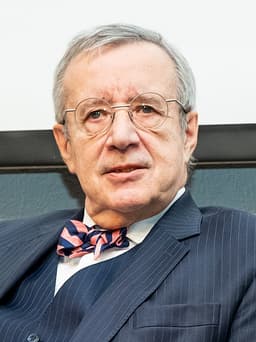
Toomas Hendrik Ilves
Politician · Modern
55.8Total
Basic Information
Born
1952
1953
Died
—
—
Era
Modern
Modern
Nationality
Korea
Estonia
Occupation
Politician
Politician
Civilization
Eastern
Western
Score Comparison
Military (10%)
15.4
49.0
Political (20%)
35.1
72.0
Influence (20%)
51.0
53.3
Legacy (20%)
40.0
42.5
Leadership (15%)
55.3
79.8
Strategy (15%)
26.9
41.7
TOTAL
40.5
55.8
Park Geun-hye — Complete Timeline
2013 AD
Elected President of South KoreaPolitical Action◆ Major
Park Geun-hye won the presidential election as the Saenuri Party candidate, becoming South Korea's first female president. She was the daughter of former dictator Park Chung-hee.
ElectionFirst Female President
Impact: nationalconstructive
2017 AD
Impeachment and removal from officePolitical Action◆ Major
Park was impeached by the National Assembly over a corruption scandal involving her confidante Choi Soon-sil. The Constitutional Court upheld the impeachment, and Park was removed from office and later arrested.
ImpeachmentCorruption Scandal
Impact: nationaltragic
2018 AD
Conviction for corruptionPolitical Action◆ Major
Park Geun-hye was convicted of bribery, coercion, and abuse of power, receiving a 25-year prison sentence. The case exposed deep ties between political power and corporate conglomerates in South Korea.
CorruptionConviction
Impact: nationaltragic
Toomas Hendrik Ilves — Complete Timeline
1996 AD
Appointed Minister of Foreign Affairs of EstoniaPolitical Action◆ Major
Ilves was appointed Minister of Foreign Affairs, serving until 1998 and again from 1999 to 2002. He was instrumental in advancing Estonia's NATO and EU membership bids, advocating for integration with Western institutions.
Foreign AffairsNATOEU Integration
Impact: nationalconstructive
2006 AD
Elected President of EstoniaPolitical Action◆ Major
Ilves was elected as the third President of Estonia, serving from 2006 to 2016. His presidency focused on digital innovation, cybersecurity, and strengthening Estonia's role in the European Union and NATO.
PresidencyDigital EstoniaCybersecurity
Impact: nationalconstructive
2007 AD
Advocated for Estonia's E-Government InitiativesReform◆ Major
Ilves strongly promoted Estonia's e-government and digital identity systems, including e-voting and e-residency. These initiatives made Estonia a global leader in digital governance and cybersecurity.
E-GovernmentDigital IdentityInnovation
Impact: globalconstructive
Led Estonia's Response to the 2007 CyberattacksPolitical Action
Ilves led Estonia's response to a series of cyberattacks targeting government, media, and banking websites. The attacks were attributed to Russian actors, and Ilves advocated for stronger international cybersecurity cooperation, leading to the creation of NATO's Cooperative Cyber Defence Centre of Excellence.
CybersecurityCyberattackNATO
Impact: global
2011 AD
Re-elected President for Second TermPolitical Action
Ilves was re-elected for a second term as President of Estonia, continuing his focus on digital society and foreign policy. His second term saw Estonia chair the EU Council and host the NATO Cyber Defence Centre.
PresidencyRe-electionDigital Policy
Impact: nationalconstructive
Expert Analysis
Origins
Park Geun-hye was born on February 2, 1952, in Daegu, South Korea, the eldest daughter of Park Chung-hee, who ruled South Korea as a military dictator from 1961 to 1979. She studied engineering at Sogang University but left after her mother's assassination in 1974, serving as First Lady until her father's assassination in 1979. Her early life was shaped by tragedy and political exposure.
Toomas Hendrik Ilves was born on December 26, 1953, in Stockholm, Sweden, to Estonian refugees. He grew up in the United States, attending Leonia High School in New Jersey. He earned a BA in psychology from Columbia University and an MA from the University of Pennsylvania. His upbringing in the West gave him a unique perspective on Estonia's independence.
Rise to Power
Park Geun-hye entered politics in 1998, winning a parliamentary seat. She became leader of the conservative Grand National Party (later Saenuri Party) and was elected President in December 2012, taking office in February 2013. She was the first female president of South Korea, with a political score of 35.1.
Toomas Hendrik Ilves served as Estonia's Minister of Foreign Affairs from 1996 to 1998 and again from 1999 to 2002, playing a key role in Estonia's accession to NATO and the European Union. He was elected President in 2006 and re-elected in 2011, serving until 2016. His political score of 72.0 reflects his effective diplomacy.
Leadership & Governance
Park Geun-hye's leadership was marked by a top-down, secretive style. She relied heavily on a confidante, Choi Soon-sil, who had no official position but influenced state affairs. This led to a major corruption scandal. Her governance score of 55.3 was undermined by her failure to maintain transparency.
Ilves championed transparency and digital innovation. He led Estonia's response to the 2007 cyberattacks, which targeted government and financial infrastructure, and promoted e-government initiatives like e-voting and e-residency. His leadership score of 79.8 reflects his effective crisis management and forward-thinking policies.
Triumph & Tragedy
Park Geun-hye's triumph was her election as South Korea's first female president, a milestone for gender equality. However, her tragedy was her impeachment in December 2016 and removal in March 2017, followed by a 25-year prison sentence for bribery, coercion, and abuse of power. Her influence score of 51.0 is tempered by her disgrace.
Ilves's triumph was steering Estonia through the 2007 cyberattacks, establishing it as a global leader in cybersecurity. He also advanced Estonia's digital society, with e-residency launched in 2014. His legacy score of 42.5 is modest, but his influence on digital governance is significant.
Character & Destiny
Park Geun-hye was reserved and isolated, relying on a small circle. Her character led to a downfall driven by corruption and abuse of power. Her strategy score of 26.9 indicates poor decision-making.
Ilves was articulate and internationally minded, with a strategic approach. His character aligned with Estonia's digital transformation, and his destiny was shaped by his ability to leverage Estonia's size into a niche of innovation.
Legacy
Park Geun-hye's legacy is tarnished by corruption; her failed presidency led to political reforms in South Korea but no enduring positive impact. Her legacy score of 40.0 reflects this.
Ilves's legacy is more positive: he helped shape Estonia's reputation as a digital pioneer. His initiatives in e-governance and cybersecurity have influenced global policy, earning him a legacy score of 42.5.
Conclusion
Toomas Hendrik Ilves had a greater impact than Park Geun-hye, with a total score of 55.8 versus 40.5. Ilves's leadership in cybersecurity and digital governance created lasting systems, while Park's presidency ended in scandal and failure. Ilves's strategic vision and effective governance produced tangible results, whereas Park's tenure is a cautionary tale. Ilves's legacy is one of innovation and resilience, while Park's is one of corruption and decline.
Rankings
🥇
Toomas Hendrik IlvesLeader
Mil: 49.0Pol: 72.0Inf: 53.3
55.8
🥈
Park Geun-hye
Mil: 15.4Pol: 35.1Inf: 51.0
40.5
+15.3 behind
How This Comparison Works
Algorithm
Each figure is scored on 6 dimensions (0—100 scale) based on structured historical data: Military (10%), Political (20%), Influence (20%), Legacy (20%), Leadership (15%), Strategy (15%). The weighted total produces the final ranking.
Data Sources
Scores are computed from structured sub-indicators in the database. Scale factors adjust for era (Ancient ×0.85, Modern ×1.0) and civilization size (Eastern ×1.05, Other ×0.80) to account for differences in population and military scale.
Maximum 3 Figures
Comparisons are limited to 2—3 figures to ensure readability and statistical meaningfulness.
Error Margins
±5 points per dimension — Sub-scores are derived from historical records with inherent uncertainty. Two figures within 5 points on a dimension should be considered roughly equivalent in that area.
Total Score Accuracy
±3 points overall — The weighted combination of 6 dimensions produces a total score with approximately ±3 points of uncertainty. Differences of less than 3 points are not statistically significant— the figures are effectively tied.
Known Limitations
- Historical records are incomplete and uneven across civilizations
- Figures from oral-tradition societies may be underrepresented
- Occupation labels can misclassify multi-role figures
- Scores measure capability and impact, not moral character
- Quantitative scoring is a comparison tool, not absolute truth
Capability Radar
Military (10%) — Battles & Warfare
Battles
12
32
Win Rate
16
32
Expansion
21
33
Political (20%) — Governance & Reform
Reform
20
60
Diplomacy
30
70
Economy
25
55
Influence (20%) — Cultural & Global Reach
Cultural
15
30
Global
20
20
Legacy (20%) — Historical Impact
Historical
20
25
Longevity
10
20
Leadership (15%) — Power & Stability
Tenure
40
65
Stability
10
65
Strategy (15%) — Tactics & Innovation
Strategy
23
37
Tactics
28
39
Reform
31
45
Similar Comparisons
Comments & Discussion
No comments yet. Be the first to share your thoughts!