Loading...
Paul Hausser vs Porfirio Diaz
Paul Hausser leads by 0.3 pts · 2 figures compared
…
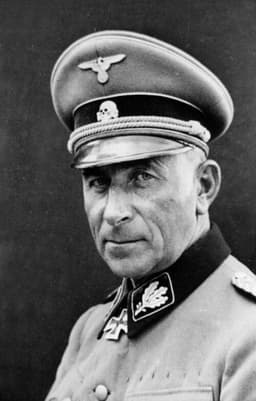
Paul Hausser
General · Modern
62.2Total

Porfirio Diaz
General · Modern
61.9Total
Basic Information
Born
1880
1830
Died
1972
1915
Era
Modern
Modern
Nationality
Germany
Mexico
Occupation
General
General
Civilization
Western
Western
Score Comparison
Military (10%)
82.0
65.0
Political (20%)
46.6
55.0
Influence (20%)
72.0
58.3
Legacy (20%)
52.0
58.0
Leadership (15%)
61.1
80.0
Strategy (15%)
68.0
60.7
TOTAL
62.2
61.9
Paul Hausser — Complete Timeline
1932 AD
Retirement from the ReichswehrPolitical Action◆ Major
Hausser retired from the Reichswehr as a lieutenant general. He then joined the SS and became a key figure in transforming the SS-Verf
Nazi GermanySSMilitary Career
Impact: national
1943 AD
Command of the II SS Panzer Corps at KurskWar◆ Major
Hausser commanded the II SS Panzer Corps during the Battle of Kursk. His corps fought in the southern pincer of the offensive, suffering heavy losses in the largest tank battle in history.
World War IIEastern FrontKursk
Impact: regional
1945 AD
Surrender to American ForcesPolitical Action
Hausser surrendered to American troops in May 1945. He was held as a prisoner of war and later testified at the Nuremberg trials, but was never convicted of war crimes.
World War IISurrenderPost-War
Porfirio Diaz — Complete Timeline
1876 AD
Plan of TuxtepecPolitical Action
Diaz issued the Plan of Tuxtepec, rebelling against President Sebastian Lerdo de Tejada's re-election. He defeated government forces and assumed the presidency, beginning a 35-year dictatorship.
CoupDictatorshipPorfiriato
Impact: nationaldestructive
1884 AD
Porfiriato Economic ModernizationReform◆ Major
Diaz implemented policies attracting foreign investment, building railroads, and expanding mining and agriculture. Mexico experienced economic growth but with increased foreign control and wealth inequality.
Economic GrowthForeign InvestmentInfrastructure
Impact: national
1910 AD
Centennial of IndependenceCultural◆ Major
Diaz celebrated Mexico's centennial with grand festivities, showcasing modernization. The event masked growing discontent, as Francisco I. Madero's anti-re-election movement gained momentum, leading to the Mexican Revolution.
CelebrationRevolution PrecursorPolitical Tension
Impact: national
1911 AD
Resignation and ExilePolitical Action
After the Treaty of Ciudad Juarez, Diaz resigned the presidency and went into exile in France. His departure ended the Porfiriato and allowed Madero to assume power, though it did not end the revolution.
End of DictatorshipExileRevolution
Impact: national
Expert Analysis
Origins
Paul Hausser was born on October 7, 1880, in Brandenburg, Germany, into a Prussian military family. He entered the Imperial German Army as a cadet in 1899, attending the Prussian Military Academy. His early career was marked by service in the General Staff, and he fought in World War I, where he was wounded and earned several decorations. By 1932, he had retired as a lieutenant general from the Reichswehr, the post-war German army.
Porfirio Diaz was born on September 15, 1830, in Oaxaca City, Mexico, to a mixed-race family of modest means. He studied law but abandoned it to join the military during the Mexican-American War (1846-1848). He later fought in the Reform War (1857-1861) and against the French Intervention (1861-1867), becoming a national hero for his role in the capture of Mexico City in 1867. His early military exploits under President Benito Juarez set the stage for his political ambitions.
Rise to Power
Hausser's rise to power came after he joined the SS in 1934. He was tasked with transforming the SS-Verfügungstruppe (SS-VT) into a combat force, which later became the Waffen-SS. By 1936, he was appointed Inspector of SS-VT, and he commanded troops in the invasions of Poland (1939) and France (1940). His key turning point was the creation of the SS Division Das Reich, which he led in the Balkans and the Soviet Union. He was promoted to Obergruppenführer in 1941.
Diaz's rise began with the Plan of Tuxtepec in 1876, when he rebelled against President Sebastian Lerdo de Tejada's re-election. After defeating government forces, he assumed the presidency in 1877. He ruled directly or through puppet presidents until 1880, then again from 1884 to 1911. His political acumen allowed him to centralize power, co-opt rivals, and modernize Mexico's infrastructure, but his regime became increasingly authoritarian.
Leadership & Governance
Hausser was a professional military leader who prioritized training and discipline. He commanded the II SS Panzer Corps at the Battle of Kursk in 1943, where his forces suffered heavy losses but achieved tactical gains. His leadership score of 61.1 reflects his competence in combat, but his political involvement was limited. He scored 46.6 in political influence, as he focused on military matters rather than Nazi ideology.
Diaz ruled Mexico with a firm hand, promoting economic growth through foreign investment. His leadership score of 80.0 is the highest, indicating his ability to control a diverse nation. He built railroads, expanded mining, and stabilized the currency. However, his political score of 55.0 reflects his suppression of dissent and lack of democratic governance. His policies favored the wealthy elite, leading to widespread inequality.
Triumph & Tragedy
Hausser's greatest success was building the Waffen-SS into an effective fighting force, with a military score of 82.0. He also survived the war and avoided conviction at Nuremberg. His tragedy was his service to the Nazi regime, which committed war crimes. His legacy is tainted by association with the SS, despite his denial of knowledge of atrocities.
Diaz's triumph was the modernization of Mexico during the Porfiriato, with economic growth and infrastructure development. His tragedy was the Mexican Revolution, which erupted due to his authoritarian rule and inequality. He was forced into exile in 1911, dying in Paris in 1915. His legacy score of 58.0 reflects mixed views: some praise his modernization, others condemn his dictatorship.
Character & Destiny
Hausser was a disciplined, professional soldier who followed orders. His decision to join the SS was driven by ambition rather than ideology. He was pragmatic, focusing on military effectiveness. This character led him to build a formidable force but also to serve a criminal regime. His destiny was to be captured, testify, and live in obscurity until his death in 1972.
Diaz was a charismatic, cunning leader who valued order and progress. He believed in strong central authority and was willing to use force to maintain power. His character led to stability and growth but also to resentment. His destiny was to be overthrown by the very forces his policies created. He died in exile, a controversial figure.
Legacy
Hausser's legacy is the Waffen-SS, which became a symbol of Nazi military power. His influence score of 72.0 is high because his organizational skills shaped an elite force. However, his legacy is overwhelmingly negative due to the SS's role in war crimes. He scored 52.0 in legacy.
Diaz's legacy is the Porfiriato, a period of economic growth but political repression. His influence score of 58.3 reflects his impact on Mexican history. His legacy score of 58.0 shows a mixed assessment: he is seen as a modernizer but also a dictator. The Mexican Revolution that followed his rule transformed the country.
Conclusion
While Hausser scored higher overall (62.2 vs 61.9), his impact is largely military and tied to a defeated regime. Diaz had a broader political and economic impact, shaping Mexico for decades. Despite his authoritarianism, Diaz's modernization efforts had lasting effects, whereas Hausser's legacy is confined to a specific military context. Therefore, Porfirio Diaz had greater historical impact, as his policies influenced a nation's development, while Hausser's contributions were overshadowed by the Nazi defeat.
Rankings
🥇
Paul HausserLeader
Mil: 82.0Pol: 46.6Inf: 72.0
62.2
🥈
Porfirio Diaz
Mil: 65.0Pol: 55.0Inf: 58.3
61.9
+0.3 behind
How This Comparison Works
Algorithm
Each figure is scored on 6 dimensions (0—100 scale) based on structured historical data: Military (10%), Political (20%), Influence (20%), Legacy (20%), Leadership (15%), Strategy (15%). The weighted total produces the final ranking.
Data Sources
Scores are computed from structured sub-indicators in the database. Scale factors adjust for era (Ancient ×0.85, Modern ×1.0) and civilization size (Eastern ×1.05, Other ×0.80) to account for differences in population and military scale.
Maximum 3 Figures
Comparisons are limited to 2—3 figures to ensure readability and statistical meaningfulness.
Error Margins
±5 points per dimension — Sub-scores are derived from historical records with inherent uncertainty. Two figures within 5 points on a dimension should be considered roughly equivalent in that area.
Total Score Accuracy
±3 points overall — The weighted combination of 6 dimensions produces a total score with approximately ±3 points of uncertainty. Differences of less than 3 points are not statistically significant— the figures are effectively tied.
Known Limitations
- Historical records are incomplete and uneven across civilizations
- Figures from oral-tradition societies may be underrepresented
- Occupation labels can misclassify multi-role figures
- Scores measure capability and impact, not moral character
- Quantitative scoring is a comparison tool, not absolute truth
Capability Radar
Military (10%) — Battles & Warfare
Battles
75
65
Win Rate
70
70
Expansion
70
50
Political (20%) — Governance & Reform
Reform
50
60
Diplomacy
30
65
Economy
20
60
Influence (20%) — Cultural & Global Reach
Cultural
50
55
Global
55
55
Legacy (20%) — Historical Impact
Historical
60
65
Longevity
40
60
Leadership (15%) — Power & Stability
Tenure
40
85
Stability
25
70
Strategy (15%) — Tactics & Innovation
Strategy
75
65
Tactics
80
60
Reform
85
55
Similar Comparisons
Comments & Discussion
No comments yet. Be the first to share your thoughts!