Loading...
Paul I of Russia vs Thalun
Thalun leads by 12.0 pts · 2 figures compared
…

Paul I of Russia
Emperor · Modern
38.9Total
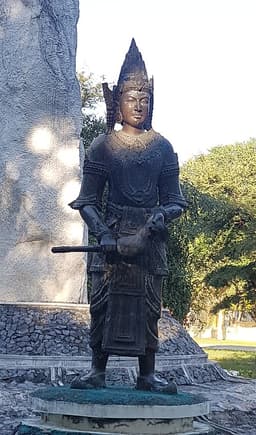
Thalun
Emperor · Modern
50.9Total
Basic Information
Born
1754
1584
Died
1801
1648
Era
Modern
Modern
Nationality
Russia
Myanmar
Occupation
Emperor
Emperor
Civilization
Western
Eastern
Score Comparison
Military (10%)
21.2
35.0
Political (20%)
36.5
60.0
Influence (20%)
50.2
51.8
Legacy (20%)
40.0
43.3
Leadership (15%)
41.5
72.0
Strategy (15%)
25.0
38.3
TOTAL
38.9
50.9
Paul I of Russia — Complete Timeline
1796 AD
Reversal of Catherine's ReformsReform◆ Major
Paul I repealed many of Catherine the Great's reforms, including the Charter to the Nobility, which had granted nobles extensive privileges. He reintroduced compulsory service for nobles and restricted their freedoms. This caused widespread resentment among the aristocracy and undermined his support.
NobilityReformReaction
Impact: nationaldestructive
Accession as Emperor of RussiaPolitical Action◆ Major
Paul I ascended the throne after the death of his mother, Catherine the Great. He immediately reversed many of her policies, including her liberal reforms and foreign alliances. His accession was marked by a desire to centralize power and impose strict military discipline, alienating the nobility.
SuccessionReversal of PoliciesCentralization
Impact: national
1798 AD
Participation in the War of the Second CoalitionWar◆ Major
Paul I joined the Second Coalition against Revolutionary France, sending Russian forces under Alexander Suvorov to Italy and Switzerland. Russian troops achieved victories but were ultimately withdrawn due to disagreements with allies. The campaign demonstrated Russian military prowess but ended in failure.
CoalitionSuvorovFrench Revolutionary Wars
Impact: regional
1801 AD
Assassination in the Mikhailovsky CastlePolitical Action◆ Major
Paul I was assassinated by a group of disgruntled nobles and officers in his bedroom at the Mikhailovsky Castle. The conspirators, led by Count Pahlen, forced him to abdicate and then killed him. His death ended his erratic rule and brought his son Alexander I to the throne.
AssassinationPalace CoupAlexander I
Impact: nationaltragic
Thalun — Complete Timeline
1629 AD
Accession to the ThronePolitical Action◆ Major
After the assassination of Anaukpetlun and the brief reign of Minyedeippa, Thalun ascended the throne as king of the Toungoo dynasty. He faced a kingdom weakened by internal strife and began consolidating power and restoring stability.
Toungoo DynastySuccessionBurma
Impact: nationalconstructive
1635 AD
Revenue Survey of 1635Reform◆ Major
Thalun conducted a comprehensive revenue survey of the Irrawaddy valley, measuring land and assessing taxes. This survey standardized the tax system, increased state revenue, and provided a detailed record of agricultural production and population.
Tax ReformAdministrationBurma
Impact: nationalconstructive
Promulgation of the Law CodeReform◆ Major
Thalun issued a new legal code, known as the 'Thalun Min Law', which codified customary law and royal decrees. This code standardized judicial procedures and remained influential in Burmese law for centuries.
Legal ReformBurmaLaw
Impact: nationalconstructive
Relocation of the Capital to AvaPolitical Action◆ Major
Thalun moved the capital of the Toungoo kingdom from Pegu (Bago) back to Ava (Inwa) in Upper Burma. This shift reflected a strategic focus on the agrarian heartland and away from maritime trade, influencing the kingdom's economic orientation.
Capital MoveAvaBurma
Impact: national
Expert Analysis
Origins
**Paul I of Russia** (born 1754) was the son of Catherine the Great and Peter III. Raised in isolation by his mother, he developed a deep resentment towards her and her policies. His education was supervised by Catherine, but he was kept away from state affairs, fostering an idealistic and rigid worldview.
**Thalun** (born 1584) was a prince of the Toungoo dynasty in Burma. He served as a governor under his brother Anaukpetlun, gaining administrative experience. After Anaukpetlun's assassination, Thalun ascended the throne in 1629, inheriting a fragmented kingdom.
Rise to Power
Paul I became Emperor in 1796 upon Catherine's death, at age 42. His first acts reversed many of her reforms: he abolished the Charter to the Nobility, curtailed noble privileges, and enforced strict military discipline. These moves alienated the elite who had prospered under Catherine.
Thalun's rise came after the chaotic reign of Minyedeippa (1628-1629). He stabilized the kingdom by executing the assassins of his brother and consolidating power. His accession was marked by a focus on internal consolidation rather than expansion.
Leadership & Governance
Paul I's leadership was erratic and autocratic. He imposed Prussian-style military drills, banned foreign travel and books, and censored the press. His governance score of 41.5 reflects his inability to build consensus. He micromanaged and reversed policies impulsively.
Thalun, with a leadership score of 72.0, was methodical. He conducted a revenue survey in 1635, measuring land and standardizing taxes. This increased state revenue and reduced corruption. He also promulgated the Thalun Min Law, codifying customary law. His governance was centralized but effective.
Triumph & Tragedy
Paul I's triumph: He briefly stabilized Russia's finances by debasing the currency? Actually, his major achievement was joining the Second Coalition against France, but Russian victories under Suvorov were undone by Paul's erratic orders. His tragedy: He was assassinated in his bedroom in 1801 by nobles he had alienated. His reign lasted only 5 years.
Thalun's triumph: His revenue survey and law code provided a stable administrative foundation for the Toungoo kingdom. The relocation of the capital to Ava (1635) secured the agricultural heartland. His tragedy: The kingdom remained isolated and eventually declined after his death, unable to resist external threats. His reforms were not sustained.
Character & Destiny
Paul I was paranoid and impulsive, with a score of 25.0 in strategy. His character led to his downfall: he alienated the nobility, the army, and even his own family. The assassination was a direct result of his erratic rule.
Thalun was cautious and pragmatic, with a strategy score of 38.3. He focused on internal reforms rather than military campaigns. His character suited the needs of his time: a kingdom exhausted by wars needed consolidation. He died naturally in 1648, succeeded by his son.
Legacy
Paul I's legacy is largely negative: he is remembered as a tyrant who reversed Catherine's reforms and was murdered. His influence score of 50.2 is moderate due to his brief reign. However, his son Alexander I reversed many of his policies, but Paul's military reforms influenced later tsars.
Thalun's legacy is more positive: his revenue survey and law code influenced Burmese administration for centuries. His legacy score of 43.3 reflects the limited global impact of a regional kingdom. He is remembered as a reformer who stabilized the Toungoo dynasty.
Conclusion
Thalun had a greater impact on his kingdom than Paul I did on Russia. Thalun's administrative reforms (revenue survey, law code) provided stability for decades, while Paul's erratic rule ended in chaos. Thalun's total score of 50.9 exceeds Paul's 38.9 by 12 points, reflecting his superior leadership and political acumen. Paul's reign was a brief, destructive episode; Thalun's was a period of consolidation. Thus, Thalun is the more effective ruler.
Rankings
🥇
ThalunLeader
Mil: 35.0Pol: 60.0Inf: 51.8
50.9
🥈
Paul I of Russia
Mil: 21.2Pol: 36.5Inf: 50.2
38.9
+12.0 behind
How This Comparison Works
Algorithm
Each figure is scored on 6 dimensions (0—100 scale) based on structured historical data: Military (10%), Political (20%), Influence (20%), Legacy (20%), Leadership (15%), Strategy (15%). The weighted total produces the final ranking.
Data Sources
Scores are computed from structured sub-indicators in the database. Scale factors adjust for era (Ancient ×0.85, Modern ×1.0) and civilization size (Eastern ×1.05, Other ×0.80) to account for differences in population and military scale.
Maximum 3 Figures
Comparisons are limited to 2—3 figures to ensure readability and statistical meaningfulness.
Error Margins
±5 points per dimension — Sub-scores are derived from historical records with inherent uncertainty. Two figures within 5 points on a dimension should be considered roughly equivalent in that area.
Total Score Accuracy
±3 points overall — The weighted combination of 6 dimensions produces a total score with approximately ±3 points of uncertainty. Differences of less than 3 points are not statistically significant— the figures are effectively tied.
Known Limitations
- Historical records are incomplete and uneven across civilizations
- Figures from oral-tradition societies may be underrepresented
- Occupation labels can misclassify multi-role figures
- Scores measure capability and impact, not moral character
- Quantitative scoring is a comparison tool, not absolute truth
Capability Radar
Military (10%) — Battles & Warfare
Battles
10
30
Win Rate
10
30
Expansion
10
20
Political (20%) — Governance & Reform
Reform
40
70
Diplomacy
20
40
Economy
20
70
Influence (20%) — Cultural & Global Reach
Cultural
20
30
Global
20
20
Legacy (20%) — Historical Impact
Historical
30
40
Longevity
20
30
Leadership (15%) — Power & Stability
Tenure
20
60
Stability
10
50
Strategy (15%) — Tactics & Innovation
Strategy
10
30
Tactics
10
30
Reform
30
20
Similar Comparisons
Comments & Discussion
No comments yet. Be the first to share your thoughts!