Loading...
Thalun vs Vasily IV
Thalun leads by 13.5 pts · 2 figures compared
…
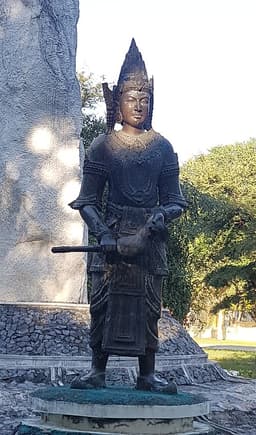
Thalun
Emperor · Modern
50.9Total
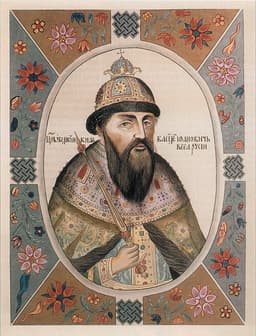
Vasily IV
Emperor · Modern
37.4Total
Basic Information
Born
1584
1552
Died
1648
1612
Era
Modern
Modern
Nationality
Myanmar
Russia
Occupation
Emperor
Emperor
Civilization
Eastern
Western
Score Comparison
Military (10%)
35.0
14.9
Political (20%)
60.0
26.4
Influence (20%)
51.8
46.3
Legacy (20%)
43.3
36.7
Leadership (15%)
72.0
38.1
Strategy (15%)
38.3
54.8
TOTAL
50.9
37.4
Thalun — Complete Timeline
1629 AD
Accession to the ThronePolitical Action◆ Major
After the assassination of Anaukpetlun and the brief reign of Minyedeippa, Thalun ascended the throne as king of the Toungoo dynasty. He faced a kingdom weakened by internal strife and began consolidating power and restoring stability.
Toungoo DynastySuccessionBurma
Impact: nationalconstructive
1635 AD
Revenue Survey of 1635Reform◆ Major
Thalun conducted a comprehensive revenue survey of the Irrawaddy valley, measuring land and assessing taxes. This survey standardized the tax system, increased state revenue, and provided a detailed record of agricultural production and population.
Tax ReformAdministrationBurma
Impact: nationalconstructive
Promulgation of the Law CodeReform◆ Major
Thalun issued a new legal code, known as the 'Thalun Min Law', which codified customary law and royal decrees. This code standardized judicial procedures and remained influential in Burmese law for centuries.
Legal ReformBurmaLaw
Impact: nationalconstructive
Relocation of the Capital to AvaPolitical Action◆ Major
Thalun moved the capital of the Toungoo kingdom from Pegu (Bago) back to Ava (Inwa) in Upper Burma. This shift reflected a strategic focus on the agrarian heartland and away from maritime trade, influencing the kingdom's economic orientation.
Capital MoveAvaBurma
Impact: national
Vasily IV — Complete Timeline
1606 AD
Bolotnikov RebellionWar◆ Major
Ivan Bolotnikov led a massive peasant and Cossack uprising against Vasily IV, claiming to be a commander of the resurrected False Dmitry. The rebels besieged Moscow but were defeated by Vasily's army in 1607.
RebellionBolotnikovPeasant War
Impact: national
Coronation as Tsar Vasily IVPolitical Action◆ Major
Vasily Shuisky was proclaimed Tsar by a boyar assembly after the overthrow of False Dmitry I. His coronation was irregular, lacking the traditional Zemsky Sobor approval, which weakened his legitimacy.
CoronationBoyarsLegitimacy
Impact: national
1608 AD
Siege of Moscow by False Dmitry IIWar◆ Major
False Dmitry II, another impostor, established a rival court at Tushino near Moscow. Vasily IV's forces were unable to dislodge him, leading to a dual power situation in Russia for over a year.
TushinoImpostorSiege
Impact: national
1609 AD
Treaty of Vyborg with SwedenPolitical Action◆ Major
Vasily IV signed a treaty with Sweden, ceding the fortress of Korela in exchange for Swedish military aid against False Dmitry II and the Polish intervention. This brought Sweden into the Russian conflict.
SwedenTreatyMilitary Aid
Impact: regional
1610 AD
Overthrow and Forced MonasticismPolitical Action◆ Major
After the Polish army defeated Russian-Swedish forces at the Battle of Klushino, boyars overthrew Vasily IV. He was forcibly tonsured as a monk and later handed over to the Poles, dying in captivity in 1612.
OverthrowPolandCaptivity
Impact: nationaltragic
Expert Analysis
Origins
**Thalun** (born 1584) was a prince of the Toungoo dynasty, the son of King Nyaungyan Min. He grew up during a period of consolidation after the dynasty's collapse and reconquest. His early education included military training and administrative governance, preparing him for leadership. His brother Anaukpetlun was assassinated in 1628, and after the brief rule of his nephew Minyedeippa, Thalun ascended the throne in 1629 at age 45. His background was rooted in the traditional Burmese monarchy, with strong ties to the Buddhist sangha and the nobility.
**Vasily IV** (born 1552) was a prominent boyar from the Shuisky family, one of the oldest Rurikid lines. He served under Ivan the Terrible and Boris Godunov, gaining political experience but also suffering exile. His family was deeply involved in court intrigues. After the death of Boris Godunov, the Time of Troubles erupted, and Vasily maneuvered through the chaos. He was elected tsar in 1606 after the overthrow of False Dmitry I, but his legitimacy was weak, lacking the traditional Zemsky Sobor endorsement.
Rise to Power
Thalun's rise was relatively straightforward: he was a prince who became king after the assassination of his brother and the brief reign of his nephew. He faced no major rivals for the throne, as the Toungoo court was stable. His accession in 1629 was peaceful, and he immediately focused on administrative reforms.
Vasily IV's rise was tumultuous. He was a key figure in the conspiracy against False Dmitry I, leading to the impostor's murder in 1606. He then proclaimed himself tsar, but his election was manipulated by a small faction of boyars. His reign was immediately challenged by the Bolotnikov Rebellion (1606-1607), a massive uprising of peasants, Cossacks, and disaffected nobles. Vasily managed to suppress it with difficulty, but his authority was never fully secure.
Leadership & Governance
Thalun's governance was methodical and reform-oriented. His most notable achievement was the revenue survey of 1635, which standardized land measurement and taxation across the Irrawaddy valley. This increased state revenue and reduced corruption. He also promulgated the Thalun Min Law, a legal code that codified customary laws and royal decrees, creating a uniform judicial system. He moved the capital from Pegu to Ava in 1635, shifting focus to the agricultural heartland and away from coastal trade. His leadership score of 72.0 reflects his effective administration.
Vasily IV's leadership was reactive and weak. He faced constant rebellions and foreign intervention. His political score of 26.4 indicates his inability to consolidate power. He signed the Treaty of Vyborg with Sweden in 1609, ceding Korela fortress in exchange for military aid—a desperate move that alienated many Russians. He failed to defeat False Dmitry II, who set up a rival court at Tushino. His military score of 14.9 is abysmal, reflecting his lack of battlefield success.
Triumph & Tragedy
Thalun's triumphs were administrative: the revenue survey increased state efficiency, and his legal code provided stability. His tragedy was the decline of Toungoo power after his death, partly due to his focus on internal consolidation rather than external expansion. His military score of 35.0 reflects a lack of aggressive campaigns.
Vasily IV's only triumph was surviving the Bolotnikov Rebellion, but it was a pyrrhic victory. His tragedies were numerous: his reign saw the Polish invasion, the siege of Moscow, and his own overthrow in 1610. He was forcibly tonsured as a monk and later died in Polish captivity. His legacy is one of failure; his total score of 37.4 is among the lowest for tsars.
Character & Destiny
Thalun was a cautious, bureaucratic ruler. He prioritized order over conquest. His character shaped a stable but stagnant kingdom. He was not a charismatic leader but an effective administrator. His destiny was to be a transitional figure between the expansionist Toungoo and its decline.
Vasily IV was ambitious but indecisive. He was a product of the boyar system, skilled in intrigue but lacking strategic vision. His character—driven by self-preservation and short-term alliances—led to his downfall. He could not unite Russia against external threats. His destiny was to be a tragic figure in the Time of Troubles.
Legacy
Thalun's legacy endures through his legal and tax reforms, which influenced Burmese administration for centuries. The Thalun Min Law remained in use until the colonial period. His revenue survey set a precedent for state record-keeping. His influence score of 51.8 reflects a moderate but lasting impact.
Vasily IV's legacy is negative. He is remembered as a failed tsar who deepened the Time of Troubles. His reign highlighted the weaknesses of the boyar system. The Treaty of Vyborg and the subsequent Polish occupation led to national humiliation. His legacy score of 36.7 is low, though his story is a cautionary tale.
Conclusion
Thalun had greater impact than Vasily IV. His total score of 50.9 versus Vasily's 37.4 reflects this. Thalun's administrative reforms provided stability and efficiency, while Vasily's reign was chaotic and destructive. Although Thalun's kingdom eventually declined, his policies had lasting positive effects. Vasily IV, by contrast, contributed to Russia's crisis and left no constructive legacy. Thalun is the clear winner in terms of effective governance and enduring influence.
Rankings
🥇
ThalunLeader
Mil: 35.0Pol: 60.0Inf: 51.8
50.9
🥈
Vasily IV
Mil: 14.9Pol: 26.4Inf: 46.3
37.4
+13.5 behind
How This Comparison Works
Algorithm
Each figure is scored on 6 dimensions (0—100 scale) based on structured historical data: Military (10%), Political (20%), Influence (20%), Legacy (20%), Leadership (15%), Strategy (15%). The weighted total produces the final ranking.
Data Sources
Scores are computed from structured sub-indicators in the database. Scale factors adjust for era (Ancient ×0.85, Modern ×1.0) and civilization size (Eastern ×1.05, Other ×0.80) to account for differences in population and military scale.
Maximum 3 Figures
Comparisons are limited to 2—3 figures to ensure readability and statistical meaningfulness.
Error Margins
±5 points per dimension — Sub-scores are derived from historical records with inherent uncertainty. Two figures within 5 points on a dimension should be considered roughly equivalent in that area.
Total Score Accuracy
±3 points overall — The weighted combination of 6 dimensions produces a total score with approximately ±3 points of uncertainty. Differences of less than 3 points are not statistically significant— the figures are effectively tied.
Known Limitations
- Historical records are incomplete and uneven across civilizations
- Figures from oral-tradition societies may be underrepresented
- Occupation labels can misclassify multi-role figures
- Scores measure capability and impact, not moral character
- Quantitative scoring is a comparison tool, not absolute truth
Capability Radar
Military (10%) — Battles & Warfare
Battles
30
15
Win Rate
30
10
Expansion
20
5
Political (20%) — Governance & Reform
Reform
70
10
Diplomacy
40
15
Economy
70
10
Influence (20%) — Cultural & Global Reach
Cultural
30
10
Global
20
5
Legacy (20%) — Historical Impact
Historical
40
20
Longevity
30
10
Leadership (15%) — Power & Stability
Tenure
60
20
Stability
50
5
Strategy (15%) — Tactics & Innovation
Strategy
30
10
Tactics
30
10
Reform
20
5
Similar Comparisons
Comments & Discussion
No comments yet. Be the first to share your thoughts!