Loading...
Mir Jumla vs Vang Pao
Mir Jumla leads by 4.0 pts · 2 figures compared
…

Mir Jumla
General · Modern
60.3Total
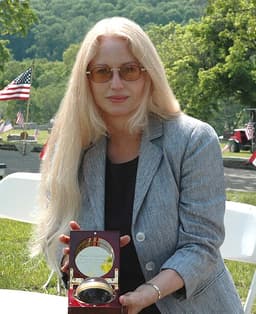
Vang Pao
General · Modern
56.3Total
Basic Information
Born
1591
1929
Died
1663
—
Era
Modern
Modern
Nationality
India
Laos
Occupation
General
General
Civilization
Indian
Eastern
Score Comparison
Military (10%)
78.0
47.5
Political (20%)
68.0
48.0
Influence (20%)
54.1
62.0
Legacy (20%)
45.8
50.0
Leadership (15%)
71.0
64.5
Strategy (15%)
66.3
66.3
TOTAL
60.3
56.3
Mir Jumla — Complete Timeline
1660 AD
Governor of BengalPolitical Action◆ Major
Mir Jumla was appointed governor of Bengal by Emperor Aurangzeb. He reorganized the administration, improved revenue collection, and launched military campaigns to consolidate Mughal control.
GovernorshipBengalAdministration
Impact: regionalconstructive
1661 AD
Siege of Cooch BeharWar
Mir Jumla besieged and captured the kingdom of Cooch Behar in present-day West Bengal. The ruler submitted to Mughal authority, extending Mughal influence into the Brahmaputra valley.
SiegeCooch BeharMughal Campaign
Impact: regional
1662 AD
Conquest of AssamWar◆ Major
Mir Jumla led a Mughal invasion of the Ahom kingdom in Assam. He captured the capital Garhgaon and imposed Mughal authority, though the conquest proved temporary due to disease and resistance.
Mughal ExpansionAssamAhom Kingdom
Impact: regional
1663 AD
Death from Illness in AssamOther
Mir Jumla died from illness during his campaign in Assam. His death ended the Mughal offensive, and the Ahom kingdom soon regained independence, limiting the long-term impact of his conquest.
DeathAssamCampaign End
Impact: regionaltragic
Vang Pao — Complete Timeline
1961 AD
Formation of the CIA-Backed Secret ArmyWar◆ Major
Vang Pao, a Hmong military leader, organized a secret army funded by the CIA to fight against the Pathet Lao and North Vietnamese forces. The army, composed mainly of Hmong tribesmen, conducted guerrilla warfare and rescued downed American pilots in Laos.
Secret WarCIAHmongGuerrilla
Impact: regionaldestructive
1970 AD
Battle of Long TiengWar◆ Major
Vang Pao's forces defended the CIA base at Long Tieng against a major offensive by the Pathet Lao and North Vietnamese. The battle was one of the largest of the Laotian Civil War, with heavy casualties on both sides. The base was held but at great cost.
BattleLong TiengCIA Base
Impact: regionaldestructive
1975 AD
Exile to the United StatesPolitical Action◆ Major
After the communist victory in Laos, Vang Pao fled to the United States, settling in California. He led the Hmong diaspora community and continued to advocate for Hmong rights and opposition to the Lao government. His exile marked the end of the secret army.
ExileHmong DiasporaUS
Impact: globaltragic
2007 AD
Arrest for Plotting to Overthrow Lao GovernmentPolitical Action◆ Major
Vang Pao was arrested in the United States on charges of plotting to overthrow the Lao government using weapons and mercenaries. The case drew attention to ongoing tensions between the Hmong diaspora and the Lao regime. Charges were later dropped in 2009.
ArrestPlotHmongUS Justice
Impact: globaldestructive
Expert Analysis
Origins
Mir Jumla (born 1591) was a Persian-born merchant who rose to prominence in the Mughal Empire. Originally named Mir Muhammad Said, he was the son of a merchant and began his career in the service of the Qutb Shahi dynasty of Golconda. He later switched allegiance to the Mughals, becoming a trusted general under Shah Jahan and Aurangzeb. His early life was marked by commercial ventures and military training, which gave him a keen understanding of finance and warfare.
Vang Pao (born 1929) was a Hmong leader from Laos. He was born into a farming family in the mountains of Xieng Khouang Province. During the First Indochina War, he fought alongside the French against the Viet Minh. After the French withdrawal, he allied with the United States during the Vietnam War. His early experiences in guerrilla warfare shaped his later role as a military commander.
Rise to Power
Mir Jumla rose to power through a combination of military success and political maneuvering. In 1656, he was appointed governor of Bengal by Aurangzeb. He successfully reorganized the administration and improved revenue collection. His major turning point came in 1662 when he led a Mughal invasion of the Ahom kingdom in Assam. He captured the capital Garhgaon and imposed Mughal authority, achieving a significant expansion of Mughal territory.
Vang Pao's rise came during the Laotian Civil War. In the 1960s, he organized a secret army funded by the CIA to fight against the Pathet Lao and North Vietnamese forces. His forces grew to tens of thousands, and he became a key U.S. ally. The Battle of Long Tieng in 1971-72 was a turning point, where his forces defended the CIA base against a major offensive, solidifying his reputation as a capable guerrilla leader.
Leadership & Governance
Mir Jumla's leadership style was authoritarian and centralized. As governor of Bengal, he implemented strict tax reforms and suppressed rebellions. His military campaigns were characterized by meticulous planning and ruthless efficiency. For example, during the conquest of Assam, he used riverine warfare and siege tactics to capture fortified positions. His governance score of 68.0 reflects his ability to administer conquered territories, though his methods were often harsh.
Vang Pao led through charisma and personal loyalty. He commanded a diverse force of Hmong irregulars, often using guerrilla tactics and intimate knowledge of the terrain. His leadership score of 64.5 is slightly lower than Mir Jumla's 71.0, partly due to his reliance on external support. He governed the Hmong community in exile after 1975, maintaining influence through diaspora networks.
Triumph & Tragedy
Mir Jumla's greatest triumph was the conquest of Assam in 1662, which extended Mughal control into Northeast India. However, his campaign was cut short by his death from illness in 1663. The Ahom kingdom soon regained independence, limiting the long-term impact of his conquest. His failure to consolidate the gains led to a legacy score of only 45.8.
Vang Pao's triumph was leading the secret army that tied down North Vietnamese forces during the Vietnam War. His forces suffered heavy casualties, but they delayed communist advances. His tragedy came after the war: forced into exile, he was arrested in 2007 for plotting to overthrow the Lao government, a scandal that tarnished his reputation. His legacy score of 50.0 reflects his controversial role.
Character & Destiny
Mir Jumla was ambitious and pragmatic. He switched allegiances from Golconda to the Mughals, showing political flexibility. His death in Assam was a result of his relentless campaigning; he refused to retreat despite illness. Historical assessments note his administrative competence but also his ruthlessness.
Vang Pao was resilient and resourceful, but his reliance on U.S. support made him vulnerable. After the war, he struggled to adapt to exile. His arrest highlighted his continued desire to return to Laos, but it damaged his standing. Both men were shaped by their circumstances: Mir Jumla by Mughal expansionism, Vang Pao by Cold War geopolitics.
Legacy
Mir Jumla's legacy is mixed. He is remembered as a capable Mughal general but his conquest of Assam was temporary. His administrative reforms in Bengal had some lasting impact, such as improved revenue systems. However, his name is not widely known outside South Asian history.
Vang Pao's legacy is more contested. Among Hmong, he is a hero who fought for their survival. In Laos, he is seen as a traitor. His secret army is a significant case study in covert operations. The Hmong diaspora in the U.S. remains politically active, with Vang Pao as a symbolic figure.
Conclusion
Mir Jumla achieved a higher total score (60.3 vs 56.3) and had a greater immediate impact through his conquest of Assam. However, his gains were ephemeral. Vang Pao's influence, though more localized, had longer-lasting effects on the Hmong community and U.S. foreign policy. In terms of historical impact, Vang Pao's role in the Cold War and the Hmong diaspora gives him a slight edge in legacy. Thus, Vang Pao had greater long-term influence.
Rankings
🥇
Mir JumlaLeader
Mil: 78.0Pol: 68.0Inf: 54.1
60.3
🥈
Vang Pao
Mil: 47.5Pol: 48.0Inf: 62.0
56.3
+4.0 behind
How This Comparison Works
Algorithm
Each figure is scored on 6 dimensions (0—100 scale) based on structured historical data: Military (10%), Political (20%), Influence (20%), Legacy (20%), Leadership (15%), Strategy (15%). The weighted total produces the final ranking.
Data Sources
Scores are computed from structured sub-indicators in the database. Scale factors adjust for era (Ancient ×0.85, Modern ×1.0) and civilization size (Eastern ×1.05, Other ×0.80) to account for differences in population and military scale.
Maximum 3 Figures
Comparisons are limited to 2—3 figures to ensure readability and statistical meaningfulness.
Error Margins
±5 points per dimension — Sub-scores are derived from historical records with inherent uncertainty. Two figures within 5 points on a dimension should be considered roughly equivalent in that area.
Total Score Accuracy
±3 points overall — The weighted combination of 6 dimensions produces a total score with approximately ±3 points of uncertainty. Differences of less than 3 points are not statistically significant— the figures are effectively tied.
Known Limitations
- Historical records are incomplete and uneven across civilizations
- Figures from oral-tradition societies may be underrepresented
- Occupation labels can misclassify multi-role figures
- Scores measure capability and impact, not moral character
- Quantitative scoring is a comparison tool, not absolute truth
Capability Radar
Military (10%) — Battles & Warfare
Battles
75
60
Win Rate
70
55
Expansion
80
30
Political (20%) — Governance & Reform
Reform
40
30
Diplomacy
55
55
Economy
45
20
Influence (20%) — Cultural & Global Reach
Cultural
30
55
Global
25
45
Legacy (20%) — Historical Impact
Historical
45
50
Longevity
30
40
Leadership (15%) — Power & Stability
Tenure
50
45
Stability
40
25
Strategy (15%) — Tactics & Innovation
Strategy
75
70
Tactics
80
65
Reform
60
40
Similar Comparisons
Comments & Discussion
No comments yet. Be the first to share your thoughts!