Loading...
Peisistratus vs Zhang Zhao
Peisistratus leads by 0.2 pts · 2 figures compared
…

Peisistratus
Politician · Ancient
54.7Total
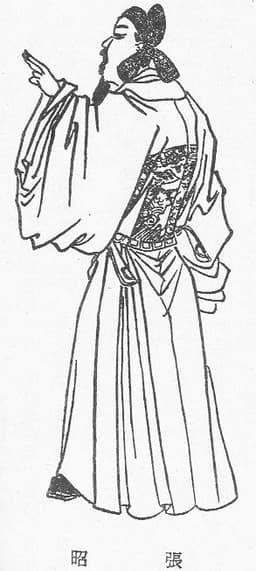
Zhang Zhao
Politician · Ancient
54.5Total
Basic Information
Born
-600
156
Died
-527
236
Era
Ancient
Ancient
Nationality
Greece
China
Occupation
Politician
Politician
Civilization
Western
Eastern
Score Comparison
Military (10%)
50.0
39.9
Political (20%)
59.3
68.0
Influence (20%)
55.0
53.3
Legacy (20%)
54.0
46.7
Leadership (15%)
66.0
66.0
Strategy (15%)
36.8
54.3
TOTAL
54.7
54.5
Peisistratus — Complete Timeline
561 BC
First Tyranny of PeisistratusPolitical Action◆ Major
Peisistratus, a popular leader, seized power in Athens by staging an attack on himself and using a bodyguard granted by the Assembly. He established a tyranny but was soon expelled by the combined forces of Lycurgus and Megacles, ending his first rule.
TyrannyAthensPower Seizure
Impact: national
546 BC
Economic and Agricultural PoliciesReform
Peisistratus implemented policies to support small farmers, including state loans and land redistribution. He also improved infrastructure, such as roads and water supply, and encouraged trade and mining, strengthening the Athenian economy.
Economic PolicyAgricultureInfrastructure
Impact: nationalconstructive
Second and Third Tyrannies of PeisistratusPolitical Action◆ Major
After a period of exile, Peisistratus returned to Athens with foreign support and defeated his opponents at the Battle of Pallene. He established a stable tyranny that lasted until his death, promoting economic prosperity and cultural development.
TyrannyAthensConsolidation of Power
Impact: national
Patronage of the Arts and ReligionCultural◆ Major
Peisistratus sponsored the construction of temples, including the Temple of Olympian Zeus, and promoted the cult of Dionysus. He established the Greater Panathenaea festival and commissioned the first written edition of Homer's epics, fostering Athenian cultural identity.
Cultural PatronageReligionHomer
Impact: nationalconstructive
Zhang Zhao — Complete Timeline
208 AD
Advised Against Battle of Red CliffsPolitical Action◆ Major
Zhang Zhao, as a senior Wu official, advised Sun Quan against forming an alliance with Liu Bei and attacking Cao Cao at Red Cliffs. He argued that surrender was more prudent given Cao Cao's overwhelming strength. Sun Quan rejected this advice, leading to the Wu-Shu victory at Red Cliffs.
Three KingdomsRed CliffsAdvice
Impact: regional
220 AD
Authored Memorials on GovernanceCultural
Zhang Zhao wrote several memorials to Sun Quan advocating for frugality, rule of law, and the importance of Confucian scholarship. These writings influenced Wu's early administrative policies and reflected his conservative, scholarly approach to governance.
WritingGovernanceConfucianism
Impact: nationalconstructive
222 AD
Served as Chief Minister of WuPolitical Action
Zhang Zhao was appointed Chief Minister (Chengxiang) of Eastern Wu after Sun Quan declared himself emperor. He held this position for several years, overseeing civil administration and advising on state policy, though his influence waned due to his earlier stance at Red Cliffs.
AppointmentWu DynastyGovernment
Impact: nationalconstructive
Expert Analysis
Origins
Peisistratus was born around 600 BCE in Athens, into a noble family claiming descent from the Homeric king Nestor. His father, Hippocrates, was a wealthy aristocrat. Peisistratus gained early fame as a military commander in the war against Megara, capturing the port of Nisaia around 565 BCE. He cultivated ties with the common people, positioning himself as a populist leader.
Zhang Zhao was born in 156 CE in Pengcheng (modern Xuzhou, China), into a scholarly family. His father, Zhang Kan, was a local official. Zhang Zhao excelled in Confucian classics and calligraphy. He fled the chaos of the late Han dynasty to Jiangdong, where he became a key advisor to Sun Ce and later Sun Quan, founding figures of Eastern Wu.
Rise to Power
Peisistratus first seized power in 561 BCE by staging a fake attack on himself, convincing the Athenian Assembly to grant him a bodyguard. He used these men to occupy the Acropolis. His first tyranny was short-lived; he was expelled by rival factions led by Lycurgus and Megacles. He returned in 556 BCE through a political alliance with Megacles, marrying his daughter. This second tyranny ended when he refused to have children with her, leading to another exile. In 546 BCE, he landed at Marathon with foreign mercenaries and gold from Thrace, defeated his opponents at the Battle of Pallene, and established a stable tyranny that lasted until his death in 527 BCE.
Zhang Zhao rose to prominence as a scholar-advisor. He joined Sun Ce around 190 CE and was appointed Chief Clerk. Sun Ce entrusted him with administrative affairs, saying, "In military matters, I rely on Zhou Yu; in civil governance, I rely on Zhang Zhao." After Sun Ce's death in 200 CE, Zhang Zhao became the chief minister to the young Sun Quan, guiding the transition and stabilizing Wu. He advocated for a cautious policy of consolidating the south rather than aggressive expansion.
Leadership & Governance
Peisistratus ruled Athens as a tyrant but maintained the existing legal framework. He introduced state loans to small farmers, land redistribution from exiled nobles, and a 5% tax on agricultural produce. He improved infrastructure, building roads and an aqueduct. He promoted the cult of Dionysus, instituting the City Dionysia festival, which spurred the development of Greek theatre. He also began construction of the Temple of Olympian Zeus. His regime was generally popular, as he reduced aristocratic dominance.
Zhang Zhao served as Chief Minister of Wu from 222 CE, after Sun Quan declared himself emperor. He advocated for Confucian governance, frugality, and the rule of law. He opposed expensive military campaigns, notably advising against the Battle of Red Cliffs in 208 CE, arguing that surrender to Cao Cao was preferable to risking destruction. Sun Quan rejected this advice and, with Zhou Yu and Liu Bei, won a decisive victory. Zhang Zhao's caution often clashed with Sun Quan's ambitions, leading to his gradual sidelining in military matters, though he remained a respected advisor.
Triumph & Tragedy
Peisistratus's greatest success was stabilizing Athens after decades of factional strife. His economic policies improved the lot of small farmers and laid the groundwork for Athens' later prosperity. His patronage of the arts made Athens a cultural center. However, his tyranny set a precedent for autocratic rule, and his sons Hippias and Hipparchus proved less capable, leading to the overthrow of the tyranny in 510 BCE. Peisistratus's legacy is mixed: he was a benevolent autocrat but also a usurper.
Zhang Zhao's greatest success was his role in consolidating Wu's early governance, ensuring stability after Sun Ce's death. His memorials on governance influenced later Confucian statecraft. His tragedy was his opposition to Red Cliffs; had Sun Quan followed his advice, Wu might have been absorbed by Cao Cao, but the victory instead elevated Wu to a major power. Zhang Zhao's caution made him seem timid, and he never achieved the military glory of contemporaries like Zhou Yu or Lu Xun.
Character & Destiny
Peisistratus was charismatic, pragmatic, and ruthless when necessary. He used deception to gain power but governed with moderation. His patience in exile and ability to secure foreign support show strategic thinking. His character allowed him to maintain power until natural death, a rare feat among Greek tyrants.
Zhang Zhao was learned, principled, and risk-averse. His Confucian values emphasized order and stability over daring. He was loyal to Sun Quan but often at odds with his aggressive policies. His character led him to be a cautious advisor in an era of war, which limited his influence as military leaders dominated.
Legacy
Peisistratus's legacy is intertwined with the rise of Athenian democracy. His policies weakened the aristocracy and strengthened the middle class, setting the stage for Cleisthenes' reforms. The City Dionysia festival he founded became a cornerstone of Western theatre. His building projects remained landmarks. He scored 54.7 overall, with high leadership (66.0) but low strategy (36.8).
Zhang Zhao's legacy is more modest. He is remembered as a loyal minister and Confucian scholar, but his advice at Red Cliffs is often seen as a blunder. His writings on governance influenced later Chinese bureaucracy, but his impact is overshadowed by the Three Kingdoms' military heroes. He scored 54.5 overall, with higher political (68.0) than military (39.9).
Conclusion
Peisistratus had greater impact. His tyranny directly enabled the cultural and political developments that made Classical Athens possible. Zhang Zhao, while a competent administrator, was a secondary figure in a larger narrative. Peisistratus's actions had long-term consequences for Western civilization, whereas Zhang Zhao's influence was confined to a short-lived kingdom. The score gap of 0.2 points understates Peisistratus's broader significance.
Rankings
🥇
PeisistratusLeader
Mil: 50.0Pol: 59.3Inf: 55.0
54.7
🥈
Zhang Zhao
Mil: 39.9Pol: 68.0Inf: 53.3
54.5
+0.2 behind
How This Comparison Works
Algorithm
Each figure is scored on 6 dimensions (0—100 scale) based on structured historical data: Military (10%), Political (20%), Influence (20%), Legacy (20%), Leadership (15%), Strategy (15%). The weighted total produces the final ranking.
Data Sources
Scores are computed from structured sub-indicators in the database. Scale factors adjust for era (Ancient ×0.85, Modern ×1.0) and civilization size (Eastern ×1.05, Other ×0.80) to account for differences in population and military scale.
Maximum 3 Figures
Comparisons are limited to 2—3 figures to ensure readability and statistical meaningfulness.
Error Margins
±5 points per dimension — Sub-scores are derived from historical records with inherent uncertainty. Two figures within 5 points on a dimension should be considered roughly equivalent in that area.
Total Score Accuracy
±3 points overall — The weighted combination of 6 dimensions produces a total score with approximately ±3 points of uncertainty. Differences of less than 3 points are not statistically significant— the figures are effectively tied.
Known Limitations
- Historical records are incomplete and uneven across civilizations
- Figures from oral-tradition societies may be underrepresented
- Occupation labels can misclassify multi-role figures
- Scores measure capability and impact, not moral character
- Quantitative scoring is a comparison tool, not absolute truth
Capability Radar
Military (10%) — Battles & Warfare
Battles
20
5
Win Rate
25
5
Expansion
30
5
Political (20%) — Governance & Reform
Reform
70
40
Diplomacy
65
55
Economy
75
50
Influence (20%) — Cultural & Global Reach
Cultural
65
30
Global
40
20
Legacy (20%) — Historical Impact
Historical
60
40
Longevity
55
30
Leadership (15%) — Power & Stability
Tenure
60
60
Stability
55
55
Strategy (15%) — Tactics & Innovation
Strategy
25
15
Tactics
20
10
Reform
15
5
Similar Comparisons
Comments & Discussion
No comments yet. Be the first to share your thoughts!