Loading...
This comparison has not been analyzed yet.
One-time AI generation (~1 minute). Scores and timeline are already available below.
Xiao He vs Zhang Zhao
Xiao He leads by 13.7 pts · 2 figures compared
…

Xiao He
Politician · Ancient
68.2Total
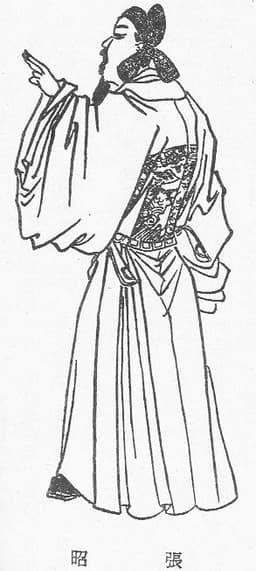
Zhang Zhao
Politician · Ancient
54.5Total
Basic Information
Born
-257
156
Died
-193
236
Era
Ancient
Ancient
Nationality
China
China
Occupation
Politician
Politician
Civilization
Eastern
Eastern
Score Comparison
Military (10%)
33.7
39.9
Political (20%)
78.0
68.0
Influence (20%)
65.0
53.3
Legacy (20%)
75.0
46.7
Leadership (15%)
80.7
66.0
Strategy (15%)
60.0
54.3
TOTAL
68.2
54.5
Xiao He — Complete Timeline
206 BC
Appointment as Prime Minister of HanPolitical Action◆ Major
After Liu Bang established the Han dynasty, he appointed Xiao He as his prime minister. Xiao He was responsible for organizing the civil administration, collecting taxes, and supplying the army during the Chu-Han Contention.
Han DynastyPrime MinisterChu-Han Contention
Impact: nationalconstructive
Recommendation of Han XinPolitical Action◆ Major
Xiao He recognized the military talent of Han Xin and recommended him to Liu Bang, who appointed Han Xin as general. Han Xin's subsequent victories were crucial to Liu Bang's victory in the Chu-Han Contention.
Talent RecognitionHan XinChu-Han Contention
Impact: nationalconstructive
200 BC
Codification of Han LawsReform◆ Major
Xiao He compiled the Han legal code, known as the Nine Chapters on Law, based on the Qin code but with modifications to reduce harshness. This code provided the legal foundation for the Han dynasty and influenced later Chinese law.
Legal CodeHan DynastyLaw Reform
Impact: nationalconstructive
Construction of Weiyang PalaceCultural◆ Major
Xiao He oversaw the construction of the Weiyang Palace in Chang'an, the new Han capital. The palace became the political center of the Han empire and symbolized the dynasty's power and legitimacy.
ArchitectureChang'anHan Capital
Impact: nationalconstructive
Zhang Zhao — Complete Timeline
208 AD
Advised Against Battle of Red CliffsPolitical Action◆ Major
Zhang Zhao, as a senior Wu official, advised Sun Quan against forming an alliance with Liu Bei and attacking Cao Cao at Red Cliffs. He argued that surrender was more prudent given Cao Cao's overwhelming strength. Sun Quan rejected this advice, leading to the Wu-Shu victory at Red Cliffs.
Three KingdomsRed CliffsAdvice
Impact: regional
220 AD
Authored Memorials on GovernanceCultural
Zhang Zhao wrote several memorials to Sun Quan advocating for frugality, rule of law, and the importance of Confucian scholarship. These writings influenced Wu's early administrative policies and reflected his conservative, scholarly approach to governance.
WritingGovernanceConfucianism
Impact: nationalconstructive
222 AD
Served as Chief Minister of WuPolitical Action
Zhang Zhao was appointed Chief Minister (Chengxiang) of Eastern Wu after Sun Quan declared himself emperor. He held this position for several years, overseeing civil administration and advising on state policy, though his influence waned due to his earlier stance at Red Cliffs.
AppointmentWu DynastyGovernment
Impact: nationalconstructive
This comparison has not been analyzed yet.
One-time AI generation (~1 minute). Scores and timeline are already available below.
Rankings
🥇
Xiao HeLeader
Mil: 33.7Pol: 78.0Inf: 65.0
68.2
🥈
Zhang Zhao
Mil: 39.9Pol: 68.0Inf: 53.3
54.5
+13.7 behind
How This Comparison Works
Algorithm
Each figure is scored on 6 dimensions (0—100 scale) based on structured historical data: Military (10%), Political (20%), Influence (20%), Legacy (20%), Leadership (15%), Strategy (15%). The weighted total produces the final ranking.
Data Sources
Scores are computed from structured sub-indicators in the database. Scale factors adjust for era (Ancient ×0.85, Modern ×1.0) and civilization size (Eastern ×1.05, Other ×0.80) to account for differences in population and military scale.
Maximum 3 Figures
Comparisons are limited to 2—3 figures to ensure readability and statistical meaningfulness.
Error Margins
±5 points per dimension — Sub-scores are derived from historical records with inherent uncertainty. Two figures within 5 points on a dimension should be considered roughly equivalent in that area.
Total Score Accuracy
±3 points overall — The weighted combination of 6 dimensions produces a total score with approximately ±3 points of uncertainty. Differences of less than 3 points are not statistically significant— the figures are effectively tied.
Known Limitations
- Historical records are incomplete and uneven across civilizations
- Figures from oral-tradition societies may be underrepresented
- Occupation labels can misclassify multi-role figures
- Scores measure capability and impact, not moral character
- Quantitative scoring is a comparison tool, not absolute truth
Capability Radar
Military (10%) — Battles & Warfare
Battles
41
5
Win Rate
44
5
Expansion
48
5
Political (20%) — Governance & Reform
Reform
95
40
Diplomacy
80
55
Economy
90
50
Influence (20%) — Cultural & Global Reach
Cultural
70
30
Global
75
20
Legacy (20%) — Historical Impact
Historical
85
40
Longevity
90
30
Leadership (15%) — Power & Stability
Tenure
85
60
Stability
85
55
Strategy (15%) — Tactics & Innovation
Strategy
48
15
Tactics
51
10
Reform
57
5
Similar Comparisons
Comments & Discussion
No comments yet. Be the first to share your thoughts!