Loading...
Pelagius of Asturias vs Philip of Swabia
Pelagius of Asturias leads by 1.8 pts · 2 figures compared
…
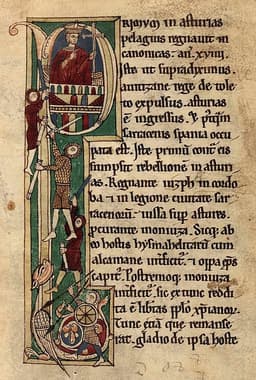
Pelagius of Asturias
Emperor · Medieval
46.0Total
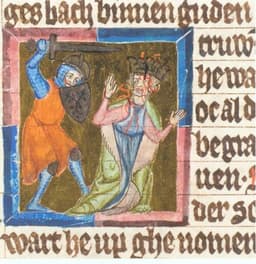
Philip of Swabia
Emperor · Medieval
44.2Total
Basic Information
Born
685
1177
Died
737
1208
Era
Medieval
Medieval
Nationality
Asturias
Holy Roman Empire
Occupation
Emperor
Emperor
Civilization
Western
Western
Score Comparison
Military (10%)
50.0
50.0
Political (20%)
26.4
36.5
Influence (20%)
55.7
50.2
Legacy (20%)
50.0
42.5
Leadership (15%)
41.5
41.5
Strategy (15%)
43.7
43.3
TOTAL
46.0
44.2
Pelagius of Asturias — Complete Timeline
718 AD
Elected first King of AsturiasPolitical Action◆ Major
Following the Umayyad conquest of the Visigothic Kingdom, Pelagius was elected as the first king of the Asturian kingdom by local nobles. This act formalized the Christian resistance and established a new political entity in northern Iberia.
KingshipAsturiasReconquista
Impact: regionalconstructive
722 AD
Battle of CovadongaWar
Pelagius led a small force of Asturian and Visigothic rebels against an Umayyad army at Covadonga. The Christian victory is traditionally considered the beginning of the Reconquista, establishing the Kingdom of Asturias as a center of resistance against Muslim rule in Iberia.
ReconquistaBattleAsturiasUmayyad
Impact: regionalconstructive
725 AD
Consolidated Asturian control over the Cantabrian regionWar
After Covadonga, Pelagius expanded and consolidated Asturian control over the Cantabrian mountains and adjacent territories. He established a defensive buffer zone against Umayyad raids, securing the survival of the nascent Christian kingdom.
Territorial ExpansionAsturiasReconquista
Impact: regionalconstructive
Philip of Swabia — Complete Timeline
1198 AD
Conflict with Otto IVWar◆ Major
Philip of Swabia fought a civil war against Otto IV from 1198 to 1208 for control of the German throne. Philip gained the upper hand by 1206, controlling most of Germany, but was assassinated before final victory.
Civil WarHohenstaufen-Welf Conflict
Impact: regionaldestructive
Election as King of GermanyPolitical Action◆ Major
Philip of Swabia was elected King of Germany in March 1198 by Hohenstaufen supporters, following the death of Henry VI. His election was contested by Otto IV, leading to a civil war.
SuccessionCivil War
Impact: regional
1208 AD
Assassination at BambergPolitical Action◆ Major
Philip of Swabia was assassinated on June 21, 1208, in Bamberg by Otto of Wittelsbach, a personal enemy. His death ended the Hohenstaufen claim to the throne and allowed Otto IV to become undisputed king.
AssassinationHohenstaufen
Impact: regionaltragic
Expert Analysis
Origins
Pelagius of Asturias, born around 685, was a Visigothic nobleman whose family likely held lands in the northwest of the Iberian Peninsula. His early life was shaped by the rapid Umayyad conquest of the Visigothic Kingdom after 711. He fled to the Cantabrian mountains, where he gathered followers among local Asturians and displaced Visigoths. Philip of Swabia, born in 1177, was the youngest son of Emperor Frederick Barbarossa and a member of the Hohenstaufen dynasty. He was raised in the imperial court, educated in governance and chivalry, and initially destined for a clerical career, becoming bishop of Würzburg in 1190 before resigning to pursue secular power.
Rise to Power
Pelagius's rise began in 718 when he was elected king by local nobles in the Cantabrian region, defying Umayyad authority. His pivotal moment came at the Battle of Covadonga (c. 722), where his small force of about 300 men ambushed a larger Umayyad army in a narrow valley. This victory, though modest in scale, became the symbolic start of the Reconquista and solidified his kingship. Philip's ascent was more contested: after the death of his brother Henry VI in 1197, he was elected King of Germany in March 1198 by Hohenstaufen supporters, but rival candidate Otto IV was elected by the Welf faction. The ensuing civil war (1198–1208) saw Philip gain control of most of Germany by 1206, with key victories at Mühlhausen and elsewhere.
Leadership & Governance
Pelagius ruled a small, mountainous kingdom with a focus on survival and consolidation. He established a defensive buffer zone, organized raids into Umayyad territory, and maintained the support of local chieftains through personal authority and shared religious identity. His governance was rudimentary, relying on tribal loyalty and the Church. Philip, by contrast, governed as a medieval monarch with a sophisticated administration inherited from the Hohenstaufens. He issued charters, patronized monasteries, and sought to centralize royal power. However, his constant military campaigns drained resources, and his assassination prevented any long-term reforms. Pelagius scored 41.5 in leadership, while Philip scored 41.5 as well, reflecting similar effectiveness in their respective contexts.
Triumph & Tragedy
Pelagius's greatest triumph was Covadonga, which secured Asturian independence and inspired later Christian resistance. His tragedy was the limited scope of his conquests; he never expanded significantly beyond the Cantabrian mountains, and his kingdom remained a small enclave. Philip's triumph was nearly winning the German throne; by 1206, he controlled the empire and was recognized by the pope. His tragedy was his assassination in 1208 by Otto of Wittelsbach, a personal enemy, just before a planned imperial coronation. This ended Hohenstaufen hopes and allowed Otto IV to seize power. Pelagius's military score of 50.0 matches Philip's 50.0, but Philip's political score of 36.5 exceeds Pelagius's 26.4, reflecting his broader but more fragile political maneuvering.
Character & Destiny
Pelagius was a resilient and determined leader, whose strategic use of terrain and religious symbolism compensated for numerical inferiority. His character—pious, stubborn, and cautious—enabled him to build a durable kingdom. Philip was ambitious and capable, but his reliance on noble alliances and his willingness to compromise made him vulnerable. His assassination stemmed from a personal vendetta, highlighting the volatile politics of the German nobility. Historians note that Pelagius's character suited the guerrilla warfare of the Reconquista, while Philip's fate was sealed by the entrenched factionalism of the Holy Roman Empire.
Legacy
Pelagius's legacy is immense: he is revered as the first king of Asturias and the founder of the Reconquista, a process that shaped Iberian history for centuries. His kingdom evolved into León, Castile, and eventually Spain. His influence score of 55.7 reflects this foundational role. Philip's legacy is more ambiguous: he is remembered as a capable but unlucky king whose death prevented the Hohenstaufen consolidation of power. His influence score of 50.2 is slightly lower, as his reign was cut short and his achievements were overshadowed by the eventual rise of the Habsburgs. Pelagius's legacy score of 50.0 exceeds Philip's 42.5, indicating a more enduring impact.
Conclusion
While Philip of Swabia demonstrated greater political acumen and nearly secured the German throne, his assassination rendered his efforts ephemeral. Pelagius, despite a lower total score of 46.0 compared to Philip's 44.2, had a more profound and lasting impact: he initiated the Reconquista, established a kingdom that would become a major European power, and is remembered as a national hero. His strategic victory at Covadonga, though small, changed the course of history. Therefore, Pelagius of Asturias had a greater impact, as his legacy directly influenced the formation of modern Spain, whereas Philip's death left his accomplishments incomplete.
Rankings
🥇
Pelagius of AsturiasLeader
Mil: 50.0Pol: 26.4Inf: 55.7
46.0
🥈
Philip of Swabia
Mil: 50.0Pol: 36.5Inf: 50.2
44.2
+1.8 behind
How This Comparison Works
Algorithm
Each figure is scored on 6 dimensions (0—100 scale) based on structured historical data: Military (10%), Political (20%), Influence (20%), Legacy (20%), Leadership (15%), Strategy (15%). The weighted total produces the final ranking.
Data Sources
Scores are computed from structured sub-indicators in the database. Scale factors adjust for era (Ancient ×0.85, Modern ×1.0) and civilization size (Eastern ×1.05, Other ×0.80) to account for differences in population and military scale.
Maximum 3 Figures
Comparisons are limited to 2—3 figures to ensure readability and statistical meaningfulness.
Error Margins
±5 points per dimension — Sub-scores are derived from historical records with inherent uncertainty. Two figures within 5 points on a dimension should be considered roughly equivalent in that area.
Total Score Accuracy
±3 points overall — The weighted combination of 6 dimensions produces a total score with approximately ±3 points of uncertainty. Differences of less than 3 points are not statistically significant— the figures are effectively tied.
Known Limitations
- Historical records are incomplete and uneven across civilizations
- Figures from oral-tradition societies may be underrepresented
- Occupation labels can misclassify multi-role figures
- Scores measure capability and impact, not moral character
- Quantitative scoring is a comparison tool, not absolute truth
Capability Radar
Military (10%) — Battles & Warfare
Battles
15
20
Win Rate
20
25
Expansion
15
20
Political (20%) — Governance & Reform
Reform
20
25
Diplomacy
25
40
Economy
15
30
Influence (20%) — Cultural & Global Reach
Cultural
40
25
Global
35
15
Legacy (20%) — Historical Impact
Historical
55
35
Longevity
50
20
Leadership (15%) — Power & Stability
Tenure
30
30
Stability
20
20
Strategy (15%) — Tactics & Innovation
Strategy
20
35
Tactics
25
30
Reform
10
15
Similar Comparisons
Comments & Discussion
No comments yet. Be the first to share your thoughts!