Loading...
Philip of Swabia vs Pulakeshin II
Pulakeshin II leads by 18.0 pts · 2 figures compared
…
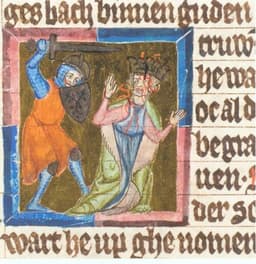
Philip of Swabia
Emperor · Medieval
44.2Total
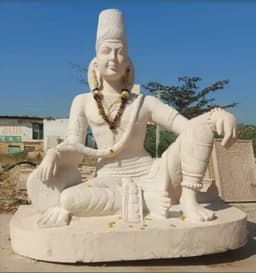
Pulakeshin II
Emperor · Medieval
62.2Total
Basic Information
Born
1177
610
Died
1208
642
Era
Medieval
Medieval
Nationality
Holy Roman Empire
India
Occupation
Emperor
Emperor
Civilization
Western
Indian
Score Comparison
Military (10%)
50.0
76.0
Political (20%)
36.5
60.0
Influence (20%)
50.2
62.0
Legacy (20%)
42.5
56.0
Leadership (15%)
41.5
62.4
Strategy (15%)
43.3
67.2
TOTAL
44.2
62.2
Philip of Swabia — Complete Timeline
1198 AD
Conflict with Otto IVWar◆ Major
Philip of Swabia fought a civil war against Otto IV from 1198 to 1208 for control of the German throne. Philip gained the upper hand by 1206, controlling most of Germany, but was assassinated before final victory.
Civil WarHohenstaufen-Welf Conflict
Impact: regionaldestructive
Election as King of GermanyPolitical Action◆ Major
Philip of Swabia was elected King of Germany in March 1198 by Hohenstaufen supporters, following the death of Henry VI. His election was contested by Otto IV, leading to a civil war.
SuccessionCivil War
Impact: regional
1208 AD
Assassination at BambergPolitical Action◆ Major
Philip of Swabia was assassinated on June 21, 1208, in Bamberg by Otto of Wittelsbach, a personal enemy. His death ended the Hohenstaufen claim to the throne and allowed Otto IV to become undisputed king.
AssassinationHohenstaufen
Impact: regionaltragic
Pulakeshin II — Complete Timeline
625 AD
Received an Embassy from the Sassanid Persian KingPolitical Action
Pulakeshin II received a diplomatic mission from the Sassanid Persian king Khosrow II, as recorded in the Aihole inscription. This embassy indicates the Chalukya kingdom's international prestige and trade connections with the Persian Gulf.
DiplomacyInternational Relations
Impact: regional
630 AD
Defeated Emperor Harsha at the Battle of NarmadaWar
Pulakeshin II repelled an invasion by the northern emperor Harsha of Kannauj on the banks of the Narmada River. This victory established the Chalukya kingdom as the dominant power in the Deccan and prevented Harsha from expanding southward.
BattleChalukya-Harsha War
Impact: regional
634 AD
Issued the Aihole InscriptionCultural
Pulakeshin II commissioned the Aihole inscription, composed by the poet Ravikirti. The inscription details his military campaigns, including the defeat of Harsha, and provides a key historical source for the Chalukya dynasty.
InscriptionPropaganda
Impact: regional
642 AD
Conquered the Pallava Capital KanchipuramWar◆ Major
Pulakeshin II captured the Pallava capital of Kanchipuram, defeating the Pallava king Mahendravarman I. This conquest extended Chalukya control into Tamil country and marked the height of his empire's territorial extent.
ConquestPallava War
Impact: regional
Killed in Battle by the PallavasWar◆ Major
Pulakeshin II was killed in battle against the Pallava king Narasimhavarman I, who avenged the earlier capture of Kanchipuram. The Pallavas sacked the Chalukya capital Vatapi, and Pulakeshin's death led to a temporary decline of the Chalukya empire.
BattleDeath
Impact: regionaltragic
Expert Analysis
Origins
Philip of Swabia was born in 1177, the third son of Holy Roman Emperor Frederick Barbarossa and Beatrice I, Countess of Burgundy. As a member of the Hohenstaufen dynasty, he was destined for high office. He received a broad education befitting a prince, including training in chivalry and administration. His early career included serving as provost of Aachen and later as Duke of Swabia. Philip's formative years were shaped by the imperial ambitions of his father and the complex politics of the Holy Roman Empire.
Pulakeshin II, born around 610 CE, was a prince of the Chalukya dynasty of Vatapi (modern Badami, Karnataka). His father was Kirttivarman I, and he succeeded his uncle Mangalesha after a period of civil war. The Chalukyas were a rising power in the Deccan, and Pulakeshin was trained in warfare and governance from a young age. His early life involved securing his throne and consolidating control over the Chalukya heartland.
Rise to Power
Philip of Swabia's rise was abrupt and contested. Following the death of his brother Emperor Henry VI in 1197, Philip was elected King of Germany in March 1198 by Hohenstaufen loyalists. However, a rival faction elected Otto IV from the Welf dynasty. This triggered a civil war that lasted a decade. Philip's position was initially weak, but he gained support from King Philip II of France and the Papacy. By 1206, he had the upper hand, controlling much of Germany and being recognized by Pope Innocent III. His assassination in 1208 by Otto of Wittelsbach, a personal enemy, cut short his consolidation of power.
Pulakeshin II rose to power after defeating his uncle Mangalesha in a civil war around 610 CE. He then embarked on a series of military campaigns to expand the Chalukya empire. His most significant achievement was repelling the invasion of Emperor Harsha of Kannauj at the Battle of Narmada around 618 CE. This victory established the Narmada River as the northern boundary of his empire and enhanced his reputation. He also conquered the Pallava capital Kanchipuram, defeating Mahendravarman I, and received an embassy from the Sassanid Persian king Khosrow II, as recorded in the Aihole inscription.
Leadership & Governance
Philip of Swabia's leadership style was typical of medieval German kings: he relied on feudal alliances, marriage ties, and military force. He was a capable administrator but his reign was dominated by the civil war. He attempted to strengthen royal authority but was constrained by the powerful princes of the Empire. His governance was reactive, focused on winning the war rather than long-term reforms. In contrast, Pulakeshin II was an aggressive expansionist and effective administrator. He divided his empire into provinces governed by loyal subordinates, maintained a strong military, and promoted trade and culture. The Aihole inscription details his patronage of the arts and his diplomatic outreach to Persia.
Triumph & Tragedy
Philip of Swabia's greatest success was his near-victory in the civil war against Otto IV. By 1206, he controlled most of Germany and had papal recognition. His tragedy was his assassination in 1208, which ended the Hohenstaufen resurgence and led to Otto IV's unchallenged rule. His death also sparked further instability in the Empire. Pulakeshin II's triumphs include defeating Harsha, capturing Kanchipuram, and expanding the Chalukya empire to its greatest extent. His tragedy came in 642 CE when he was killed in battle against the Pallava king Narasimhavarman I, who sacked Vatapi. This defeat reversed some of his gains but his empire survived under his successors.
Character & Destiny
Philip of Swabia was described as energetic and capable, but his destiny was cut short by personal enmity. His assassination was a result of a private feud with Otto of Wittelsbach, not a political conspiracy. His character—ambitious but perhaps too trusting—led to his downfall. Pulakeshin II was a bold and strategic ruler, as shown by his military campaigns. His death in battle reflects his willingness to lead from the front. Historians praise his leadership, with military scores of 76.0 compared to Philip's 50.0. Political scores also favor Pulakeshin II (60.0 to 36.5).
Legacy
Philip of Swabia's legacy is limited. His reign was too short to leave a lasting impact, and his death allowed the Welf dynasty to dominate temporarily. The Hohenstaufen dynasty eventually fell with the execution of his nephew Conradin in 1268. His influence score of 50.2 is modest. Pulakeshin II's legacy is far greater. He is remembered as one of the greatest Chalukya kings, who expanded the empire and established diplomatic ties with Persia. The Aihole inscription is a key historical source. His influence score of 62.0 and legacy score of 56.0 reflect his enduring importance in Indian history.
Conclusion
Pulakeshin II had a significantly greater impact than Philip of Swabia. His total score of 62.2 dwarfs Philip's 44.2, a gap of 18.0 points. Pulakeshin's military victories, administrative reforms, and diplomatic achievements shaped the Deccan for centuries. Philip, while a competent ruler, was unable to secure his throne or dynasty due to his early death. The historical record clearly favors the Chalukya emperor, who left a tangible legacy through inscriptions and empire-building. Thus, Pulakeshin II stands as the more consequential figure.
Rankings
🥇
Pulakeshin IILeader
Mil: 76.0Pol: 60.0Inf: 62.0
62.2
🥈
Philip of Swabia
Mil: 50.0Pol: 36.5Inf: 50.2
44.2
+18.0 behind
How This Comparison Works
Algorithm
Each figure is scored on 6 dimensions (0—100 scale) based on structured historical data: Military (10%), Political (20%), Influence (20%), Legacy (20%), Leadership (15%), Strategy (15%). The weighted total produces the final ranking.
Data Sources
Scores are computed from structured sub-indicators in the database. Scale factors adjust for era (Ancient ×0.85, Modern ×1.0) and civilization size (Eastern ×1.05, Other ×0.80) to account for differences in population and military scale.
Maximum 3 Figures
Comparisons are limited to 2—3 figures to ensure readability and statistical meaningfulness.
Error Margins
±5 points per dimension — Sub-scores are derived from historical records with inherent uncertainty. Two figures within 5 points on a dimension should be considered roughly equivalent in that area.
Total Score Accuracy
±3 points overall — The weighted combination of 6 dimensions produces a total score with approximately ±3 points of uncertainty. Differences of less than 3 points are not statistically significant— the figures are effectively tied.
Known Limitations
- Historical records are incomplete and uneven across civilizations
- Figures from oral-tradition societies may be underrepresented
- Occupation labels can misclassify multi-role figures
- Scores measure capability and impact, not moral character
- Quantitative scoring is a comparison tool, not absolute truth
Capability Radar
Military (10%) — Battles & Warfare
Battles
20
75
Win Rate
25
80
Expansion
20
85
Political (20%) — Governance & Reform
Reform
25
65
Diplomacy
40
75
Economy
30
70
Influence (20%) — Cultural & Global Reach
Cultural
25
60
Global
15
50
Legacy (20%) — Historical Impact
Historical
35
65
Longevity
20
55
Leadership (15%) — Power & Stability
Tenure
30
70
Stability
20
68
Strategy (15%) — Tactics & Innovation
Strategy
35
82
Tactics
30
78
Reform
15
60
Similar Comparisons
Comments & Discussion
No comments yet. Be the first to share your thoughts!