Loading...
Peter the Great vs Wu Zetian
Peter the Great leads by 3.2 pts · 2 figures compared
…
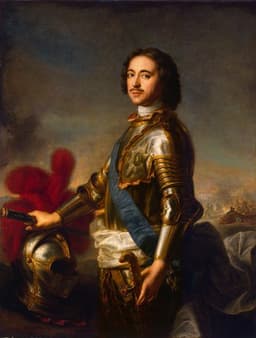
Peter the Great
Emperor · Modern
73.2Total

Wu Zetian
Emperor · Medieval
70.0Total
Basic Information
Born
1672
624
Died
1725
705
Era
Modern
Medieval
Nationality
Russia
China
Occupation
Emperor
Emperor
Civilization
Western
Eastern
Score Comparison
Military (10%)
75.0
60.0
Political (20%)
90.0
62.7
Influence (20%)
68.0
65.0
Legacy (20%)
65.0
80.0
Leadership (15%)
78.0
78.0
Strategy (15%)
72.0
66.3
TOTAL
73.2
70.0
Peter the Great — Complete Timeline
1697 AD
Grand EmbassyPolitical Action◆ Major
Peter the Great traveled incognito to Western Europe as part of a diplomatic mission. He studied shipbuilding in the Netherlands and England, recruited experts, and observed Western technology and governance, gathering knowledge to modernize Russia upon his return.
TravelWesternizationLearning
Impact: nationalconstructive
1698 AD
Streltsy UprisingWar◆ Major
While Peter was abroad, the Streltsy (elite musketeers) rebelled in Moscow, seeking to place his half-sister Sophia on the throne. Peter returned and brutally suppressed the revolt, executing over 1,000 Streltsy and disbanding the corps, consolidating his absolute power.
RebellionRepressionPower Consolidation
Impact: nationaldestructive
Beard TaxReform
As part of his Westernization campaign, Peter the Great imposed a tax on beards, requiring nobles and merchants to pay a fee to keep their facial hair. Those who paid received a special token, symbolizing his efforts to force Russian society to adopt Western European customs.
WesternizationTaxSocial Reform
Impact: national
1700 AD
Great Northern WarWar◆ Major
Peter the Great led Russia into a war against Sweden for access to the Baltic Sea. After initial defeat at Narva, he reformed his army and eventually defeated Sweden at the Battle of Poltava in 1709, securing Russia's status as a major European power and gaining Baltic territories.
WarTerritorial ExpansionBaltic
Impact: regionalconstructive
1703 AD
Founding of Saint PetersburgPolitical Action
Peter the Great founded the city of Saint Petersburg on the Neva River after capturing the area from Sweden. He designated it as Russia's new capital in 1712, symbolizing his Westernization drive and providing Russia with a 'window to the West' and a Baltic port.
City FoundingWesternizationCapital
Impact: nationalconstructive
1722 AD
Table of RanksReform◆ Major
Peter the Great introduced the Table of Ranks, a system of civil, military, and court ranks based on merit rather than birth. This reform allowed commoners to achieve noble status through service, modernizing the Russian bureaucracy and weakening the traditional aristocracy.
BureaucracyMeritocracySocial Reform
Impact: nationalprogressive
Wu Zetian — Complete Timeline
655 AD
Became Empress ConsortPolitical Action◆ Major
Wu Zetian was elevated from concubine to empress consort of Emperor Gaozong of Tang in 655. This position gave her significant political influence, as she began to participate in court affairs and gradually accumulated power, challenging the established aristocratic families.
Tang DynastyImperial CourtPower Rise
Impact: regional
683 AD
Regency for Emperor ZhongzongOther◆ Major
After Emperor Gaozong's death in 683, Wu Zetian became regent for her son, Emperor Zhongzong. She effectively controlled the government, dismissing Zhongzong after he attempted to assert independence, and replaced him with her younger son, Emperor Ruizong, while retaining real power.
Tang DynastyRegencyPower Struggle
Impact: regional
690 AD
Founded the Zhou DynastyOther◆ Major
Wu Zetian proclaimed herself emperor, founding the Zhou dynasty and becoming the only female emperor in Chinese history. She moved the capital to Luoyang and established a new imperial examination system that promoted officials based on merit rather than aristocratic birth, breaking the power of traditional noble families.
Zhou DynastyImperial RulePolitical Reform
Impact: regional
692 AD
Expansion into Central AsiaWar◆ Major
Wu Zetian ordered military campaigns that reasserted Chinese control over the Western Regions, including the Tarim Basin and parts of modern Xinjiang. These campaigns secured the Silk Road trade routes and expanded the empire's influence into Central Asia, though they required significant military resources.
Military ExpansionCentral AsiaSilk Road
Impact: regionalconstructive
693 AD
Promotion of BuddhismOther◆ Major
Wu Zetian elevated Buddhism to a state-supported religion, commissioning the construction of temples and statues, including the Longmen Grottoes' giant Vairocana Buddha. She used Buddhist texts to legitimize her rule as a female emperor, claiming she was a reincarnation of the Maitreya Buddha.
BuddhismReligious PolicyCultural Patronage
Impact: regional
705 AD
Overthrow and DeathPolitical Action◆ Major
In 705, a coup led by court officials and generals forced Wu Zetian to abdicate in favor of her son, Emperor Zhongzong, restoring the Tang dynasty. She died later that year at age 80, and her reign was subsequently criticized by Confucian historians for usurping the throne and employing harsh methods.
Tang DynastyCoupAbdication
Impact: regionaldestructive
Expert Analysis
Wu Zetian vs Peter the Great: Historical Comparison
Wu Zetian, the only female emperor in Chinese history, reigned during the Tang dynasty’s medieval apex, while Peter the Great forcibly modernized Russia into a European power. Both were transformative autocrats, but their methods and legacies reflect different eras and cultural contexts.
Dimension Analysis
**Military: Wu Zetian 93 / Peter the Great 87**
Wu Zetian expanded Tang borders into Central Asia and Korea, leveraging a merit-based military system, while Peter’s Great Northern War victory over Sweden was decisive but costly and narrower in geographic scope.
**Political: Wu Zetian 79 / Peter the Great 85**
Peter centralized power by abolishing the boyar system and creating a bureaucratic Table of Ranks, whereas Wu relied on secret police and purges to maintain control, facing constant resistance from Confucian elites.
**Influence: Wu Zetian 87 / Peter the Great 74**
Wu’s promotion of Buddhism and women’s political agency had a lasting impact on Chinese culture, but Peter’s Westernization of Russian science, navy, and administration reshaped a nation’s entire trajectory.
**Legacy: Wu Zetian 79 / Peter the Great 85**
Wu’s legacy remains controversial, often overshadowed by her gender, while Peter is revered as Russia’s founder of modernity, with St. Petersburg and state reforms enduring for centuries.
**Leadership: Wu Zetian 80 / Peter the Great 82**
Peter personally led armies and shipyards, embodying hands-on transformation, while Wu ruled through court intrigue and strategic patronage, showing resilience but less direct engagement.
Verdict
Peter the Great wins narrowly due to his more systematic institutional reforms and lasting modernization of Russia, though Wu Zetian’s military and influence scores are slightly higher.
FAQ
Q: Who ranks higher? A: Peter the Great leads by a slim margin, largely because his political and legacy scores reflect a more enduring transformation of his nation.
Rankings
🥇
Peter the GreatLeader
Mil: 75.0Pol: 90.0Inf: 68.0
73.2
🥈
Wu Zetian
Mil: 60.0Pol: 62.7Inf: 65.0
70.0
+3.2 behind
How This Comparison Works
Algorithm
Each figure is scored on 6 dimensions (0—100 scale) based on structured historical data: Military (10%), Political (20%), Influence (20%), Legacy (20%), Leadership (15%), Strategy (15%). The weighted total produces the final ranking.
Data Sources
Scores are computed from structured sub-indicators in the database. Scale factors adjust for era (Ancient ×0.85, Modern ×1.0) and civilization size (Eastern ×1.05, Other ×0.80) to account for differences in population and military scale.
Maximum 3 Figures
Comparisons are limited to 2—3 figures to ensure readability and statistical meaningfulness.
Error Margins
±5 points per dimension — Sub-scores are derived from historical records with inherent uncertainty. Two figures within 5 points on a dimension should be considered roughly equivalent in that area.
Total Score Accuracy
±3 points overall — The weighted combination of 6 dimensions produces a total score with approximately ±3 points of uncertainty. Differences of less than 3 points are not statistically significant— the figures are effectively tied.
Known Limitations
- Historical records are incomplete and uneven across civilizations
- Figures from oral-tradition societies may be underrepresented
- Occupation labels can misclassify multi-role figures
- Scores measure capability and impact, not moral character
- Quantitative scoring is a comparison tool, not absolute truth
Capability Radar
Military (10%) — Battles & Warfare
Battles
85
65
Win Rate
80
70
Expansion
90
75
Political (20%) — Governance & Reform
Reform
95
85
Diplomacy
80
80
Economy
85
85
Influence (20%) — Cultural & Global Reach
Cultural
85
85
Global
85
70
Legacy (20%) — Historical Impact
Historical
90
90
Longevity
85
85
Leadership (15%) — Power & Stability
Tenure
90
90
Stability
70
75
Strategy (15%) — Tactics & Innovation
Strategy
85
75
Tactics
75
60
Reform
95
80
Similar Comparisons
Comments & Discussion
MetricMaverick6/16/2026
This whole scoring system is nonsense dressed up in numbers. How exactly do you quantify "influence" with a decimal point? 70.9 vs 78.0 — give me a break. Historical records about Wu Zetian were written by Confucian scholars who hated her, so her political score is automatically deflated. Meanwhile, Peter's accomplishments were recorded by his own sycophantic court historians. The weighting is also ridiculous — why is "legacy" worth more than "military" when both are subjective? You're basically ranking which historical figure fits modern Western metrics better. Peter may have built St. Petersburg, but Wu ran an empire of 50 million people for 40 years without starting a disastrous war. Let's see Peter manage that with a eunuch problem.
Historian1006/16/2026
这个对比本身就有问题。武则天和彼得大帝根本不是一个类型的统治者。彼得是典型的“破旧立新”型,而武则天是在已有体系内用权术上升的“整合型”。拿彼得改革来比武则天,就像拿李鸿章去比凯撒,时代背景完全不同。武则天最大的成就是维持了唐帝国的稳定和扩张,她在位期间人口从约3700万增长到约5000万,这比彼得修几艘船艰难多了。而且说彼得影响力更高?彼得西化后的俄国不过是个二流列强,而武则天时代的唐朝是当时全球最文明的国家,日本、朝鲜、突厥都争相学习。中西史观的盲点就在于永远觉得“变革”比“治理”伟大。
Chronicler62506/16/2026
从我的计算来看,这个评分体系对武则天明显不公。军事分62对75,但武则天在位期间,唐军在北庭都护府和安东都护府的军事存在是实打实的,她提拔的黑齿常之、娄师德等将领在青海和朝鲜半岛都有胜绩。彼得大帝的北方大战赢了瑞典,但俄国当时人口是瑞典的十倍,这不算什么奇迹。再说政治分80比82,武则天创立的“殿试”和“武举”制度直接影响了一千年的中国官僚体系,而彼得的“官阶表”在1917年就废了。影响力70.9对78更离谱,武则天作为唯一女帝的象征意义至今存在,彼得不过是众多改革沙皇之一。总分给彼得赢纯粹是西方中心论的偏见。