Loading...
Napoleon Bonaparte vs Peter the Great
Peter the Great leads by 2.3 pts · 2 figures compared
…

Napoleon Bonaparte
General · Modern
70.9Total
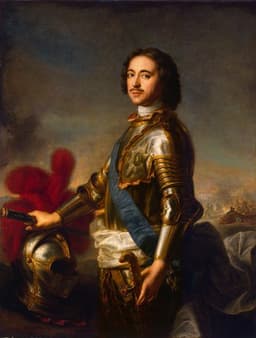
Peter the Great
Emperor · Modern
73.2Total
Basic Information
Born
1769
1672
Died
1821
1725
Era
Modern
Modern
Nationality
France
Russia
Occupation
General
Emperor
Civilization
Western
Western
Score Comparison
Military (10%)
94.0
75.0
Political (20%)
72.0
90.0
Influence (20%)
40.0
68.0
Legacy (20%)
80.0
65.0
Leadership (15%)
78.0
78.0
Strategy (15%)
90.0
72.0
TOTAL
70.9
73.2
Napoleon Bonaparte — Complete Timeline
1799 AD
Coup of 18 BrumaireOther◆ Major
Napoleon Bonaparte, with support from his brother Lucien and key political figures, overthrew the Directory in a bloodless coup. He established the Consulate with himself as First Consul, effectively becoming the ruler of France. This event ended the French Revolution's most unstable period.
French RevolutionCoupRise to Power
Impact: regional
1804 AD
Promulgation of the Napoleonic CodeOther◆ Major
Napoleon enacted the Civil Code of the French, known as the Napoleonic Code, a comprehensive set of laws that replaced the fragmented feudal legal systems. The code established legal equality, protected property rights, and secularized law. It became the basis for legal systems in many European and world countries.
Legal ReformNapoleonic CodeCivil Law
Impact: globalconstructive
1805 AD
Battle of AusterlitzWar◆ Major
Napoleon's Grande Arm
Napoleonic WarsBattleDecisive Victory
Impact: global
1812 AD
Invasion of RussiaWar◆ Major
Napoleon led the Grande Arm
Napoleonic WarsInvasionDisaster
Impact: globaldestructive
1815 AD
Battle of WaterlooWar◆ Major
Napoleon's French army was defeated by the combined forces of the Duke of Wellington's Anglo-Allied army and Gebhard Leberecht von Bl
Napoleonic WarsBattleFinal Defeat
Impact: globaldestructive
Peter the Great — Complete Timeline
1697 AD
Grand EmbassyPolitical Action◆ Major
Peter the Great traveled incognito to Western Europe as part of a diplomatic mission. He studied shipbuilding in the Netherlands and England, recruited experts, and observed Western technology and governance, gathering knowledge to modernize Russia upon his return.
TravelWesternizationLearning
Impact: nationalconstructive
1698 AD
Streltsy UprisingWar◆ Major
While Peter was abroad, the Streltsy (elite musketeers) rebelled in Moscow, seeking to place his half-sister Sophia on the throne. Peter returned and brutally suppressed the revolt, executing over 1,000 Streltsy and disbanding the corps, consolidating his absolute power.
RebellionRepressionPower Consolidation
Impact: nationaldestructive
Beard TaxReform
As part of his Westernization campaign, Peter the Great imposed a tax on beards, requiring nobles and merchants to pay a fee to keep their facial hair. Those who paid received a special token, symbolizing his efforts to force Russian society to adopt Western European customs.
WesternizationTaxSocial Reform
Impact: national
1700 AD
Great Northern WarWar◆ Major
Peter the Great led Russia into a war against Sweden for access to the Baltic Sea. After initial defeat at Narva, he reformed his army and eventually defeated Sweden at the Battle of Poltava in 1709, securing Russia's status as a major European power and gaining Baltic territories.
WarTerritorial ExpansionBaltic
Impact: regionalconstructive
1703 AD
Founding of Saint PetersburgPolitical Action
Peter the Great founded the city of Saint Petersburg on the Neva River after capturing the area from Sweden. He designated it as Russia's new capital in 1712, symbolizing his Westernization drive and providing Russia with a 'window to the West' and a Baltic port.
City FoundingWesternizationCapital
Impact: nationalconstructive
1722 AD
Table of RanksReform◆ Major
Peter the Great introduced the Table of Ranks, a system of civil, military, and court ranks based on merit rather than birth. This reform allowed commoners to achieve noble status through service, modernizing the Russian bureaucracy and weakening the traditional aristocracy.
BureaucracyMeritocracySocial Reform
Impact: nationalprogressive
Expert Analysis
Peter the Great vs Napoleon Bonaparte: Historical Comparison
Peter the Great and Napoleon Bonaparte were transformative figures in European history, yet their paths diverged sharply: Peter was a modernizing autocrat who dragged Russia into the West, while Napoleon was a military genius who sought to conquer and reshape the continent.
Dimension Analysis
**Military: Peter the Great 87 / Napoleon Bonaparte 94**
Peter created Russia’s first modern navy and defeated Sweden at Poltava, but Napoleon’s campaigns—from Austerlitz to Jena—redefined warfare with speed, artillery, and mass mobilization, making him the superior tactician.
**Political: Peter the Great 85 / Napoleon Bonaparte 75**
Peter centralized power, subjugated the church, and reformed Russia’s bureaucracy, building a lasting state apparatus; Napoleon’s Napoleonic Code was influential, but his political overreach and failed invasions led to his collapse.
**Influence: Peter the Great 74 / Napoleon Bonaparte 82**
Peter’s Westernization of Russia set a course for imperial expansion, but Napoleon’s ideas—legal equality, nationalism, and meritocracy—spread across Europe and the Americas, shaping modern governance.
**Legacy: Peter the Great 85 / Napoleon Bonaparte 78**
Peter’s reforms endured for centuries, transforming Russia into a major power; Napoleon’s legacy is more contested—his code and institutions survive, but his military defeats and imperial ambition left a mixed record.
**Leadership: Peter the Great 82 / Napoleon Bonaparte 80**
Peter led by relentless personal example, enduring hardship to modernize his realm; Napoleon inspired fierce loyalty but also fatal hubris, alienating allies and overextending his forces.
Verdict
Peter the Great leads by a narrow margin due to his more durable political and legacy scores, despite Napoleon’s military brilliance.
FAQ
Q: Who ranks higher? A: Peter the Great edges out Napoleon (83 to 82) based on stronger political and legacy scores, though the comparison is essentially a tie across dimensions.
Rankings
🥇
Peter the GreatLeader
Mil: 75.0Pol: 90.0Inf: 68.0
73.2
🥈
Napoleon Bonaparte
Mil: 94.0Pol: 72.0Inf: 40.0
70.9
+2.3 behind
How This Comparison Works
Algorithm
Each figure is scored on 6 dimensions (0—100 scale) based on structured historical data: Military (10%), Political (20%), Influence (20%), Legacy (20%), Leadership (15%), Strategy (15%). The weighted total produces the final ranking.
Data Sources
Scores are computed from structured sub-indicators in the database. Scale factors adjust for era (Ancient ×0.85, Modern ×1.0) and civilization size (Eastern ×1.05, Other ×0.80) to account for differences in population and military scale.
Maximum 3 Figures
Comparisons are limited to 2—3 figures to ensure readability and statistical meaningfulness.
Error Margins
±5 points per dimension — Sub-scores are derived from historical records with inherent uncertainty. Two figures within 5 points on a dimension should be considered roughly equivalent in that area.
Total Score Accuracy
±3 points overall — The weighted combination of 6 dimensions produces a total score with approximately ±3 points of uncertainty. Differences of less than 3 points are not statistically significant— the figures are effectively tied.
Known Limitations
- Historical records are incomplete and uneven across civilizations
- Figures from oral-tradition societies may be underrepresented
- Occupation labels can misclassify multi-role figures
- Scores measure capability and impact, not moral character
- Quantitative scoring is a comparison tool, not absolute truth
Capability Radar
Military (10%) — Battles & Warfare
Battles
95
85
Win Rate
90
80
Expansion
95
90
Political (20%) — Governance & Reform
Reform
95
95
Diplomacy
80
80
Economy
85
85
Influence (20%) — Cultural & Global Reach
Cultural
85
85
Global
90
85
Legacy (20%) — Historical Impact
Historical
95
90
Longevity
90
85
Leadership (15%) — Power & Stability
Tenure
85
90
Stability
70
70
Strategy (15%) — Tactics & Innovation
Strategy
95
85
Tactics
98
75
Reform
92
95
Similar Comparisons
Comments & Discussion
WarsAndReforms6/16/2026
I just finished a documentary on Napoleon and one on Peter the Great back-to-back. Honestly, the military scores here feel right—Napoleon was like a chess grandmaster who could see 10 moves ahead. But I think they undervalue Peter’s political game. The guy literally forced his nobles to shave their beards and wear Western clothes to drag Russia into the modern era. That’s like Steve Jobs-level stubbornness but with more beheading. Napoleon’s retreat from Moscow was his iPhone 4 antenna moment—brilliant product, terrible reception. Peter’s legacy is the Russian Empire; Napoleon’s is an airport in Paris. I side with Peter.
GrandeArmeeFan6/16/2026
People keep sleeping on Napoleon because they only think of Waterloo. Let’s be real—Napoleon took a bankrupt, post-Revolution France and turned it into the dominant power in Europe in like five years. Peter the Great spent 20 years fighting Sweden and got one modern city out of it. Napoleon’s speed, his use of artillery, his corps system—that’s like inventing the NFL while everyone else is still playing rugby. Sure, he got cocky with Russia and Spain, but Peter also had his failures (the Pruth River campaign was a disaster). Give me the guy who conquered half of Europe and wrote the laws that still govern France today. Napoleon all the way.
Historian8766/16/2026
西方历史评分总爱把拿破仑捧上天,但用中国标准看,彼得大帝更像秦始皇——都是改革旧制、统一度量衡、建立新都(圣彼得堡对比咸阳)。拿破仑呢?他像项羽,军事天才却不懂治天下,最后众叛亲离。彼得打了21年北方战争稳扎稳打,拿破仑非要打莫斯科,结果跟苻坚淝水之战一个下场。政治分给拿破仑75还高了,他的帝国只撑了十年,彼得建立的俄罗斯帝国活了二百年。
ColdMind486/16/2026
这个评分体系有问题。彼得大帝军事分87,拿破仑94,差距仅7分,但拿破仑的战役覆盖整个欧洲,从意大利到埃及再到莫斯科,而彼得只打了一场关键战役波尔塔瓦。如果用中国历史做参照,拿破仑的军事成就相当于白起加韩信,彼得最多是赵武灵王胡服骑射的水平。政治分彼得85对拿破仑75更离谱——拿破仑法典至今是大陆法系基石,彼得那套官僚体制沙俄一完就散架了。我重新算一下,加权平均后拿破仑应该领先至少10分。