Loading...
This comparison has not been analyzed yet.
One-time AI generation (~1 minute). Scores and timeline are already available below.
Petru Rares vs Theodore I Laskaris
Theodore I Laskaris leads by 8.5 pts · 2 figures compared
…

Petru Rares
Emperor · Medieval
53.3Total
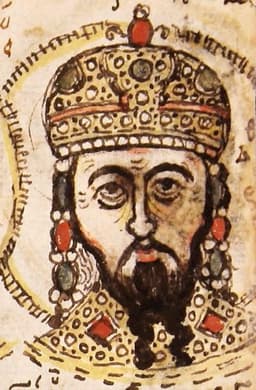
Theodore I Laskaris
Emperor · Medieval
61.8Total
Basic Information
Born
1483
1174
Died
1546
1222
Era
Medieval
Medieval
Nationality
Moldavia
Nicaean Empire
Occupation
Emperor
Emperor
Civilization
Western
Western
Score Comparison
Military (10%)
50.0
65.0
Political (20%)
68.0
60.0
Influence (20%)
52.5
61.0
Legacy (20%)
45.0
56.0
Leadership (15%)
53.2
77.2
Strategy (15%)
57.5
55.0
TOTAL
53.3
61.8
Petru Rares — Complete Timeline
1527 AD
Became Prince of MoldaviaPolitical Action◆ Major
Petru Rares ascended to the throne of Moldavia as the illegitimate son of Stephen the Great. His rule was initially recognized by the Ottoman Empire, but he later pursued an independent policy, leading to conflicts with both the Ottomans and Poland.
SuccessionPrinceMoldavia
Impact: regional
1530 AD
Patron of the Arts and Church BuildingCultural
Petru Rares was a notable patron of the arts, commissioning the construction and decoration of several churches and monasteries in Moldavia. He continued the tradition of his father, Stephen the Great, in supporting the Moldavian Orthodox Church and its architecture.
PatronageChurch BuildingOrthodox Church
Impact: regionalconstructive
1531 AD
Battle of ObertynWar◆ Major
Petru Rares defeated the Polish army at the Battle of Obertyn, securing control over the Pokuttya region. The victory was a major military success, but it did not lead to lasting territorial gains as Poland later regained the area.
BattlePoland-Moldavia WarMilitary Victory
Impact: regionalconstructive
1538 AD
Deposed by the Ottoman EmpirePolitical Action◆ Major
Petru Rares was deposed by the Ottoman Sultan Suleiman the Magnificent after refusing to comply with Ottoman demands. He fled to Transylvania, and the Ottomans installed a more loyal ruler,
DepositionOttoman InterventionExile
Impact: regionaldestructive
1541 AD
Regained the Throne of MoldaviaPolitical Action◆ Major
Petru Rares regained the Moldavian throne with the help of the Ottoman Empire, after pledging loyalty and increased tribute. He ruled for another five years, but his power was significantly reduced, and he remained an Ottoman vassal.
RestorationOttoman VassalComeback
Impact: regional
Theodore I Laskaris — Complete Timeline
1204 AD
Foundation of the Empire of NicaeaPolitical Action
After the Fourth Crusade captured Constantinople, Theodore I Laskaris fled to Nicaea in Asia Minor and established a Byzantine government-in-exile. He organized resistance against the Latin Empire and the Seljuk Turks, laying the foundation for the Nicaean Empire as the primary successor state of Byzantium.
Fourth CrusadeSuccessor StateExile Government
Impact: regionalconstructive
1208 AD
Coronation as emperor by the Patriarch of ConstantinoplePolitical Action◆ Major
Theodore I Laskaris was formally crowned as emperor by the newly elected Patriarch of Constantinople-in-exile, Michael IV Autoreianos. This coronation legitimized the Nicaean Empire as the rightful continuation of the Byzantine Empire, with full ecclesiastical authority.
CoronationLegitimacyPatriarchate
Impact: regionalconstructive
1211 AD
Battle of Antioch on the MeanderWar◆ Major
Theodore I Laskaris defeated the Seljuk Sultanate of Rum at the Battle of Antioch on the Meander. The victory secured Nicaean control over western Anatolia and prevented Seljuk expansion into Byzantine territories, establishing Theodore as a major regional power.
Byzantine-Seljuk WarsMilitary VictoryAnatolian Campaign
Impact: regional
Defeat of the Latin Empire at the Battle of RhyndacusWar
Theodore I Laskaris led Nicaean forces to a victory over the Latin Empire at the Battle of Rhyndacus. The battle halted Latin expansion into Asia Minor and secured Nicaean control over the region, strengthening the Byzantine resistance against the crusader states.
Latin EmpireMilitary VictoryAsia Minor
Impact: regional
This comparison has not been analyzed yet.
One-time AI generation (~1 minute). Scores and timeline are already available below.
Rankings
🥇
Theodore I LaskarisLeader
Mil: 65.0Pol: 60.0Inf: 61.0
61.8
🥈
Petru Rares
Mil: 50.0Pol: 68.0Inf: 52.5
53.3
+8.5 behind
How This Comparison Works
Algorithm
Each figure is scored on 6 dimensions (0—100 scale) based on structured historical data: Military (10%), Political (20%), Influence (20%), Legacy (20%), Leadership (15%), Strategy (15%). The weighted total produces the final ranking.
Data Sources
Scores are computed from structured sub-indicators in the database. Scale factors adjust for era (Ancient ×0.85, Modern ×1.0) and civilization size (Eastern ×1.05, Other ×0.80) to account for differences in population and military scale.
Maximum 3 Figures
Comparisons are limited to 2—3 figures to ensure readability and statistical meaningfulness.
Error Margins
±5 points per dimension — Sub-scores are derived from historical records with inherent uncertainty. Two figures within 5 points on a dimension should be considered roughly equivalent in that area.
Total Score Accuracy
±3 points overall — The weighted combination of 6 dimensions produces a total score with approximately ±3 points of uncertainty. Differences of less than 3 points are not statistically significant— the figures are effectively tied.
Known Limitations
- Historical records are incomplete and uneven across civilizations
- Figures from oral-tradition societies may be underrepresented
- Occupation labels can misclassify multi-role figures
- Scores measure capability and impact, not moral character
- Quantitative scoring is a comparison tool, not absolute truth
Capability Radar
Military (10%) — Battles & Warfare
Battles
55
65
Win Rate
60
70
Expansion
45
60
Political (20%) — Governance & Reform
Reform
45
65
Diplomacy
55
70
Economy
40
60
Influence (20%) — Cultural & Global Reach
Cultural
35
50
Global
20
45
Legacy (20%) — Historical Impact
Historical
40
65
Longevity
30
55
Leadership (15%) — Power & Stability
Tenure
60
70
Stability
40
65
Strategy (15%) — Tactics & Innovation
Strategy
50
75
Tactics
55
60
Reform
40
55
Similar Comparisons
Comments & Discussion
No comments yet. Be the first to share your thoughts!