Loading...
Alexander the Great vs Theodore I Laskaris
Alexander the Great leads by 23.4 pts · 2 figures compared
…
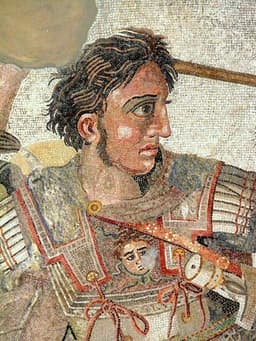
Alexander the Great
General · Ancient
85.2Total
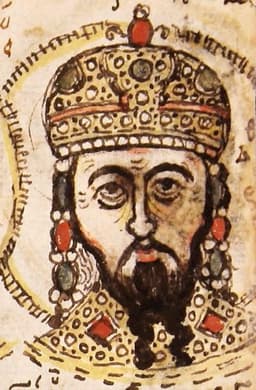
Theodore I Laskaris
Emperor · Medieval
61.8Total
Basic Information
Born
-356
1174
Died
-323
1222
Era
Ancient
Medieval
Nationality
Macedon
Nicaean Empire
Occupation
General
Emperor
Civilization
Western
Western
Score Comparison
Military (10%)
95.0
65.0
Political (20%)
60.0
60.0
Influence (20%)
92.0
61.0
Legacy (20%)
90.0
56.0
Leadership (15%)
80.0
77.2
Strategy (15%)
92.0
55.0
TOTAL
85.2
61.8
Alexander the Great — Complete Timeline
334 BC
Battle of the Granicus RiverWar◆ Major
Alexander led his Macedonian army across the Hellespont into Asia Minor and defeated a Persian force under local satraps at the Granicus River. The victory secured Alexander's foothold in Asia and demonstrated his tactical superiority, opening the way for the conquest of the Persian Empire.
Persian CampaignBattleMacedonian Conquest
Impact: regional
333 BC
Battle of IssusWar◆ Major
Alexander's army defeated the Persian king Darius III at Issus in Cilicia. Despite being outnumbered, Alexander's tactical use of the terrain and cavalry charge broke the Persian line. Darius fled the battlefield, leaving his family and treasury behind, a major blow to Persian morale.
Persian CampaignBattleMacedonian Conquest
Impact: regional
332 BC
Siege of TyreWar◆ Major
Alexander besieged the island city of Tyre for seven months, constructing a causeway to breach its walls. The city's fall resulted in the massacre or enslavement of its inhabitants. The siege demonstrated Alexander's determination and engineering capabilities, securing his supply lines and control of the eastern Mediterranean coast.
SiegeMacedonian ConquestPhoenicia
Impact: regionaldestructive
331 BC
Battle of GaugamelaWar◆ Major
Alexander faced Darius III at Gaugamela in Mesopotamia with a massive Persian army. Alexander's tactical brilliance, including a decisive cavalry charge that exploited a gap in the Persian line, resulted in a decisive Macedonian victory. Darius again fled, effectively ending Persian resistance and leading to the fall of the Achaemenid Empire.
Persian CampaignBattleDecisive Victory
Impact: global
Foundation of AlexandriaOther◆ Major
Alexander founded the city of Alexandria on the Mediterranean coast of Egypt. He personally selected the site and oversaw the initial planning. Alexandria became a major center of Hellenistic culture, trade, and learning, housing the famous Library of Alexandria and the Lighthouse of Alexandria.
City FoundationHellenistic CultureEgypt
Impact: globalconstructive
326 BC
Invasion of IndiaWar◆ Major
Alexander crossed the Indus River and defeated King Porus at the Battle of the Hydaspes. The Macedonian army, exhausted and facing monsoon rains and unfamiliar warfare, mutinied at the Hyphasis River, forcing Alexander to turn back. This campaign marked the easternmost extent of his conquests.
Indian CampaignBattleMutiny
Impact: regional
Theodore I Laskaris — Complete Timeline
1204 AD
Foundation of the Empire of NicaeaPolitical Action
After the Fourth Crusade captured Constantinople, Theodore I Laskaris fled to Nicaea in Asia Minor and established a Byzantine government-in-exile. He organized resistance against the Latin Empire and the Seljuk Turks, laying the foundation for the Nicaean Empire as the primary successor state of Byzantium.
Fourth CrusadeSuccessor StateExile Government
Impact: regionalconstructive
1208 AD
Coronation as emperor by the Patriarch of ConstantinoplePolitical Action◆ Major
Theodore I Laskaris was formally crowned as emperor by the newly elected Patriarch of Constantinople-in-exile, Michael IV Autoreianos. This coronation legitimized the Nicaean Empire as the rightful continuation of the Byzantine Empire, with full ecclesiastical authority.
CoronationLegitimacyPatriarchate
Impact: regionalconstructive
1211 AD
Battle of Antioch on the MeanderWar◆ Major
Theodore I Laskaris defeated the Seljuk Sultanate of Rum at the Battle of Antioch on the Meander. The victory secured Nicaean control over western Anatolia and prevented Seljuk expansion into Byzantine territories, establishing Theodore as a major regional power.
Byzantine-Seljuk WarsMilitary VictoryAnatolian Campaign
Impact: regional
Defeat of the Latin Empire at the Battle of RhyndacusWar
Theodore I Laskaris led Nicaean forces to a victory over the Latin Empire at the Battle of Rhyndacus. The battle halted Latin expansion into Asia Minor and secured Nicaean control over the region, strengthening the Byzantine resistance against the crusader states.
Latin EmpireMilitary VictoryAsia Minor
Impact: regional
Expert Analysis
Alexander the Great vs Theodore I Laskaris: Historical Comparison
Alexander the Great, the ancient Macedonian conqueror, and Theodore I Laskaris, the medieval Byzantine emperor who founded the Nicaean Empire, represent two vastly different eras of empire-building. While Alexander expanded an existing kingdom through unprecedented military conquest, Theodore rebuilt a shattered state from the ashes of the Fourth Crusade. This comparison evaluates their achievements across key dimensions.
Dimension Analysis
**Military: Alexander the Great 96 / Theodore I Laskaris 86**
Alexander’s undefeated record, innovative phalanx-cavalry tactics, and conquest of the Persian Empire from Egypt to India set a military benchmark. Theodore, though a capable commander, fought defensive wars to preserve the Nicaean state against Latins, Seljuks, and Bulgarians, never achieving Alexander’s scale of offensive victory.
**Political: Alexander the Great 65 / Theodore I Laskaris 67**
Alexander’s fusion of Macedonian and Persian elites was visionary but fragile, collapsing after his death. Theodore’s political acumen was superior in context: he legitimized a rump state, secured Church support, and established dynastic continuity (the Laskarid dynasty), all while navigating hostile neighbors and internal exile.
**Influence: Alexander the Great 90 / Theodore I Laskaris 76**
Alexander’s conquests spread Hellenistic culture across three continents, shaping trade, art, and governance for centuries. Theodore’s influence was more regional: he preserved Byzantine institutions, Orthodox Christianity, and Roman legal traditions, directly enabling the eventual reconquest of Constantinople in 1261.
**Legacy: Alexander the Great 90 / Theodore I Laskaris 85**
Alexander’s legacy is global—his name became synonymous with genius and ambition, inspiring later conquerors from Caesar to Napoleon. Theodore’s legacy is narrower but profound: he is revered as the “second founder” of Byzantium, a savior who kept the empire alive during its darkest hour.
**Leadership: Alexander the Great 82 / Theodore I Laskaris 84**
Alexander led from the front, inspiring personal loyalty but also alienating his generals through hubris. Theodore’s leadership was more resilient: he maintained unity among fractious Greek nobles, refugees, and clergy, balancing diplomacy and force to hold a fragile state together for two decades.
Verdict
Alexander the Great leads overall due to his unparalleled military genius and global influence, but Theodore I Laskaris’s political and leadership scores reflect his crucial role in preserving Byzantine civilization against overwhelming odds.
FAQ
Q: Who ranks higher? A: Alexander the Great ranks higher overall (85 vs. 80), driven by his superior military and influence scores, though Theodore closely matches him in political and leadership dimensions.
Rankings
🥇
Alexander the GreatLeader
Mil: 95.0Pol: 60.0Inf: 92.0
85.2
🥈
Theodore I Laskaris
Mil: 65.0Pol: 60.0Inf: 61.0
61.8
+23.4 behind
How This Comparison Works
Algorithm
Each figure is scored on 6 dimensions (0—100 scale) based on structured historical data: Military (10%), Political (20%), Influence (20%), Legacy (20%), Leadership (15%), Strategy (15%). The weighted total produces the final ranking.
Data Sources
Scores are computed from structured sub-indicators in the database. Scale factors adjust for era (Ancient ×0.85, Modern ×1.0) and civilization size (Eastern ×1.05, Other ×0.80) to account for differences in population and military scale.
Maximum 3 Figures
Comparisons are limited to 2—3 figures to ensure readability and statistical meaningfulness.
Error Margins
±5 points per dimension — Sub-scores are derived from historical records with inherent uncertainty. Two figures within 5 points on a dimension should be considered roughly equivalent in that area.
Total Score Accuracy
±3 points overall — The weighted combination of 6 dimensions produces a total score with approximately ±3 points of uncertainty. Differences of less than 3 points are not statistically significant— the figures are effectively tied.
Known Limitations
- Historical records are incomplete and uneven across civilizations
- Figures from oral-tradition societies may be underrepresented
- Occupation labels can misclassify multi-role figures
- Scores measure capability and impact, not moral character
- Quantitative scoring is a comparison tool, not absolute truth
Capability Radar
Military (10%) — Battles & Warfare
Battles
98
65
Win Rate
99
70
Expansion
99
60
Political (20%) — Governance & Reform
Reform
75
65
Diplomacy
80
70
Economy
70
60
Influence (20%) — Cultural & Global Reach
Cultural
95
50
Global
95
45
Legacy (20%) — Historical Impact
Historical
98
65
Longevity
95
55
Leadership (15%) — Power & Stability
Tenure
60
70
Stability
55
65
Strategy (15%) — Tactics & Innovation
Strategy
98
75
Tactics
99
60
Reform
85
55
Similar Comparisons
Comments & Discussion
ClassicistPhilo6/16/2026
We must be cautious in directly comparing these two figures, as their historical contexts are radically different. Alexander, as Arrian describes in the Anabasis, was driven by an almost Aristotelian desire to conquer the known world — his logistics and battlefield innovations, from the siege of Tyre to the hydaspes crossing, were truly revolutionary. But his political settlement was fragile; the Babylonian distribution of satrapies (Plutarch, Alex. 73) shows a reliance on personal charisma rather than institutional strength. Theodore I, by contrast, operated in the post-1204 Byzantine diaspora, a world of shattered norms. George Akropolites notes how Theodore rebuilt the Nicaean state through careful diplomacy with both the Patriarch and the Seljuk sultan — a more subtle, defensive genius. The scores here underestimate Theodore’s political resilience and overstate Alexander’s long-term influence, which was largely romanticized by later Roman and Hellenistic biographers. In short: apples and oranges, but the apple rotted faster.
Historian9536/16/2026
这个评分体系让我有点疑惑。亚历山大军事96分我能理解,但西奥多军事86分?他的战绩主要是防御战,而且面对的是四分五裂的拉丁帝国和塞尔柱人,跟亚历山大横扫波斯帝国的难度完全不是一个量级。按中国史的标准,西奥多顶多算“中兴之主”,类似刘秀复汉,但刘秀军事评分在西方体系里肯定到不了86这么高。另外政治分亚历山大有65?他死后帝国立刻分裂,继承者内战不断,这政治分应该更低,参考秦始皇统一后迅速崩溃,政治评分也不会给这么高。数据模型明显偏向西方历史叙事。
OldScroll906/16/2026
拿亚历山大跟西奥多比,就像拿汉武帝跟宋高宗比,时代背景和对手完全不同。亚历山大相当于西方版的“封狼居胥”,灭波斯、征印度,个人军事天赋确实举世无双。但西奥多更像后赵的石勒——在帝国崩溃后白手起家,稳住残局,为后代复兴奠定基础。这方面中国史里有很多类似人物,比如刘秀、郭威,但西方评分往往只看“征服面积”,忽略“在废墟上重建”的政治难度。西奥多政治分72,我认为偏低,他能在尼西亚四面受敌的情况下维持政权、获得教会认可,至少该给75以上。建议引入中国史学的“经营维度”来修正分数。