Loading...
Philip II of Spain vs Yeshwant Rao Holkar II
Philip II of Spain leads by 5.1 pts · 2 figures compared
…

Philip II of Spain
Emperor · Modern
59.4Total
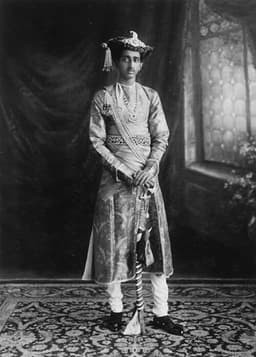
Yeshwant Rao Holkar II
Emperor · Modern
54.3Total
Basic Information
Born
1527
1908
Died
1598
1961
Era
Modern
Modern
Nationality
Spain
India
Occupation
Emperor
Emperor
Civilization
Western
Indian
Score Comparison
Military (10%)
60.0
40.5
Political (20%)
59.3
68.0
Influence (20%)
68.0
54.9
Legacy (20%)
40.0
41.7
Leadership (15%)
78.0
65.7
Strategy (15%)
58.0
60.0
TOTAL
59.4
54.3
Philip II of Spain — Complete Timeline
1563 AD
Escorial ConstructionCultural
Philip II commissioned the construction of El Escorial, a vast monastery-palace complex near Madrid. It served as a royal residence, monastery, and burial site for Spanish monarchs, symbolizing Philip's piety and centralized rule.
ArchitectureRoyal PalaceMonastery
Impact: nationalconstructive
1568 AD
Revolt of the NetherlandsWar◆ Major
Philip II's harsh policies, including the Inquisition and taxation, sparked the Dutch Revolt. The rebellion, led by William the Silent, resulted in the Eighty Years' War and the eventual independence of the Dutch Republic, draining Spanish resources.
Dutch RevoltEighty Years' WarRebellion
Impact: regionaldestructive
1571 AD
Battle of LepantoWar◆ Major
The Holy League, led by Philip II's half-brother Don John of Austria, defeated the Ottoman fleet at Lepanto. This naval victory halted Ottoman expansion in the Mediterranean and boosted Christian morale, though Philip's strategic focus remained on the Atlantic.
Naval BattleOttoman EmpireHoly League
Impact: regional
1580 AD
Annexation of PortugalPolitical Action◆ Major
Philip II claimed the Portuguese throne after the death of King Henry of Portugal, leading to the Iberian Union. He ruled Portugal and its overseas empire, including Brazil and Asian colonies, expanding Spanish global influence.
Iberian UnionTerritorial ExpansionPortugal
Impact: global
1588 AD
Spanish ArmadaWar
Philip II launched the Spanish Armada, a massive fleet of 130 ships, to invade England and overthrow Elizabeth I. The Armada was defeated by the English navy and storms, resulting in heavy losses and marking a decline in Spanish naval dominance.
Naval CampaignEnglandDefeat
Impact: globaldestructive
Yeshwant Rao Holkar II — Complete Timeline
1926 AD
Accession to Indore ThronePolitical Action
Yeshwant Rao Holkar II became Maharaja of Indore at age 18 after the death of his father, Shivaji Rao Holkar. He was known for his modernist outlook and patronage of art and architecture.
IndoreSuccession
1930 AD
Construction of Manik Bagh PalaceCultural◆ Major
Yeshwant Rao Holkar II commissioned the Manik Bagh Palace in Indore, designed by German architect Eckart Muthesius in the Art Deco style. The palace featured modernist furniture and became a landmark of 20th-century design.
IndoreArchitectureArt Deco
Impact: regionalconstructive
1935 AD
Patronage of Modern Art and CollectionCultural
Yeshwant Rao Holkar II amassed a significant collection of modern Western and Indian art, including works by artists like Brancusi and Magritte. His collection was displayed at Manik Bagh and later dispersed, influencing Indian art patronage.
Art CollectionModernism
Impact: nationalconstructive
1947 AD
Accession of Indore to IndiaPolitical Action
Yeshwant Rao Holkar II signed the Instrument of Accession, merging Indore into the Dominion of India after independence. He later served as a Rajpramukh of Madhya Bharat until the state's reorganization in 1956.
Indian IndependenceIntegration
Impact: national
Expert Analysis
Origins
Philip II of Spain was born in 1527 in Valladolid, son of Holy Roman Emperor Charles V and Isabella of Portugal. He received a rigorous education in statecraft, religion, and military affairs, steeped in the Habsburg tradition of Catholic orthodoxy and imperial expansion. His upbringing prepared him to rule a vast global empire.
Yeshwant Rao Holkar II was born in 1908 in Indore, the eldest son of Maharaja Shivaji Rao Holkar. He was educated at the Cheam School in England and later at Christ Church, Oxford, where he developed a keen interest in modern art, architecture, and progressive governance. He inherited a princely state with a tradition of enlightened rule.
Rise to Power
Philip II became king of Spain in 1556 upon his father's abdication, inheriting Spain, the Netherlands, the Duchy of Milan, the Kingdom of Naples, and the Spanish American colonies. His marriage to Mary I of England in 1554 briefly made him king consort of England. After Mary's death, he sought to influence English affairs, culminating in the Spanish Armada. His rise was marked by careful consolidation of power and a relentless defense of Catholicism.
Yeshwant Rao Holkar II ascended the throne of Indore in 1926 at age 18 after his father's death. He was one of the few Indian princes to embrace modernism, commissioning the Art Deco Manik Bagh Palace in 1930. He quickly established himself as a progressive ruler, introducing reforms in education, agriculture, and public health. His patronage of modern art and architecture set him apart from his contemporaries.
Leadership & Governance
Philip II governed with an iron hand, centralizing administration from his monastic palace at El Escorial. He enforced religious uniformity through the Inquisition, leading to the Revolt of the Netherlands (1568-1648). His military scored 60.0, but his political score of 59.3 reflects the strain of overextension. He annexed Portugal in 1580, creating the Iberian Union, but his heavy taxation and religious persecution fueled rebellion.
Yeshwant Rao Holkar II ruled Indore with a modernist vision, implementing land reforms and promoting industrial development. His political score of 68.0 reflects his diplomatic skill in navigating the transition to Indian independence. He signed the Instrument of Accession in 1947, merging Indore into India, and later served as Rajpramukh of Madhya Bharat. His leadership score of 65.7 shows his effectiveness as a constitutional monarch.
Triumph & Tragedy
Philip II's greatest triumph was the victory at Lepanto in 1571, where the Holy League smashed the Ottoman fleet, halting Muslim expansion in the Mediterranean. His greatest tragedy was the defeat of the Spanish Armada in 1588, a massive fleet of 130 ships sent to invade England. The Armada's failure marked the beginning of Spanish decline and allowed England to emerge as a naval power.
Yeshwant Rao Holkar II's triumph was his successful integration of Indore into independent India, preserving peace and his people's welfare. His patronage resulted in a remarkable art collection, including works by Brancusi and Magritte, now housed in the Manik Bagh Palace. His tragedy was the loss of his princely powers and the eventual dissipation of his collection after his death in 1961.
Character & Destiny
Philip II was meticulous, devout, and stubborn, believing himself God's instrument. His personality scored 78.0 in leadership but his strategic inflexibility (strategy score 58.0) led to costly wars. His character shaped his fate: he died in 1598, exhausted by the burdens of empire, having failed to crush the Dutch Revolt or conquer England.
Yeshwant Rao Holkar II was a visionary modernist, open to global influences. His character scored 65.7 in leadership and 60.0 in strategy. He adapted to changing times, choosing peaceful integration over futile resistance. His destiny was to be the last Maharaja of Indore, remembered more for his art collection than his political power.
Legacy
Philip II's legacy is mixed: he expanded the Spanish Empire to its zenith but also sowed the seeds of its decline. The Spanish Armada's failure is a historical turning point. His influence score of 68.0 reflects his impact on European politics, religion, and colonialism. The Escorial remains a symbol of his reign.
Yeshwant Rao Holkar II's legacy is primarily cultural: the Manik Bagh Palace is a masterpiece of Art Deco architecture, and his art collection is celebrated. His legacy score of 41.7 is lower because his political influence was limited to a short period and a small state. However, he is remembered as a progressive ruler who embraced modernity.
Conclusion
Philip II of Spain, with a total score of 59.4, had a far greater impact on world history than Yeshwant Rao Holkar II, who scored 54.3. Philip's decisions shaped the course of European and global events—the Armada, the Dutch Revolt, the Iberian Union—while Holkar's influence was confined to a small princely state and the art world. Despite Holkar's admirable modernism, Philip's legacy of empire and religious conflict resonates on a global scale. The clear verdict is that Philip II's historical weight surpasses that of the Maharaja of Indore.
Rankings
🥇
Philip II of SpainLeader
Mil: 60.0Pol: 59.3Inf: 68.0
59.4
🥈
Yeshwant Rao Holkar II
Mil: 40.5Pol: 68.0Inf: 54.9
54.3
+5.1 behind
How This Comparison Works
Algorithm
Each figure is scored on 6 dimensions (0—100 scale) based on structured historical data: Military (10%), Political (20%), Influence (20%), Legacy (20%), Leadership (15%), Strategy (15%). The weighted total produces the final ranking.
Data Sources
Scores are computed from structured sub-indicators in the database. Scale factors adjust for era (Ancient ×0.85, Modern ×1.0) and civilization size (Eastern ×1.05, Other ×0.80) to account for differences in population and military scale.
Maximum 3 Figures
Comparisons are limited to 2—3 figures to ensure readability and statistical meaningfulness.
Error Margins
±5 points per dimension — Sub-scores are derived from historical records with inherent uncertainty. Two figures within 5 points on a dimension should be considered roughly equivalent in that area.
Total Score Accuracy
±3 points overall — The weighted combination of 6 dimensions produces a total score with approximately ±3 points of uncertainty. Differences of less than 3 points are not statistically significant— the figures are effectively tied.
Known Limitations
- Historical records are incomplete and uneven across civilizations
- Figures from oral-tradition societies may be underrepresented
- Occupation labels can misclassify multi-role figures
- Scores measure capability and impact, not moral character
- Quantitative scoring is a comparison tool, not absolute truth
Capability Radar
Military (10%) — Battles & Warfare
Battles
75
32
Win Rate
55
33
Expansion
80
34
Political (20%) — Governance & Reform
Reform
70
60
Diplomacy
60
40
Economy
65
50
Influence (20%) — Cultural & Global Reach
Cultural
70
45
Global
80
25
Legacy (20%) — Historical Impact
Historical
80
30
Longevity
75
20
Leadership (15%) — Power & Stability
Tenure
85
30
Stability
55
35
Strategy (15%) — Tactics & Innovation
Strategy
70
40
Tactics
60
42
Reform
65
42
Similar Comparisons
Comments & Discussion
No comments yet. Be the first to share your thoughts!