Loading...
Moshweshwe I vs Philip II of Spain
Moshweshwe I leads by 4.7 pts · 2 figures compared
…
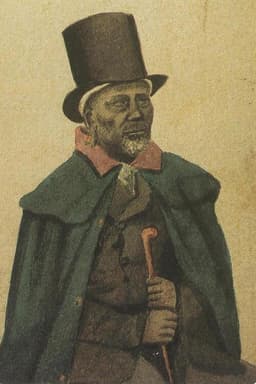
Moshweshwe I
Emperor · Modern
64.1Total

Philip II of Spain
Emperor · Modern
59.4Total
Basic Information
Born
1786
1527
Died
1870
1598
Era
Modern
Modern
Nationality
Lesotho
Spain
Occupation
Emperor
Emperor
Civilization
Other
Western
Score Comparison
Military (10%)
55.0
60.0
Political (20%)
72.0
59.3
Influence (20%)
60.0
68.0
Legacy (20%)
58.0
40.0
Leadership (15%)
78.0
78.0
Strategy (15%)
66.3
58.0
TOTAL
64.1
59.4
Moshweshwe I — Complete Timeline
1824 AD
Unification of Basotho at Thaba-BosiuPolitical Action
Moshoeshoe I established his stronghold at Thaba-Bosiu, a mountain fortress, and began uniting various Sotho clans into the Basotho nation. This provided a safe haven during the Difaqane and laid the foundation for Lesotho.
Basotho NationUnificationThaba-Bosiu
Impact: regionalconstructive
1853 AD
Defeat of SekonyelaWar◆ Major
Moshoeshoe's forces captured the Tlokwa stronghold of Sekonyela, ending the long conflict between the Basotho and Tlokwa. This victory consolidated Basotho control over the region and absorbed many Tlokwa into the nation.
BasothoTlokwaVictory
Impact: regionalconstructive
1868 AD
Request for British ProtectionPolitical Action
Facing threats from the Orange Free State, Moshoeshoe requested British annexation of Basutoland. The British agreed, making Basutoland a protectorate and preserving Basotho independence from Boer rule.
British ProtectionBasutolandDiplomacy
Impact: regionalconstructive
1869 AD
Signing of the Treaty of Aliwal NorthPolitical Action◆ Major
Moshoeshoe signed a treaty with the British that defined the boundaries of Basutoland (modern Lesotho). The treaty ceded some territory to the Orange Free State but secured British protection for the Basotho.
TreatyBoundariesBritish Protection
Impact: regional
Philip II of Spain — Complete Timeline
1563 AD
Escorial ConstructionCultural
Philip II commissioned the construction of El Escorial, a vast monastery-palace complex near Madrid. It served as a royal residence, monastery, and burial site for Spanish monarchs, symbolizing Philip's piety and centralized rule.
ArchitectureRoyal PalaceMonastery
Impact: nationalconstructive
1568 AD
Revolt of the NetherlandsWar◆ Major
Philip II's harsh policies, including the Inquisition and taxation, sparked the Dutch Revolt. The rebellion, led by William the Silent, resulted in the Eighty Years' War and the eventual independence of the Dutch Republic, draining Spanish resources.
Dutch RevoltEighty Years' WarRebellion
Impact: regionaldestructive
1571 AD
Battle of LepantoWar◆ Major
The Holy League, led by Philip II's half-brother Don John of Austria, defeated the Ottoman fleet at Lepanto. This naval victory halted Ottoman expansion in the Mediterranean and boosted Christian morale, though Philip's strategic focus remained on the Atlantic.
Naval BattleOttoman EmpireHoly League
Impact: regional
1580 AD
Annexation of PortugalPolitical Action◆ Major
Philip II claimed the Portuguese throne after the death of King Henry of Portugal, leading to the Iberian Union. He ruled Portugal and its overseas empire, including Brazil and Asian colonies, expanding Spanish global influence.
Iberian UnionTerritorial ExpansionPortugal
Impact: global
1588 AD
Spanish ArmadaWar
Philip II launched the Spanish Armada, a massive fleet of 130 ships, to invade England and overthrow Elizabeth I. The Armada was defeated by the English navy and storms, resulting in heavy losses and marking a decline in Spanish naval dominance.
Naval CampaignEnglandDefeat
Impact: globaldestructive
Expert Analysis
Origins
Moshweshwe I was born around 1786 near modern-day Lesotho, a minor chief of the Bamokoteli lineage. His early life was shaped by the upheavals of the Mfecane, a period of widespread conflict and displacement in southern Africa. He gathered followers by offering refuge and cattle, gradually building a following. In 1824, he established his stronghold at Thaba-Bosiu, a flat-topped mountain that became the spiritual and political heart of the Basotho nation. His education came from practical experience in diplomacy and warfare, learning to navigate the complex alliances of the region.
Philip II was born on May 21, 1527, in Valladolid, Spain, to Emperor Charles V and Isabella of Portugal. He was groomed from childhood for rule, receiving a rigorous education in theology, law, and languages. His upbringing was steeped in the Habsburg tradition of dynastic politics and Catholic orthodoxy. By age 16, he was given administrative responsibilities, and he served as regent of Spain during his father's absences. His early experiences were marked by the immense wealth and power of the Spanish Empire, but also by the burdens of maintaining it.
Rise to Power
Moshweshwe I's rise was gradual and based on attraction rather than conquest. After establishing Thaba-Bosiu, he welcomed refugees from various clans, offering protection in exchange for loyalty. His policy of assimilation allowed him to absorb defeated groups, such as the Tlokwa after their defeat in 1853. He skillfully played off European powers, first the British at the Cape, then the Boers of the Orange Free State. The turning point came in 1868 when he requested British protection, leading to Basutoland becoming a protectorate. This secured his nation's existence against Boer expansion.
Philip II ascended the Spanish throne in 1556 upon his father's abdication. He inherited a vast empire spanning Europe, the Americas, and Asia. His rise was predetermined by birth, but he consolidated power through centralization and religious uniformity. He personally oversaw the administration from El Escorial, a monastery-palace he built to symbolize his rule. Key events included the victory at Lepanto in 1571, which enhanced his prestige, and the annexation of Portugal in 1580, which gave him control of the Portuguese overseas empire. His authority was absolute, but he faced constant challenges from the Dutch Revolt and English privateering.
Leadership & Governance
Moshweshwe I's leadership was characterized by consultation and consensus. He ruled through a council of chiefs and allowed local autonomy, which fostered loyalty. His governance was pragmatic: he introduced new crops and cattle management to improve food security. Diplomatically, he mastered the art of playing off stronger neighbors. For example, he signed the Treaty of Aliwal North in 1869, ceding some land but securing the core of his territory. His military score of 55.0 reflects his defensive strategy rather than offensive conquest; he rarely initiated wars but defended Thaba-Bosiu successfully.
Philip II governed through a vast bureaucracy, issuing decrees from his desk. He micromanaged the empire, reviewing every document, which slowed decision-making. His policies were driven by Catholic orthodoxy, enforcing the Inquisition in the Netherlands and expelling Moriscos from Spain. Economically, he relied on silver from the Americas, but his wars drained the treasury. The Revolt of the Netherlands (1568–1648) was a direct result of his heavy-handed rule. He scored 78.0 in leadership, but his political score of 59.3 was hampered by his inability to delegate or adapt.
Triumph & Tragedy
Moshweshwe I's greatest triumph was founding the Basotho nation, which survives today as Lesotho. He successfully defended his people against the Boers and secured British protection, a masterstroke of diplomacy. His tragedy was the loss of territory in the Treaty of Aliwal North, which reduced Basutoland's size. He also failed to completely unify all Sotho groups, as some remained under Boer control. His legacy score of 58.0 reflects the small size of his nation but its enduring identity.
Philip II's triumph was the expansion of Spanish power to its zenith, including the annexation of Portugal and the victory at Lepanto. He also completed El Escorial, a cultural monument. His tragedy was the failure of the Spanish Armada in 1588, which led to the decline of Spanish naval dominance. The Dutch Revolt ultimately succeeded, leading to the loss of the northern Netherlands. His legacy score of 40.0 is low because his reign is often seen as a period of overreach and eventual decline.
Character & Destiny
Moshweshwe I was patient, pragmatic, and inclusive. He often said, "Peace is like a river that flows gently; war is like a flood that destroys." His character shaped his destiny: he built a nation through diplomacy rather than conquest. He died in 1870, just after seeing his people protected by Britain. His leadership score of 78.0 reflects his ability to inspire loyalty without force.
Philip II was meticulous, devout, and suspicious. He believed he was God's instrument to defend Catholicism, which led him to overreach. His character caused him to micro-manage and distrust subordinates, contributing to the Armada's failure. He died in 1598, embittered by the Dutch Revolt and England's defiance. His leadership score of 78.0 is similar to Moshweshwe's, but his strategic score of 58.0 is lower because his grand plans often backfired.
Legacy
Moshweshwe I's legacy is the nation of Lesotho, which remains independent and culturally cohesive. His diplomatic strategy of seeking British protection set a precedent for other African leaders. He is remembered as the "Father of the Basotho" and his image appears on Lesotho's currency. His influence score of 60.0 is modest globally but profound regionally.
Philip II's legacy is mixed. He is remembered for the Spanish Armada's failure and the decline of Spain. However, his reign saw the peak of Spanish art and architecture, and the Iberian Union created a global empire. His influence score of 68.0 reflects Spain's lasting cultural impact, but his political and military failures tarnish his reputation.
Conclusion
Moshweshwe I had a greater impact relative to his resources and context. He scored 64.1 overall, compared to Philip II's 59.4. While Philip ruled a global empire, his leadership led to costly failures and long-term decline. Moshweshwe, with fewer resources, built a nation that survives today. His diplomatic acumen and inclusive governance created a lasting legacy. Philip's ambition overreached, while Moshweshwe's pragmatism secured his people's future. Therefore, Moshweshwe I is the more effective leader in terms of achieving sustainable outcomes.
Rankings
🥇
Moshweshwe ILeader
Mil: 55.0Pol: 72.0Inf: 60.0
64.1
🥈
Philip II of Spain
Mil: 60.0Pol: 59.3Inf: 68.0
59.4
+4.7 behind
How This Comparison Works
Algorithm
Each figure is scored on 6 dimensions (0—100 scale) based on structured historical data: Military (10%), Political (20%), Influence (20%), Legacy (20%), Leadership (15%), Strategy (15%). The weighted total produces the final ranking.
Data Sources
Scores are computed from structured sub-indicators in the database. Scale factors adjust for era (Ancient ×0.85, Modern ×1.0) and civilization size (Eastern ×1.05, Other ×0.80) to account for differences in population and military scale.
Maximum 3 Figures
Comparisons are limited to 2—3 figures to ensure readability and statistical meaningfulness.
Error Margins
±5 points per dimension — Sub-scores are derived from historical records with inherent uncertainty. Two figures within 5 points on a dimension should be considered roughly equivalent in that area.
Total Score Accuracy
±3 points overall — The weighted combination of 6 dimensions produces a total score with approximately ±3 points of uncertainty. Differences of less than 3 points are not statistically significant— the figures are effectively tied.
Known Limitations
- Historical records are incomplete and uneven across civilizations
- Figures from oral-tradition societies may be underrepresented
- Occupation labels can misclassify multi-role figures
- Scores measure capability and impact, not moral character
- Quantitative scoring is a comparison tool, not absolute truth
Capability Radar
Military (10%) — Battles & Warfare
Battles
45
75
Win Rate
60
55
Expansion
40
80
Political (20%) — Governance & Reform
Reform
70
70
Diplomacy
90
60
Economy
50
65
Influence (20%) — Cultural & Global Reach
Cultural
55
70
Global
45
80
Legacy (20%) — Historical Impact
Historical
60
80
Longevity
65
75
Leadership (15%) — Power & Stability
Tenure
75
85
Stability
65
55
Strategy (15%) — Tactics & Innovation
Strategy
70
70
Tactics
65
60
Reform
55
65
Similar Comparisons
Comments & Discussion
No comments yet. Be the first to share your thoughts!