Loading...
Philip III of France vs Sher Shah Suri
Sher Shah Suri leads by 12.2 pts · 2 figures compared
…
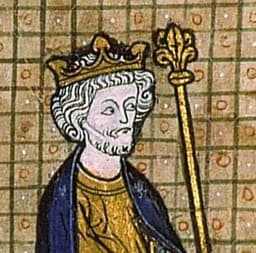
Philip III of France
Emperor · Medieval
56.5Total
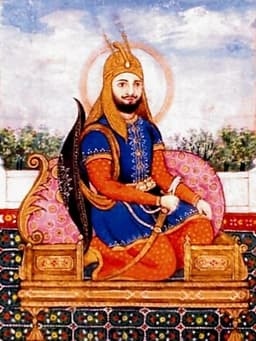
Sher Shah Suri
Emperor · Medieval
68.7Total
Basic Information
Born
1245
1486
Died
1285
1545
Era
Medieval
Medieval
Nationality
France
India
Occupation
Emperor
Emperor
Civilization
Western
Indian
Score Comparison
Military (10%)
72.5
80.0
Political (20%)
48.0
82.0
Influence (20%)
54.1
56.7
Legacy (20%)
45.8
65.0
Leadership (15%)
74.0
72.0
Strategy (15%)
60.0
72.0
TOTAL
56.5
68.7
Philip III of France — Complete Timeline
1258 AD
Treaty of CorbeilPolitical Action
Philip III's father, Louis IX, signed the Treaty of Corbeil, which renounced French claims to Catalonia and Roussillon in exchange for Aragonese renunciation of claims to Provence and Languedoc. Philip III inherited this settlement.
TreatyDiplomacyCapetian
Impact: regional
1274 AD
Invasion of NavarreWar◆ Major
Philip III invaded Navarre to enforce his claim as regent for his niece, Joan I of Navarre. He secured control of the kingdom, which later passed to his son Philip IV through marriage, expanding French influence in the Pyrenees.
InvasionTerritorial ExpansionCapetian
Impact: regional
1285 AD
Aragonese CrusadeWar◆ Major
Philip III led the Aragonese Crusade, a papal-sanctioned invasion of Aragon to depose King Peter III. The French army was defeated at the Battle of the Col de Panissars and forced to retreat, suffering heavy losses. Philip III died during the retreat.
CrusadeDefeatCapetian
Impact: regionaltragic
Sher Shah Suri — Complete Timeline
1539 AD
Defeat of Humayun at ChausaWar◆ Major
Sher Shah Suri defeated the Mughal emperor Humayun at the Battle of Chausa in Bihar. This victory forced Humayun to flee to Persia and allowed Sher Shah to establish the Sur Empire in northern India.
BattleMughal-Sur Conflict
Impact: regional
1540 AD
Defeat of Humayun at KannaujWar◆ Major
Sher Shah Suri decisively defeated Humayun at the Battle of Kannauj (also known as Bilgram). This victory consolidated Sher Shah's control over the Delhi Sultanate and ended Mughal rule in India for 15 years.
BattleMughal-Sur Conflict
Impact: regional
Introduction of the RupeeReform◆ Major
Sher Shah Suri introduced a standardized silver coin called the 'rupiya', which became the basis for the modern Indian rupee. This reform stabilized the economy and facilitated trade across his empire.
Currency ReformEconomic Policy
Impact: regionalconstructive
1541 AD
Land Revenue ReformsReform◆ Major
Sher Shah Suri implemented a systematic land revenue system based on measurement of land and classification of soil types. This reform increased state revenue and reduced corruption, later adopted by the Mughals under Akbar.
Administrative ReformTaxation
Impact: regionalconstructive
1542 AD
Construction of the Grand Trunk RoadOther◆ Major
Sher Shah Suri built the Grand Trunk Road from Sonargaon (Bangladesh) to Peshawar (Pakistan), improving trade and communication. The road included rest houses and wells at regular intervals, facilitating travel and commerce.
InfrastructureTrade Route
Impact: regionalconstructive
Expert Analysis
Origins
Philip III of France, born in 1245, was the second son of King Louis IX. He became heir after his older brother Louis died in 1260. His upbringing was steeped in the piety and chivalric ideals of his father's court. Philip was known for his physical strength and courage, earning the nickname 'the Bold.' He lacked the intellectual depth of his father but was loyal to the Church and his nobles.
Sher Shah Suri, born Farid Khan in 1486, was of Afghan origin from the Sur tribe. His father, Hasan Khan, was a jagirdar in Bihar. Sher Shah's early life was marked by conflict with his father, leading him to leave home and seek employment under various Afghan rulers. He gained military experience under the service of Bahar Khan Lohani, who granted him the title 'Sher Shah' after he killed a tiger.
Rise to Power
Philip III became king in 1270 after his father's death during the Eighth Crusade. He was crowned at Reims in 1271. His reign saw the expansion of French royal domain through inheritance and marriage. In 1274, he claimed Navarre as regent for his niece, Joan I, and invaded the kingdom, securing control. His most ambitious venture was the Aragonese Crusade (1284-1285), called by Pope Martin IV to depose King Peter III of Aragon. The campaign started well but ended in disaster when the French fleet was destroyed, and the army was ravaged by disease, leading to a retreat and Philip's death soon after.
Sher Shah Suri rose from a minor noble to emperor through military prowess and strategic alliances. He initially served under the Mughal governor of Bihar but later rebelled. In 1537, he besieged the fort of Chausa and defeated the Mughal emperor Humayun in 1539 at the Battle of Chausa. He followed this with a decisive victory at Kannauj in 1540, forcing Humayun into exile. Sher Shah then established the Sur Empire, ruling from 1540 to 1545.
Leadership & Governance
Philip III's governance was marked by continuity with his father's policies but lacked innovation. He relied heavily on his chamberlain, Pierre de la Broce, and later on his uncle, Charles of Anjou. His military leadership was characterized by personal bravery but poor strategic planning. The Aragonese Crusade failed due to logistical issues and underestimation of the enemy. His political score of 48.0 reflects his inability to manage the crusade effectively.
Sher Shah Suri was a reformer and efficient administrator. He introduced a land revenue system that measured land and classified soil types, ensuring fair taxation and increased state revenue. He standardized the silver rupee, which became the basis for modern Indian currency. He built the Grand Trunk Road, improving trade and communication from Bengal to the Indus. His political score of 82.0 reflects his administrative genius. He also established a postal system and promoted religious tolerance.
Triumph & Tragedy
Philip III's greatest triumph was the expansion of French territory through the acquisition of Navarre and the County of Toulouse. However, his tragedy was the Aragonese Crusade, which drained the treasury and cost many lives. His military score of 72.5 is inflated by his personal valor, but his strategic score of 60.0 indicates flawed planning.
Sher Shah Suri's triumphs include defeating the Mughals and establishing a stable empire. His administrative reforms were so effective that they were later adopted by the Mughals under Akbar. His tragedy was his short reign of only five years; he died in 1545 from a gunpowder explosion during the siege of Kalinjar. His legacy score of 65.0 reflects the enduring impact of his reforms despite his brief rule.
Character & Destiny
Philip III was described as brave but gullible and easily manipulated. His reliance on advisors led to mixed results. His character of obedience to the Church and his father's ideals led him to undertake the crusade, which sealed his fate. He died at 40, likely from dysentery, returning from the failed campaign.
Sher Shah Suri was cunning, ambitious, and pragmatic. He learned from his mistakes and adapted. His ability to win over local chiefs and his administrative acumen set him apart. He died while achieving his final military objective, a fitting end for a soldier-emperor.
Legacy
Philip III's legacy is overshadowed by his father and son. His reign saw the royal domain expand, but his military failure weakened the monarchy temporarily. He is remembered as a crusader king who failed. His influence score of 54.1 reflects moderate impact.
Sher Shah Suri's legacy is monumental in Indian history. The rupee, land revenue system, and Grand Trunk Road remained in use for centuries. His administrative model influenced the Mughal empire. His legacy score of 65.0 is higher, and his total score of 68.7 surpasses Philip's 56.5.
Conclusion
Sher Shah Suri had greater impact due to his administrative reforms that shaped Indian governance for centuries. Philip III's reign was largely a continuation of his father's policies, and his major military campaign ended in failure. While Philip's territorial gains were significant, Sher Shah's institutional innovations were more enduring. The score gap of 12.2 points reflects this disparity. Sher Shah Suri is the more consequential ruler.
Rankings
🥇
Sher Shah SuriLeader
Mil: 80.0Pol: 82.0Inf: 56.7
68.7
🥈
Philip III of France
Mil: 72.5Pol: 48.0Inf: 54.1
56.5
+12.2 behind
How This Comparison Works
Algorithm
Each figure is scored on 6 dimensions (0—100 scale) based on structured historical data: Military (10%), Political (20%), Influence (20%), Legacy (20%), Leadership (15%), Strategy (15%). The weighted total produces the final ranking.
Data Sources
Scores are computed from structured sub-indicators in the database. Scale factors adjust for era (Ancient ×0.85, Modern ×1.0) and civilization size (Eastern ×1.05, Other ×0.80) to account for differences in population and military scale.
Maximum 3 Figures
Comparisons are limited to 2—3 figures to ensure readability and statistical meaningfulness.
Error Margins
±5 points per dimension — Sub-scores are derived from historical records with inherent uncertainty. Two figures within 5 points on a dimension should be considered roughly equivalent in that area.
Total Score Accuracy
±3 points overall — The weighted combination of 6 dimensions produces a total score with approximately ±3 points of uncertainty. Differences of less than 3 points are not statistically significant— the figures are effectively tied.
Known Limitations
- Historical records are incomplete and uneven across civilizations
- Figures from oral-tradition societies may be underrepresented
- Occupation labels can misclassify multi-role figures
- Scores measure capability and impact, not moral character
- Quantitative scoring is a comparison tool, not absolute truth
Capability Radar
Military (10%) — Battles & Warfare
Battles
55
75
Win Rate
60
80
Expansion
65
75
Political (20%) — Governance & Reform
Reform
40
95
Diplomacy
50
70
Economy
45
90
Influence (20%) — Cultural & Global Reach
Cultural
30
60
Global
25
55
Legacy (20%) — Historical Impact
Historical
40
85
Longevity
35
80
Leadership (15%) — Power & Stability
Tenure
55
60
Stability
50
65
Strategy (15%) — Tactics & Innovation
Strategy
50
80
Tactics
45
85
Reform
30
90
Similar Comparisons
Comments & Discussion
No comments yet. Be the first to share your thoughts!